
Ricotta and spinach tortelloni with butter and sage
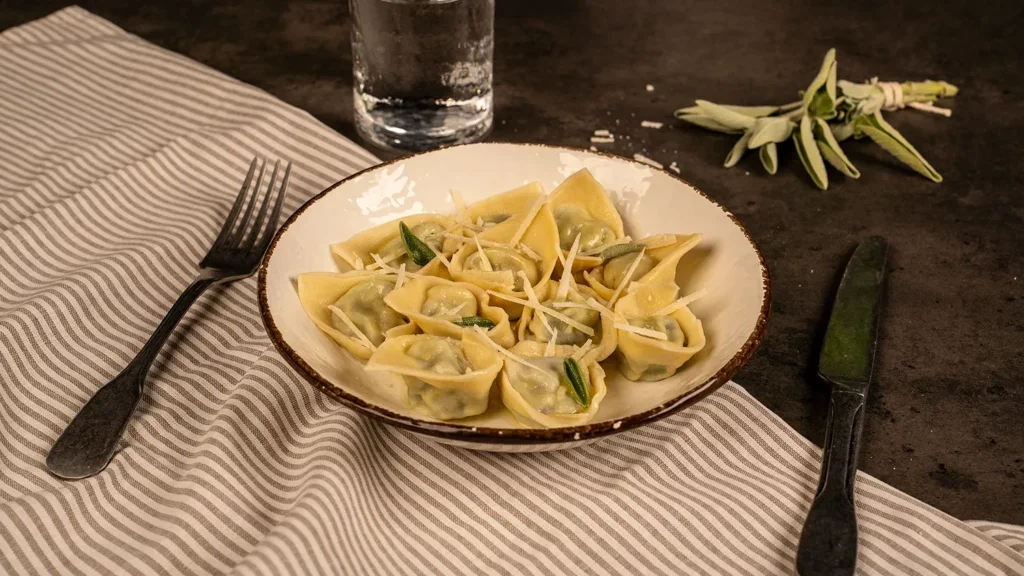
These homemade tortelloni are filled with ricotta, spinach, Parmesan and a little nutmeg, then tossed in butter and sage. Making the pasta from scratch takes a little care, but the rich, tender filling makes it a rewarding dish to share.
Ingredients
- 400 gplain flour
- 4eggs
- 600 gcow’s milk ricotta
- 150 gcooked spinach, squeezed dry
- 100 gParmesan
- to tastesalt
- to tastenutmeg
- to tastebutter
- 4 leavessage
Instructions
- 1
Make the dough
Put the flour and eggs in a large bowl. Mix first with a fork, then knead by hand until the dough is smooth and even.
- 2
Rest the dough
Leave the dough to rest for 20 minutes.
- 3
Cook the spinach
Cook the spinach in a frying pan with a knob of butter for 7 minutes. Squeeze it dry.
- 4
Mix the filling
Put the spinach in a bowl with the ricotta, nutmeg, Parmesan and salt. Mix everything together.
- 5
Roll the pasta
Divide the dough into three pieces. Roll each into a sheet 1.5 mm thick, using a rolling pin or pasta machine.
- 6
Fill the squares
Cut the pasta sheets into squares and place some filling in the centre of each one.
- 7
Seal the triangles
Fold each square into a triangle, starting at the edges, and press the edges together firmly to seal.
- 8
Shape the tortelloni
Fold the triangle’s ends downwards and round off its point. Bring the ends together and press lightly to close.
- 9
Boil the pasta
Cook the tortelloni in plenty of salted boiling water. Drain them when they rise to the surface.
- 10
Warm the butter
Melt butter in a frying pan over a low heat with the sage leaves and a pinch of salt.
- 11
Toss and serve
Add the tortelloni to the pan and let them take on the butter and sage flavour for a couple of minutes. Serve with flakes of Parmesan and a few sage leaves.
What are ricotta and spinach tortelloni?
Tortelloni are stuffed pasta parcels, often associated with the Emilia-Romagna region of northern Italy. Their larger shape gives room for a generous filling, here made with ricotta, spinach and Parmesan.
This version pairs the creamy centre with fresh pasta and a simple butter-and-sage dressing. The sauce is restrained, so it complements rather than masks the filling.
Nutrition and macros by portion
The nutrition label shows one serving as written: 842 calories, 36g protein, 91g carbs, 35g fat.
| Portion | Adjustment | kcal | Protein | Carbs | Fat |
|---|---|---|---|---|---|
| Lighter | Use less butter | 589 kcal | 25g | 64g | 25g |
| This serving | As written | 842 kcal | 36g | 91g | 35g |
| Hungry | Larger pasta portion | 1263 kcal | 54g | 137g | 53g |
The flour and pasta contribute most of the carbohydrates, while ricotta and Parmesan provide much of the protein. Cheese and butter are the main sources of fat; the exact amounts depend on how much butter is used. Serve with a generous portion of salad or vegetables to balance the meal.
Getting the pasta dough right
Flour and eggs are the whole pasta dough, so kneading until smooth helps make it cohesive and easier to roll. Give it the full 20-minute rest before shaping; this lets the dough relax.
Roll the dough evenly to 1.5 mm thick. If using a pasta machine, work through the settings gradually rather than forcing a thick piece through a narrow setting.
Preparing a dry, creamy filling
Spinach: cook it for 7 minutes, then squeeze it thoroughly. Excess moisture can make the filling loose and wet the pasta around the seams.
Ricotta and Parmesan: mix these with the spinach, salt and nutmeg until evenly combined. Taste the filling before shaping and adjust the seasoning if needed.
Folding and sealing
Filling: place it in the centre of each square, leaving enough bare pasta around the edges to seal. Keep the amount consistent so each parcel closes without stretching.
Shape: fold each square into a triangle and press the edges together firmly. Fold down the ends, round the point, then bring the ends together and press lightly to finish.
Cooking and checking for doneness
Boil the tortelloni in plenty of salted water and drain them once they rise to the surface, as directed in the recipe. Handle them gently when lifting them out so the filled parcels stay intact.
The final couple of minutes in the pan are for coating the pasta in the sage butter, not for prolonged cooking. Keep the heat low as the butter melts.
Serving with butter and sage
Butter and sage give the pasta a fragrant, savoury finish without a complicated sauce. Melt the butter gently with the sage leaves and a pinch of salt, then toss the drained tortelloni in the pan.
Serve straight away with Parmesan flakes and a few sage leaves. A crisp green salad or simply cooked vegetables make a fresh contrast to the rich filling.
Recipe notes & tips
- Squeeze the cooked spinach well before mixing it into the filling.
- Keep unused dough covered while you roll and shape the other portions.
- Dust the work surface lightly if the pasta begins to stick.
- Leave a clear border around each mound of filling so the edges can seal.
- Press out trapped air as you close each tortellone.
- Keep the butter over a low heat so it melts gently with the sage.
Variations
- Add lemon zest: mix a little into the filling for a fresher note.
- Use pecorino: replace some of the Parmesan with finely grated pecorino for a sharper taste.
- Change the herbs: add a little finely chopped parsley to the ricotta and spinach mixture.
- Make smaller parcels: cut smaller pasta squares and use less filling in each one.
- Finish with black pepper: grind it over the tortelloni just before serving.
Common mistakes to avoid
- Wet filling: squeeze the spinach thoroughly before mixing it with the ricotta.
- Overfilled parcels: use less filling so the pasta edges can meet cleanly.
- Open seams: press firmly around the edges and remove any trapped air before sealing.
- Uneven pasta sheets: roll to an even 1.5 mm thickness so the tortelloni cook consistently.
- Butter browning too quickly: keep the pan over a low heat while melting it with the sage.
- Rough handling: lift the cooked tortelloni gently to avoid tearing their pasta shells.
How to store
Keep cooked leftovers in a sealed container in the fridge for up to 2 days. Reheat gently in a frying pan with a little butter or water; avoid vigorous stirring, which can break the pasta. Uncooked tortelloni can be frozen in a single layer, then transferred to a freezer bag once firm.
Frequently asked questions
Can I make the tortelloni ahead?
Yes. Shape them ahead and keep them covered in the fridge for a short time, or freeze them in a single layer. Cook from frozen, allowing extra time in the boiling water.
How do I stop the filling leaking out?
Squeeze the spinach dry, avoid overfilling, and press the pasta edges firmly together. Removing trapped air also helps keep the seams closed.
How do I know when the tortelloni are cooked?
The recipe says to drain them when they rise to the surface. Lift one carefully and check that the pasta is tender before draining the batch.
Can I use a pasta machine?
Yes. The recipe allows either a rolling pin or a pasta machine; roll the sheets to 1.5 mm thick.
What can I serve with these tortelloni?
A green salad or simply cooked vegetables work well alongside the rich ricotta filling and butter dressing.
Cook it from the original
This recipe comes from frosta.it. Their page has the author’s own photos, notes and tips — the best place to cook it from.
Open the recipe on frosta.it