
Pasta Ligurian style
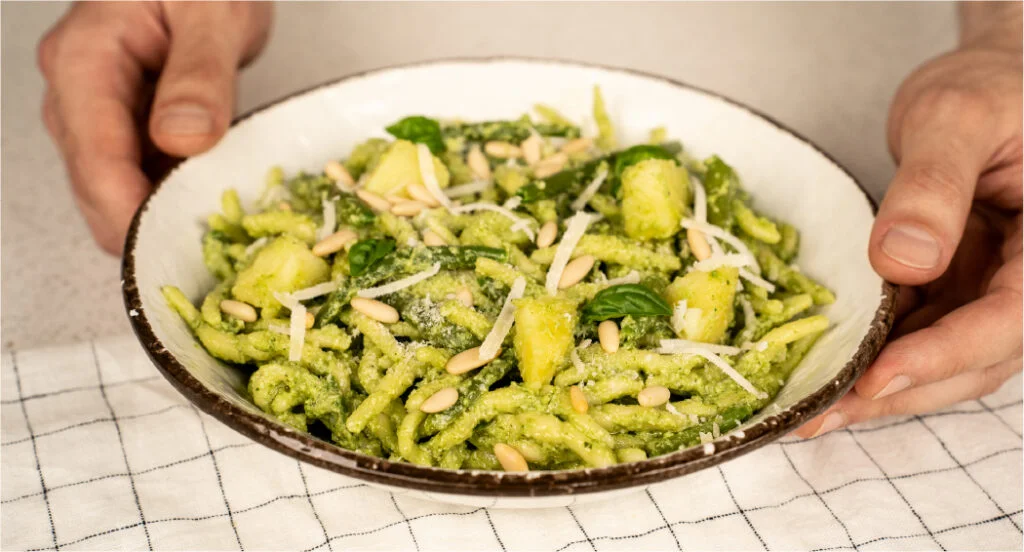
Trofie with green beans, potatoes and pesto is a hearty Ligurian pasta dish that brings together the region’s fresh pasta and basil-rich sauce. It makes a satisfying meal with a mix of tender vegetables, cheese and toasted-tasting pine nuts.
Ingredients
- 350 gfresh trofie
- 120 gpotatoes
- 100 ggreen beans
- 50 gbasil
- 50 gParmesan
- 50 gpine nuts
- 50 gPecorino
- 1 clovegarlic
- 35 golive oil
- 1 pinchsalt
Instructions
- 1
Make the pesto
Put the garlic, salt, pine nuts, Parmesan, Pecorino, basil and olive oil in a blender or mortar. Blend or pound until the pesto is creamy and evenly combined.
- 2
Cook pasta and beans
Bring a pan of salted water to the boil and add the green beans. After 4 minutes, add the trofie and cook until al dente. Drain and set aside.
- 3
Combine and serve
Put the diced potatoes, green beans, pasta and pesto in a large bowl. Toss gently to coat, then serve hot.
What is trofie with pesto?
This dish draws on a familiar Ligurian combination: twisted trofie pasta with basil pesto, green beans and potatoes. Trofie’s shape catches the sauce, while the vegetables make the bowl more substantial.
Here, the pesto uses both Parmesan and Pecorino for a savoury, rounded flavour. The method keeps the preparation straightforward by cooking the beans and pasta in the same pan.
Nutrition and macros by portion
The nutrition label shows one serving as written: 525 calories, 20g protein, 63g carbs, 24g fat.
| Portion | Adjustment | kcal | Protein | Carbs | Fat |
|---|---|---|---|---|---|
| Lighter | Use less pesto | 368 kcal | 14g | 44g | 17g |
| This serving | As written | 525 kcal | 20g | 63g | 24g |
| Hungry | Add another portion | 788 kcal | 30g | 95g | 36g |
The trofie and potatoes supply most of the carbohydrates, while olive oil, pine nuts and the cheeses contribute much of the fat. The cheeses, pine nuts and pasta also provide protein. Pair a serving with a simple salad or extra vegetables for more freshness and variety.
The pesto ingredients
Basil: use fresh leaves and blend them with the garlic, pine nuts, cheeses and olive oil until the mixture is creamy. A mortar gives you more control over the texture; a blender is quicker.
Cheese and nuts: Parmesan and Pecorino bring saltiness and depth, while pine nuts add richness. Taste the pesto before adding extra salt, since the cheeses are already savoury.
Cooking the pasta and beans
Green beans: give them a 4-minute head start in the boiling water before adding the trofie. This lets them begin cooking while the pasta finishes.
Trofie: cook until al dente, checking the packet guidance as fresh pasta can cook quickly. Drain the pasta and beans once they are tender but not soft.
The potatoes need attention
The recipe calls for diced potatoes to be added to the serving bowl, but it does not give a cooking step for them. As written, they will remain raw, so cook them separately until tender before combining if you want the soft potato texture usually expected in this dish.
Keep the dice small and check them with a knife: it should slide through without resistance. Drain them well so they do not water down the pesto.
Getting the texture right
A good pesto should cling to the trofie rather than pool at the bottom of the bowl. If it feels too thick to coat the pasta, loosen it with a little cooking water, added gradually.
Toss gently once the ingredients are together. This helps coat the pasta without breaking up the beans or cooked potato.
Serving suggestions
Serve the dish hot, soon after tossing it with the pesto, so the sauce stays aromatic and coats the pasta evenly. A simple green salad makes a fresh accompaniment.
The pasta, potatoes and beans make this a filling meal on its own. Keep any extra sides light and simple rather than adding another rich, cheesy dish.
Recipe notes & tips
- Use a mortar if you prefer a pesto with a less uniform texture.
- Keep the pesto ingredients measured and ready before the pasta water boils.
- Start the beans first, then add the trofie after exactly 4 minutes.
- Cook the diced potatoes separately until tender, as the method does not specify cooking them.
- Reserve a little pasta water before draining to help loosen the pesto if needed.
Variations
- More basil: increase the fresh, herbal flavour by adding extra basil to the pesto.
- Garlic adjustment: use less garlic for a gentler sauce.
- Nut swap: replace the pine nuts with walnuts for a different flavour.
- Extra vegetables: add more green beans for a vegetable-forward bowl.
- Cheese finish: grate a little extra Parmesan over the dish just before serving.
Common mistakes to avoid
- Raw potatoes: the method adds them straight to the bowl; cook them until tender before combining.
- Overcooked trofie: check the pasta as it cooks and drain it when al dente.
- Overcooked beans: add the trofie after the beans have boiled for 4 minutes, not earlier.
- Too much salt: taste the pesto first because both cheeses are salty.
- Thick pesto: loosen it with a little reserved pasta water rather than adding a large splash at once.
How to store
Refrigerate leftovers in an airtight container and eat within 2 days. Reheat gently in a pan with a splash of water, or serve at room temperature; the pesto may darken slightly in storage.
Frequently asked questions
Can I use dried trofie?
Yes. Cook them according to the packet instructions and add them after the green beans have had their 4-minute head start.
Do the potatoes need to be cooked?
Yes, if you want them tender. The supplied method does not explain how to cook them, so boil or steam the diced potatoes separately before adding them to the bowl.
Can I make the pesto without a mortar?
Yes. The recipe allows for a blender; process the ingredients until creamy and evenly combined.
Can I prepare the pesto ahead?
You can make it in advance and refrigerate it in a sealed container. Stir it before using and loosen it with a little pasta water if needed.
How do I keep the pesto from becoming too thick?
Save a little cooking water before draining and stir it into the pesto gradually until it coats the pasta.
Cook it from the original
This recipe comes from frosta.it. Their page has the author’s own photos, notes and tips — the best place to cook it from.
Open the recipe on frosta.it