
Cod fillets pizzaiola-style
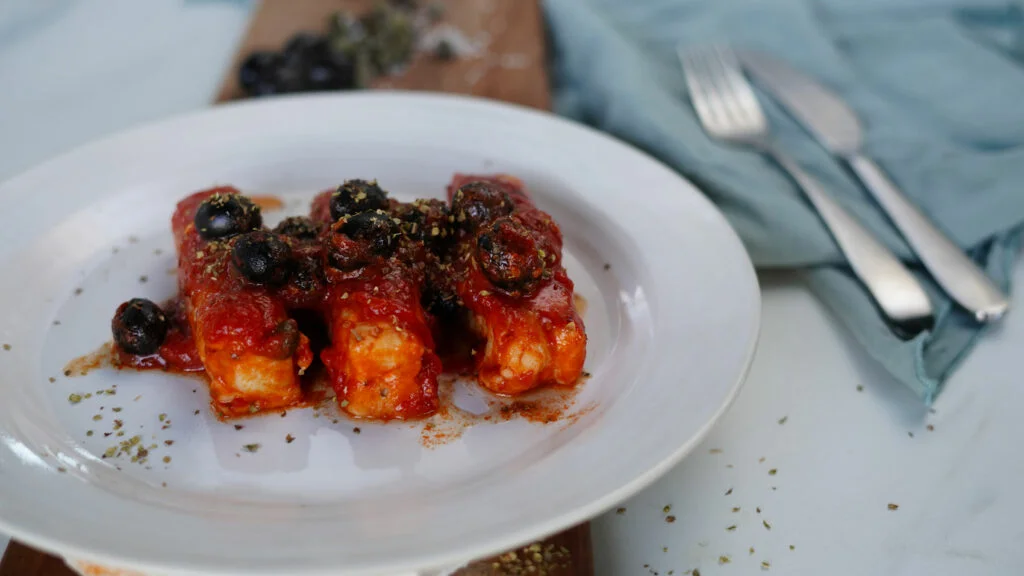
Cod fillets pizzaiola-style are gently cooked in a tomato sauce with olives, capers, garlic and oregano. It is a straightforward Mediterranean-inspired supper, with the sauce doing the work of adding plenty of savoury flavour to mild fish.
Ingredients
- 4 servings; quantity not specifiedCod fillets
- 250 gPeeled tomatoes
- To tasteBlack olives
- 1 tbspDesalted capers
- To tasteExtra-virgin olive oil
- 1 cloveGarlic
- To tasteSalt
- To tasteBlack pepper
- To tasteDried oregano
Instructions
- 1
Start the sauce
Warm extra-virgin olive oil in a pan with the garlic, desalted capers and black olives. After a few minutes, add the peeled tomatoes and stir. Crush the tomatoes with a fork so they cook down more easily and release more sauce.
- 2
Cook the cod
Simmer the sauce over a medium-low heat until ready. Add the cod fillets, dried oregano and a pinch of salt. Cook the fish for about 10–12 minutes, turning it once with a wide spatula to help keep the fillets intact. Serve with a little extra oregano if you like.
What is cod pizzaiola?
Pizzaiola is an Italian style of cooking with tomato, garlic and herbs, often joined by ingredients such as olives and capers. The name evokes the simple, Mediterranean flavours associated with pizza marinara.
Here, cod takes the place of a pizza topping and cooks directly in the sauce. The tomato softens the salty, briny flavours of the olives and capers, while mild fish keeps the dish balanced.
Nutrition and macros by portion
The nutrition label shows one serving as written: 180 calories, 32g protein, 5g carbs, 5g fat.
| Portion | Adjustment | kcal | Protein | Carbs | Fat |
|---|---|---|---|---|---|
| Lighter | Use less olive oil | 126 kcal | 22g | 4g | 4g |
| This serving | As written | 180 kcal | 32g | 5g | 5g |
| Hungry | Add potatoes or bread | 270 kcal | 48g | 8g | 8g |
Cod supplies most of the protein, while the tomatoes contribute some carbohydrate and fibre. Olive oil and olives provide most of the fat; serving the fish with vegetables and a moderate portion of potatoes or bread makes a balanced plate.
Build the sauce first
Aromatics: gently warm the garlic, capers and olives in the oil for a few minutes before adding the tomatoes. This gives their flavour a head start without needing to brown them deeply.
Tomatoes: crush the peeled tomatoes with a fork as they go into the pan. Smaller pieces make a more even sauce and help it cook down around the fish.
Handle the cod gently
Fish fillets can break apart as they soften, so use a wide spatula when turning them and do it just once. Keep the sauce at a gentle simmer rather than letting it bubble vigorously.
The recipe does not specify the fillets’ size or thickness, so check them as they cook. They should be opaque and flake easily when tested at the thickest part.
Season with care
Capers and olives are already salty, so add only the recipe’s pinch of salt at first and taste the sauce before serving. A little black pepper can round out the seasoning.
Dried oregano goes into the pan with the fish. Add a little more at the end if you want a more pronounced herbal aroma.
Allow time for the tomato
The method gives no fixed time for reducing the sauce before the cod goes in. Cook it over medium-low heat until it has come together and is no longer watery, then add the fillets.
Once the fish is in the pan, the stated cooking time is about 10–12 minutes, with one turn. Thicker fillets may need checking carefully before serving.
What to serve alongside
The tomato and olive sauce is good spooned over bread, potatoes or plain rice, which can catch the juices. A green salad or simply cooked vegetables make a fresh contrast.
Serve the cod promptly after cooking, while the fillets are tender and the sauce is hot.
Recipe notes & tips
- Desalt the capers before cooking, as the recipe specifies.
- Use a wide pan so the fillets can sit in the sauce without being crowded.
- Crush the peeled tomatoes in the pan with a fork to help them cook down.
- Keep the sauce at a gentle simmer once the cod is added.
- Turn the fillets only once and support them with a wide spatula.
- Taste the sauce before adding more salt, since olives and capers can be salty.
Variations
- Add chilli: include a little chilli with the garlic for a hotter sauce.
- Use fresh oregano: add it near the end for a brighter herbal flavour.
- Add cherry tomatoes: halve them and simmer them with the peeled tomatoes.
- Serve with greens: add spinach to the sauce near the end and let it wilt.
- Try another white fish: use similarly sized fillets and check them for doneness.
Common mistakes to avoid
- Adding too much salt: olives and capers are salty, so season lightly and taste first.
- Boiling the sauce hard: a vigorous boil can break up the cod; keep it at a gentle simmer.
- Turning the fillets repeatedly: they may fall apart, so turn them just once with a broad spatula.
- Skipping the tomato crush: large pieces can cook unevenly, so press them with a fork in the pan.
- Overcooking the fish: check the thickest part and stop once it is opaque and flakes easily.
How to store
Refrigerate leftovers in a covered container and use within 1–2 days. Reheat gently in a covered pan over low heat until hot throughout, taking care not to break up the cod.
Frequently asked questions
How do I know when the cod is cooked?
It should be opaque and flake easily at its thickest point. The recipe allows about 10–12 minutes, but the precise time depends on the fillets’ thickness.
Can I use frozen cod?
Yes, but thaw it safely and pat it dry before cooking. Follow the packet guidance if the fish is intended to be cooked from frozen.
Do I need to remove the garlic?
The method leaves the garlic in the pan. You can leave it whole for a gentler flavour or remove it before serving if preferred.
Can I prepare the tomato sauce ahead?
You can cook the sauce ahead and refrigerate it, then reheat it gently before adding the cod. Cook the fish just before serving for the best texture.
What can I use instead of peeled tomatoes?
Chopped tinned tomatoes are a practical substitute. Crush them as they cook so the sauce has a similar consistency.
Cook it from the original
This recipe comes from frosta.it. Their page has the author’s own photos, notes and tips — the best place to cook it from.
Open the recipe on frosta.it