
Pasta alla Norma
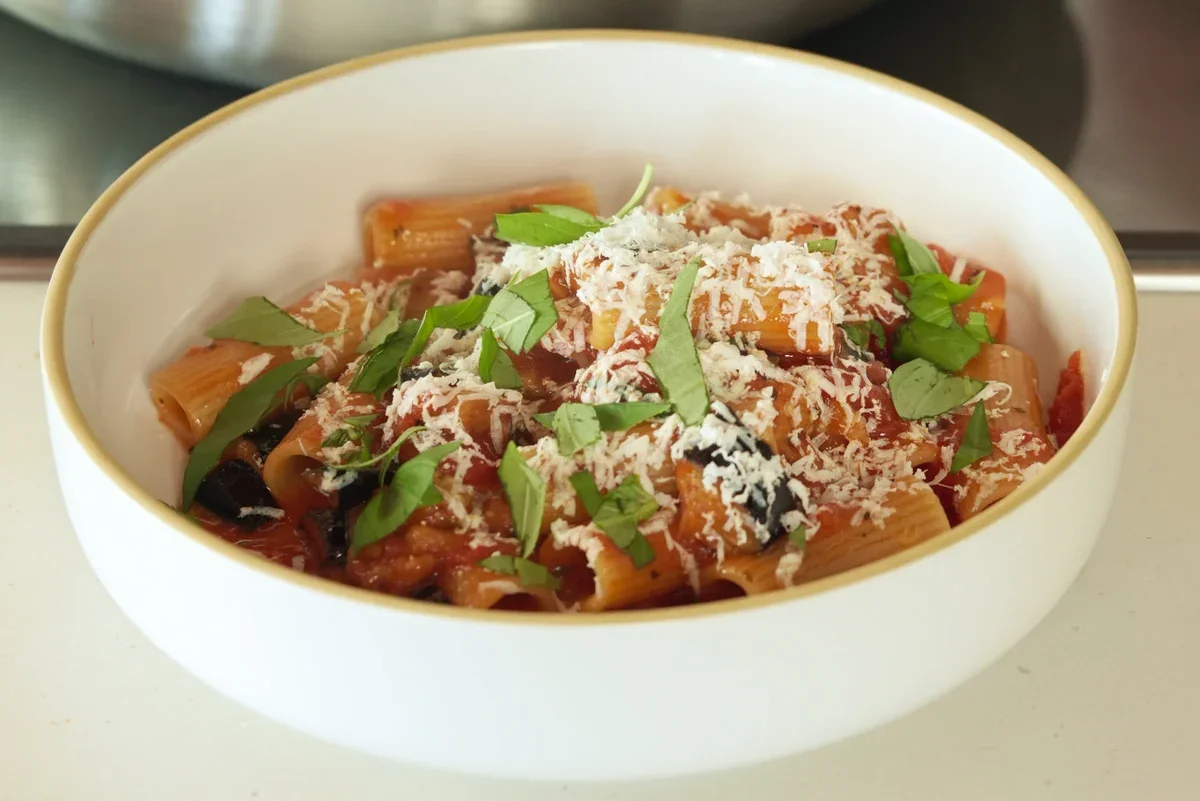
Pasta alla Norma pairs ridged pasta with tomato sauce, browned aubergine, basil and salty ricotta salata. It makes a satisfying Sicilian-inspired dinner, with a glossy sauce that clings to every piece of pasta.
Ingredients
- 90 ml (6 tablespoons), plus more for servingextra-virgin olive oil
- 340 g (¾ pound; 2 to 3 small aubergines)small Italian or Japanese aubergines, cut into 1.3 cm dice
- to tastekosher salt
- 3 medium cloves (about 15 ml minced)garlic, minced
- 5 ml (1 teaspoon)dried oregano
- 1.25 ml (¼ teaspoon)red pepper flakes
- 30 ml (2 tablespoons)tomato paste
- 1 can, 794 g (28 ounces)whole peeled tomatoes, crushed by hand into 1.3 cm chunks
- 454 g (1 pound)dry ridged tubular pasta, such as rigatoni or penne rigate
- a handfulsmall fresh basil leaves, or large leaves torn
- 57 g (2 ounces)aged ricotta salata, finely grated
Instructions
- 1
Brown the aubergine
Heat 30–45 ml (2 to 3 tablespoons) olive oil in a large pan over medium heat until shimmering. Cook the aubergine in batches in a single layer, seasoning with salt and turning occasionally, until deeply browned and tender, about 10 minutes per batch. Transfer to a paper-towel-lined plate, adding more oil as needed for the remaining batches.
- 2
Fry the aromatics
Return any oil left over to the pan and raise the heat to medium-high. Once the oil is hot and shimmering, add the garlic, oregano and red pepper flakes; stir constantly until fragrant, about 30 seconds. Stir in the tomato paste and cook until evenly mixed and beginning to sizzle, about 1 minute.
- 3
Simmer the sauce
Add the crushed tomatoes and their juices and bring to the boil. Lower the heat to a gentle simmer and cook, stirring occasionally, until thickened and glossy, about 10 minutes. Season with salt to taste.
- 4
Cook the pasta
Meanwhile, bring a large pot of salted water to the boil. Cook the pasta according to the packet directions until just shy of al dente. Transfer it directly to the sauce with tongs, reserving some pasta water.
- 5
Toss everything together
Add the cooked aubergine and a few tablespoons of pasta water to the pan. Add the basil and turn the heat to high. Stir and toss constantly until the sauce turns creamy and clings to the pasta, adding more pasta water if needed.
- 6
Finish and serve
Divide the pasta among bowls. Drizzle with olive oil, add a generous grating of ricotta salata and finish with a few torn basil leaves. Serve immediately.
What is Pasta alla Norma?
Pasta alla Norma is a Sicilian pasta dish, associated with Catania, built around aubergine and tomato. Its name is commonly linked to the opera Norma by Catania-born composer Vincenzo Bellini.
This version uses ridged pasta to catch the sauce, while browned aubergine adds a tender, savoury contrast. Basil and ricotta salata bring freshness and a salty finish.
Nutrition and macros by portion
The nutrition label shows one serving as written: 690 calories, 22g protein, 98g carbs, 23g fat.
| Portion | Adjustment | kcal | Protein | Carbs | Fat |
|---|---|---|---|---|---|
| Lighter | Use less olive oil | 483 kcal | 15g | 69g | 16g |
| This serving | As written | 690 kcal | 22g | 98g | 23g |
| Hungry | Larger pasta portion | 1035 kcal | 33g | 147g | 35g |
Most of the carbohydrates come from the pasta, while olive oil supplies much of the fat and the pasta and ricotta salata contribute protein. Aubergine and tomatoes add fibre and some natural sugars. For a more balanced plate, serve a green salad or another non-starchy vegetable alongside it.
Choose the aubergine
Small aubergines: Italian or Japanese varieties work well here, cut into evenly sized dice so they cook at a similar pace.
Hot oil: Brown the pieces in a single layer rather than crowding the pan. Batches take longer, but allow the aubergine to colour instead of steaming.
Build flavour in the pan
Garlic and spices: Stir the garlic, oregano and pepper flakes briefly in the hot oil, just until fragrant. Add the tomato paste next and cook it until it starts to sizzle.
Tomatoes: Hand-crushing the whole tomatoes leaves small pieces in the sauce. A gentle simmer gives the sauce time to thicken without losing its fresh tomato character.
Get the pasta texture right
Just shy of al dente: Take the pasta out of the water before it is fully tender, as it will finish cooking in the sauce.
Pasta water: Add it a little at a time while tossing. Its starch helps the tomato sauce turn silky and adhere to the ridges.
Finish with cheese and basil
Ricotta salata: This aged, salty cheese is grated over the finished bowls, rather than stirred into the pan. Taste before adding extra salt, since the cheese contributes plenty of savouriness.
Fresh basil: Add most of the basil during the final toss, then scatter a few torn leaves over the bowls for a fresh aroma.
Plan the timing
Start the aubergine first, since browning it in batches is the most hands-on part of the recipe. While the tomato sauce simmers, boil the pasta so the two are ready to come together.
The final toss is quick: have the reserved pasta water, basil and grated cheese ready before draining the pasta.
What to serve alongside
A simple green salad with a sharp dressing makes a fresh counterpoint to the rich aubergine and pasta. Crusty bread is useful for any sauce left in the bowl.
The pasta is filling on its own, so keep sides uncomplicated and serve it straight away while the sauce is glossy.
Recipe notes & tips
- Cut the aubergine into evenly sized pieces so they brown and soften at the same rate.
- Let the oil shimmer before adding each batch of aubergine.
- Reserve pasta water before draining; it is harder to add later if the sauce needs loosening.
- Keep the tomato sauce at a gentle simmer so it thickens without catching on the pan.
- Grate the ricotta salata finely so a little spreads over each serving.
- Taste the sauce before adding more salt, especially after topping with the cheese.
Variations
- Add capers: Stir a spoonful into the tomato sauce for a briny note.
- Use another pasta shape: Choose a ridged short pasta that catches the sauce.
- Increase the heat: Add more red pepper flakes to taste.
- Make it dairy-free: Leave off the ricotta salata and finish with extra basil.
- Add olives: Stir sliced black olives into the sauce as it simmers.
Common mistakes to avoid
- Crowding the aubergine: It can steam rather than brown; cook it in single-layer batches.
- Burning the garlic: It cooks quickly, so stir constantly and add the tomato paste as soon as it smells fragrant.
- Skipping the tomato paste cook: Let it sizzle for about 1 minute to incorporate evenly into the sauce.
- Overcooking the pasta: Stop just shy of al dente, as it will finish in the pan.
- Adding too much pasta water at once: Pour in a little at a time until the sauce clings to the pasta.
- Salting too heavily: Ricotta salata is salty, so check the finished sauce before seasoning further.
How to store
Refrigerate leftovers in an airtight container for up to 3 days. Reheat gently in a pan with a splash of water, stirring until hot; add fresh basil and ricotta salata after reheating if available.
Frequently asked questions
Can I use penne instead of rigatoni?
Yes. Penne rigate is a suitable choice, and other ridged short pasta shapes can also hold the sauce.
Can I make the sauce ahead?
Yes. Prepare the tomato sauce ahead and refrigerate it, then reheat it while the pasta cooks. Browned aubergine can also be kept chilled separately and added during the final toss.
Do I need to peel the aubergine?
No. The recipe uses diced aubergine with its skin on, which helps the pieces hold their shape as they cook.
What can I use instead of ricotta salata?
A firm, salty grating cheese can stand in, though the flavour will differ. Add it to taste, as saltiness varies between cheeses.
How do I know when the sauce is ready?
After about 10 minutes of simmering, it should look thicker and glossy. Once tossed with pasta water, it should coat the pasta rather than pool at the bottom of the pan.
Can I make this dish less spicy?
Yes. Reduce or omit the red pepper flakes. The tomato, aubergine and basil still provide plenty of flavour.
Cook it from the original
This recipe comes from fromourplace.ca. Their page has the author’s own photos, notes and tips — the best place to cook it from.
Open the recipe on fromourplace.ca