
Mujigae tteok (Korean rainbow rice cakes)
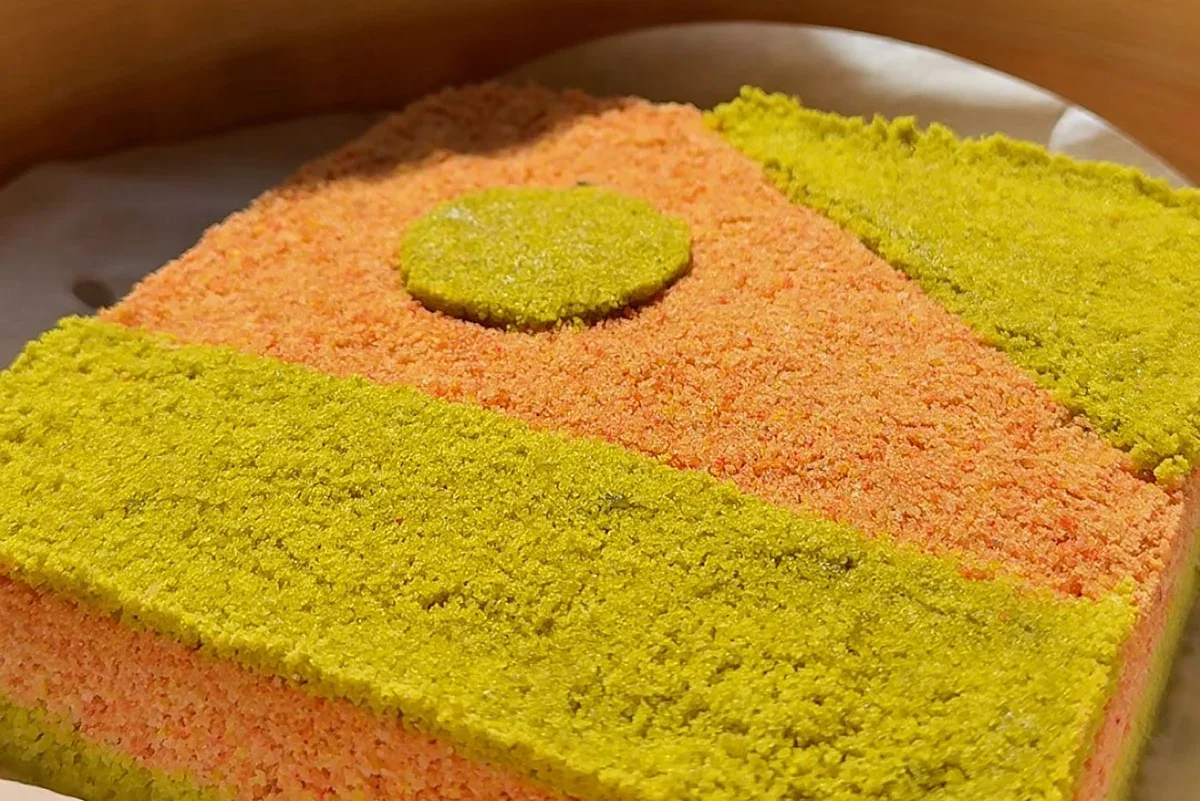
Mujigae tteok is a chewy Korean steamed rice cake striped with colourful layers. Strawberry and matcha powders give it a festive look, while the simple rice-flour mixture makes it a lovely dessert to share.
Ingredients
- 90 g (¾ cup)rice flour
- 120 g (¾ cup)glutinous rice flour
- 32 g (¼ cup)cornflour
- 100 g (½ cup)granulated sugar
- ½ teaspoonsalt
- 240 ml (1 cup)warm water
- 3 tablespoonsground strawberry powder
- 3 tablespoonsmatcha powder
- 950 ml (4 cups)water, for the steamer
Instructions
- 1
Prepare the steamer
Pour 950 ml (4 cups) of water into a pot and set a bamboo steamer over it, lined with steamer paper. Lightly grease a 15 × 15 cm (6 × 6 inch) square mould, or another small mould, and place it in the steamer. Wrap the lid in a tea towel to stop condensation dripping onto the cake.
- 2
Mix the dough
Whisk the rice flour, glutinous rice flour, cornflour, sugar and salt together in a large bowl. Add the warm water and stir with chopsticks until the mixture begins to come together. Gently rub the dough between your palms to break up clumps and distribute the water evenly.
- 3
Colour the dough
Divide the dough evenly between two bowls and sift each portion through a coarse strainer. Work the matcha into one bowl and the strawberry powder into the other, rubbing each powder in gently by hand, then sift both mixtures once more. Set aside ¼ cup of each coloured dough for the final layer.
- 4
Layer the colours
Add the matcha dough to the prepared mould, followed by the strawberry dough, smoothing each layer with a bench scraper or the back of a spoon. Add the reserved dough on top and make a decorative pattern if you like.
- 5
Steam the cake
Bring the pot of water to a simmer and carefully position the steamer on top. Cover with the tea-towel-wrapped lid and steam over medium-high heat for 30 to 40 minutes, until the rice cake is cooked through.
- 6
Cool and serve
Leave the rice cake to cool completely before slicing and serving.
What is mujigae tteok?
Mujigae tteok is a Korean steamed rice cake known for its coloured, layered appearance; “mujigae” means rainbow in Korean. This version uses strawberry and matcha powders to create contrasting pink and green layers.
Rice flour and glutinous rice flour give the cake its characteristic chewy texture. Sifting the mixture helps keep the layers smooth and even.
Nutrition and macros by portion
The nutrition label shows one serving as written: 586 calories, 0g protein, 0g carbs, 0g fat.
| Portion | Adjustment | kcal | Protein | Carbs | Fat |
|---|---|---|---|---|---|
| Lighter | Smaller, thinner slices | 410 kcal | 0g | 0g | 0g |
| This serving | As written | 586 kcal | 0g | 0g | 0g |
| Hungry | Larger cake portion | 879 kcal | 0g | 0g | 0g |
The rice flours and sugar provide most of the carbohydrates, while the flours also contribute some protein; the recipe contains little added fat. Enjoy a slice with fresh fruit or alongside an unsweetened drink for a balanced dessert plate.
Choosing the flours
Rice flour: this forms the base of the dough, while cornflour contributes to the cake’s texture.
Glutinous rice flour: despite its name, it contains no gluten; it is made from sticky rice and helps make the cake chewy.
Getting an even dough
Hydration: add the warm water to the dry ingredients and mix until the dough starts to clump. Rub it gently between your palms to break up larger pieces rather than pressing it into one solid mass.
Sifting: pass the dough through a coarse strainer before and after adding the powders. This reduces clumps and helps each colour spread more evenly.
Building the layers
Order: put the matcha layer in first, then add the strawberry layer. Smooth each one gently so the colours remain distinct.
Decoration: save ¼ cup of each coloured dough for the top. Add it in small pieces or arrange it into a simple pattern.
Steaming and doneness
Keep the pot at a simmer and steam for 30 to 40 minutes over medium-high heat. The cake should be cooked through before you take it off the heat.
The tea towel around the lid catches condensation, helping prevent water from dripping onto the surface. Make sure the towel is secured away from the heat.
Cooling and serving
Let the cake cool completely before cutting it, so the layers can set and the slices hold their shape. Use a clean, lightly greased knife if the sticky rice cake clings to the blade.
Serve it in small slices as a sweet snack or dessert. Its colours make it a natural centrepiece for a shared table.
Recipe notes & tips
- Sift the dough through a coarse strainer to break up clumps before steaming.
- Rub the powders into the dough gently so the colours distribute without compacting it.
- Keep the reserved coloured dough for the decorative top layer.
- Wrap the steamer lid in a tea towel to limit condensation falling onto the cake.
- Cool the cake fully before slicing for neater portions.
Variations
- Use another colour: replace one powder with a different food powder suitable for colouring dough.
- Make a single-colour cake: mix one powder into all the dough instead of dividing it.
- Change the pattern: arrange the reserved dough in dots or simple stripes on top.
- Vary the layers: divide the coloured dough into smaller portions for more stripes.
- Serve with fruit: add sliced fruit alongside the cake for a fresh contrast.
Common mistakes to avoid
- Skipping the sifting: clumps can make the dough uneven; sift each colour before and after adding its powder.
- Overmixing by pressing: compact dough can lose its light, crumbly texture; rub it gently between your palms.
- Blurring the layers: rough smoothing can mix the colours; level each layer with a light touch.
- Letting condensation drip: a wet surface can affect the cake; wrap the lid in a tea towel.
- Slicing while warm: the cake may not hold its shape; wait until it has cooled completely.
How to store
Store the cooled cake in an airtight container in the fridge and eat within 2 to 3 days. Reheat slices briefly in a steamer until soft, or microwave them for a short time; rice cakes firm up as they cool.
Frequently asked questions
Can I use regular rice flour instead of glutinous rice flour?
The recipe uses both types for its chewy texture. Replacing the glutinous rice flour with regular rice flour will change the result.
Why does the dough need to be sifted?
Sifting breaks up clumps and helps the powders colour the dough evenly, giving the finished cake a smoother texture.
How do I know when the cake is cooked?
Steam it for 30 to 40 minutes, as directed, until it is cooked through. If it needs longer, continue steaming and check again.
Can I make it without matcha?
Yes. You can use another colouring powder or make the entire cake with strawberry powder, though the appearance will be different.
Why should the cake cool before cutting?
Cooling lets the layers set, making the sticky cake easier to slice cleanly.
Cook it from the original
This recipe comes from fromourplace.fr. Their page has the author’s own photos, notes and tips — the best place to cook it from.
Open the recipe on fromourplace.fr