
Coconut chickpea curry
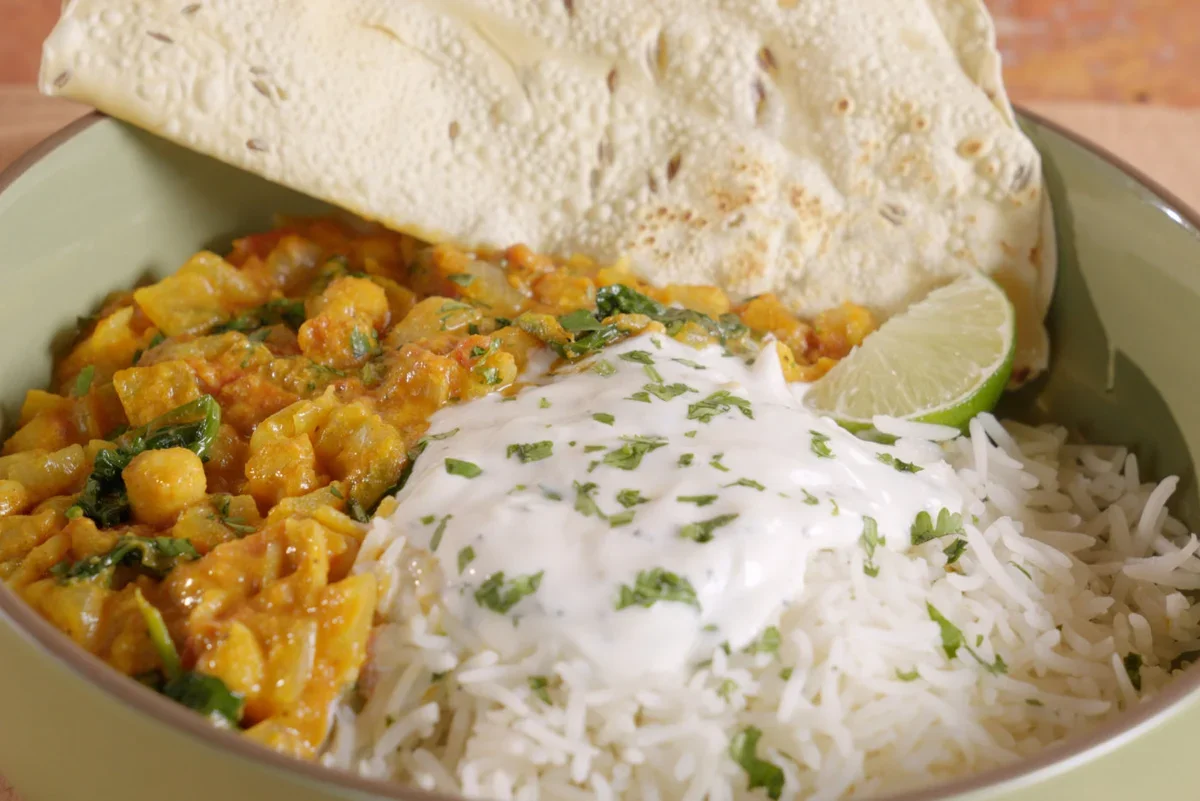
This coconut chickpea curry simmers chickpeas in a warmly spiced tomato and coconut sauce. It is a straightforward one-pan meal for a cosy supper, ready in about 35 minutes.
Ingredients
- 30 ml (2 tablespoons)coconut oil
- 1 mediumred or yellow onion, diced
- 400 g (14 oz)fresh or tinned diced tomatoes
- to tastesea salt and ground black pepper
- 454 g (16 oz)tinned chickpeas, drained and rinsed
- 3garlic cloves, minced
- 22.5 ml (1 1/2 tablespoons)garam masala
- 5 ml (1 teaspoon)curry powder
- 1.25 ml (1/4 teaspoon)cumin
- 383 g (13.5 oz)tinned coconut milk
- 10 ml (2 teaspoons), optionalcoconut flour
- Juice of 1 smalllime
- to tastesalt
Instructions
- 1
Heat the oil
Set a deep pan over medium-high heat and add the coconut oil.
- 2
Cook the vegetables
Add the diced onion and tomatoes, then season with sea salt and ground black pepper and stir. Reduce the heat to medium and cook for about 10 minutes, until the tomatoes break down and the onion softens.
- 3
Add spices
Stir in the chickpeas, garlic, garam masala, curry powder and cumin.
- 4
Simmer the curry
Pour in the coconut milk and stir. If using it, add the coconut flour to thicken the curry slightly. Bring to the boil, then lower the heat and simmer for 10–12 minutes.
- 5
Finish and serve
Taste and adjust the seasoning as needed. Take the pan off the heat, squeeze over the lime juice and stir. Leave to cool slightly, then serve warm.
What is coconut chickpea curry?
Curry is a broad family of dishes, with forms shaped by many South Asian cooking traditions. This version is a simple, home-style take, bringing chickpeas together with tomatoes, coconut milk and a blend of spices.
Tomatoes soften into the sauce while coconut milk adds creaminess and chickpeas make the dish substantial. Garam masala, curry powder and cumin give it layers of warmth without a long list of steps.
Nutrition and macros by portion
The nutrition label shows one serving as written: 510 calories, 12g protein, 48g carbs, 31g fat.
| Portion | Adjustment | kcal | Protein | Carbs | Fat |
|---|---|---|---|---|---|
| Lighter | Use less coconut milk | 357 kcal | 8g | 34g | 22g |
| This serving | As written | 510 kcal | 12g | 48g | 31g |
| Hungry | Serve with extra rice | 765 kcal | 18g | 72g | 47g |
Most of the carbohydrate and fibre come from the chickpeas and tomatoes, while coconut milk and coconut oil provide most of the fat. Chickpeas also contribute protein. To round out the plate, serve a moderate portion with vegetables and rice or flatbread.
Build the tomato base
Onion first: cooking it with the tomatoes for about 10 minutes gives both time to soften and meld. Keep the heat at medium after the initial heating so the mixture cooks down rather than catching.
Tomatoes: fresh or tinned diced tomatoes both work here. Cook until they have broken down, since this gives the coconut milk a more even base to mix into.
Choose and prepare the chickpeas
Tinned chickpeas: drain and rinse them before adding to the pan. They are already cooked, so the simmer is mainly for warming them through and letting them take on the sauce's flavour.
Garlic and spices: add these with the chickpeas, as the recipe directs. Stir well so the seasoning is distributed before pouring in the coconut milk.
Get the sauce consistency right
Coconut milk: stir it through the spiced tomato mixture, then bring the curry to the boil before lowering the heat. A gentle simmer helps the flavours come together without needing a hard boil.
Optional thickener: the coconut flour is there to make the curry slightly thicker. Add it only if you want a firmer sauce, and stir it in thoroughly.
Check the finish
Timing: simmer for 10–12 minutes, as stated in the method. The chickpeas should be hot and the sauce should look cohesive.
Seasoning: taste the curry before taking it off the heat and adjust the salt as needed. Stir in the lime juice at the end to bring a fresh, sharp note to the creamy sauce.
Serving ideas
Serve the curry warm, on its own or with rice, flatbread or another grain to catch the sauce. A simple side of vegetables or salad can add freshness and crunch.
For a shared meal, set extra lime wedges on the table so everyone can adjust the acidity to taste.
Recipe notes & tips
- Use a deep pan so the sauce has room to simmer without splashing.
- Stir the tomato and onion mixture occasionally as it cooks.
- Drain and rinse the chickpeas well before adding them.
- Add the coconut flour only if you want a thicker curry.
- Taste before adding the final salt, as the seasonings and tinned ingredients can vary.
- Add the lime juice after cooking to keep its flavour fresh.
Variations
- Add greens: Stir in a handful of spinach during the final minutes of simmering.
- Use extra vegetables: Add diced courgette with the onion and tomatoes so it has time to soften.
- Adjust the heat: Add chilli to taste alongside the spices.
- Swap the legumes: Use drained tinned butter beans in place of chickpeas.
- Make it smoother: Mash a few chickpeas into the sauce before serving.
Common mistakes to avoid
- Rushing the tomato base: Cook it for about 10 minutes so the tomatoes break down and the onion softens.
- Leaving the heat too high: Reduce it to medium after adding the tomatoes to prevent the mixture catching.
- Adding chickpeas without draining: Drain and rinse them first to avoid carrying extra canning liquid into the curry.
- Boiling throughout: Bring the coconut milk mixture to the boil, then lower the heat for the 10–12 minute simmer.
- Adding lime too early: Squeeze it over the curry after taking the pan off the heat.
- Using coconut flour without stirring: Mix it through thoroughly so it thickens the sauce evenly.
How to store
Cool leftovers and refrigerate them in a covered container for up to 3 days. Reheat gently in a pan until piping hot, stirring occasionally; add a small splash of water if the sauce has thickened.
Frequently asked questions
Can I use dried chickpeas?
Yes, but cook them fully before adding them to the curry. The recipe's simmering time is intended for chickpeas that are already cooked.
Can I use light coconut milk?
Yes, though the sauce will be less rich and creamy. If you prefer a thicker texture, the recipe includes optional coconut flour.
Do I need to use coconut flour?
No. It is optional and is included only to thicken the curry slightly.
How can I tell when the curry is ready?
After simmering for 10–12 minutes, the chickpeas should be hot and the sauce should be well combined. Taste it and adjust the seasoning before serving.
What can I serve with this curry?
Rice or flatbread works well for soaking up the sauce. You can also add a side of vegetables or salad.
Can I make it ahead?
Yes. Refrigerate it once cooled and reheat it gently until piping hot. Add the lime juice at the end if you want its flavour to stay bright.
Cook it from the original
This recipe comes from fromourplace.ca. Their page has the author’s own photos, notes and tips — the best place to cook it from.
Open the recipe on fromourplace.ca