
Pork Tenderloin with Figs and Balsamic Sauce
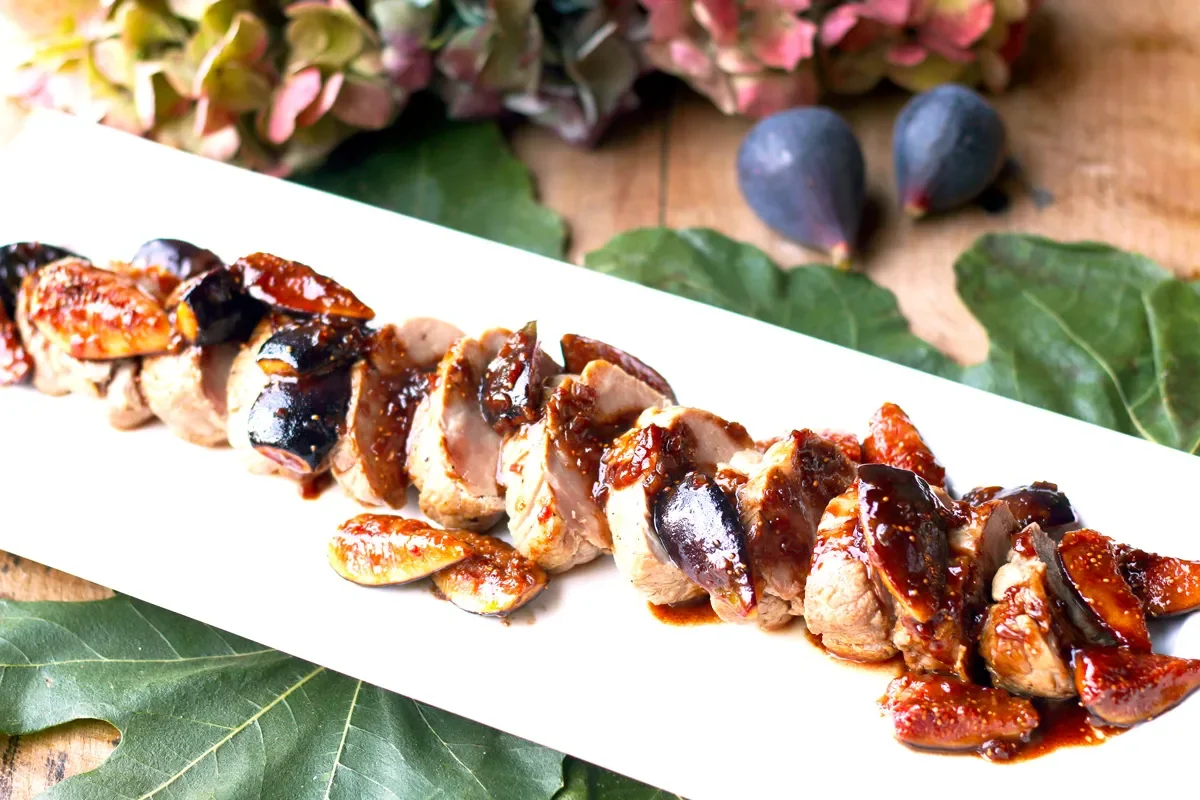
Pork tenderloin is seared, roasted and served with quartered figs in a glossy Marsala and balsamic butter sauce. It makes an elegant centrepiece, with a straightforward pan sauce that uses the browned bits left from searing.
Ingredients
- 680 g (1.5 pounds)pork tenderloin, at room temperature
- 8firm, ripe Black Mission figs
- 30 ml (2 tablespoons)extra virgin olive oil
- 45 g (3 tablespoons)cold unsalted butter, diced
- 1 smallshallot, finely chopped
- 120 ml (1/2 cup)dry Marsala wine or dry white wine
- 30 ml (2 tablespoons)balsamic vinegar from Modena
- To tastekosher or sea salt
- To tastefreshly ground black pepper
Instructions
- 1
Preheat the oven
Heat the oven to 190°C (375°F).
- 2
Trim the tenderloin
Set the pork on a cutting board. Trim away excess fat, then remove the silver skin by sliding a thin, sharp knife beneath it and loosening it before pulling or cutting it off in strips.
- 3
Tie the pork
If the tenderloin has a long, thin tail, fold it underneath. Tie the pork with kitchen string at 4 cm (1½-inch) intervals to help it keep a rounded shape and cook evenly.
- 4
Prepare the figs
Wipe the figs with a damp paper towel and cut them lengthways into quarters.
- 5
Heat the pan
Set a large, heavy frying or sauté pan over medium-high heat.
- 6
Season the pork
Pat the pork dry with paper towels, then season generously all over with salt and pepper.
- 7
Sear the tenderloin
Pour the olive oil into the hot pan. When it shimmers, add the pork and sear each of its four sides, turning once per side, until golden, about 8 to 10 minutes in total.
- 8
Roast the pork
Take the pan off the heat and move the pork to a baking sheet, keeping the pan for the sauce. Roast the pork in the centre of the hot oven until a thermometer in the thickest part reads 57–60°C (135–140°F), about 10 to 15 minutes.
- 9
Rest the meat
Transfer the pork to a carving board, loosely cover it with foil and leave it to rest for 10 minutes while you make the sauce.
- 10
Soften the shallot
Spoon off any excess grease from the pan and put it over medium heat. Add 30 g (2 tablespoons) of the butter, the shallot and 15 ml (1 tablespoon) water; season lightly with salt. Cook for 2 to 3 minutes, stirring now and then, until the shallot is soft and the water has evaporated.
- 11
Reduce the wine
Pour in the wine and scrape the bottom of the pan with a wooden spoon to loosen the browned bits. Boil for 2 to 3 minutes, until the alcohol fumes have evaporated.
- 12
Add the juices
Lower the heat and stir in any meat juices that have collected on the carving board.
- 13
Thicken the sauce
Let the sauce simmer gently until reduced and thickened to a medium consistency.
- 14
Finish the sauce
Turn off the heat, add the balsamic vinegar and whisk in the remaining 15 g (1 tablespoon) cold butter until the sauce is smooth and glossy and coats the back of a spoon. Taste and adjust the seasoning if needed.
- 15
Glaze the figs
Add the fig quarters and gently toss them in the sauce until glazed and just warmed through.
- 16
Slice the pork
Remove the string and cut the pork crosswise into 2 cm (3/4-inch) thick medallions.
- 17
Serve with sauce
Arrange the medallions in a neat row on a serving platter and spoon the fig sauce over them.
What is pork tenderloin with figs?
This dish pairs lean pork tenderloin with sweet figs and a savoury, wine-based pan sauce. Marsala and balsamic bring depth and acidity, while butter gives the sauce a smooth finish.
The recipe draws on Italian ingredients such as Marsala, balsamic vinegar and figs, without requiring a complicated preparation. Searing the pork first and using the same pan for the sauce connects the browned meat and fruit.
Nutrition and macros by portion
The nutrition label shows one serving as written: 460 calories, 40g protein, 20g carbs, 22g fat.
| Portion | Adjustment | kcal | Protein | Carbs | Fat |
|---|---|---|---|---|---|
| Lighter | Use less finishing butter | 322 kcal | 28g | 14g | 15g |
| This serving | As written | 460 kcal | 40g | 20g | 22g |
| Hungry | Serve with extra potatoes | 690 kcal | 60g | 30g | 33g |
Pork provides most of the protein, while the figs contribute carbohydrates and natural sugars. Olive oil and butter supply much of the fat; serve a moderate amount of potatoes or bread alongside and add green vegetables to round out the plate.
Choosing the ingredients
Pork tenderloin: Bring it to room temperature as specified, and choose a piece that is fairly even in thickness. Trimming the silver skin helps avoid tough, chewy strips.
Searing and roasting
Even shape: Folding under a thin tail and tying the tenderloin at regular intervals helps it cook more evenly. Dry the surface before seasoning so the meat can brown well.
Temperature: Sear all four sides until golden, then roast until the centre reaches 57–60°C (135–140°F), as the recipe directs. Use a thermometer in the thickest part rather than judging by colour alone.
Making the pan sauce
Browned bits: The residue from searing adds savoury flavour, so scrape it into the wine as it boils. Keep the pan at a gentle simmer after adding the meat juices and reduce until the sauce has a medium consistency.
Cold butter: Whisk the remaining butter in off the heat for a smooth, glossy finish. Add the figs only at the end so they warm and take on the sauce without cooking down too much.
Resting and slicing
Resting: Leave the pork loosely tented with foil for 10 minutes while the sauce is prepared. This gives the meat time to settle before slicing.
Medallions: Remove all the string before cutting crosswise into 2 cm (3/4-inch) slices. Arrange them on a platter and spoon the fig sauce over the top.
Timing the meal
The listed total time is 50 minutes, including preparation, searing, roasting and resting. Start the sauce while the pork rests so both can be ready to serve together.
What to serve alongside
A plain potato side, such as mashed or roasted potatoes, goes well with the sauce. For a fresher contrast, add a green salad or simply cooked green vegetables.
Recipe notes & tips
- Pat the tenderloin thoroughly dry before it goes into the hot oil.
- Turn the pork once on each side to brown all four sides evenly.
- Use a thermometer to check the thickest part of the tenderloin.
- Keep the reserved butter cold until it is time to finish the sauce.
- Add the figs near the end so they warm through without losing their shape.
Variations
- Use white wine: Choose a dry white wine instead of Marsala for a less sweet sauce.
- Try another fig: Use another firm, ripe fig variety if Black Mission figs are unavailable.
- Add herbs: Stir a little chopped fresh thyme into the shallots for an aromatic note.
- Serve with greens: Add simply cooked green beans or a crisp salad alongside the pork.
- Make it sharper: Add a small extra splash of balsamic at the end if you prefer a more pronounced tang.
Common mistakes to avoid
- Skipping the trim: Remove the silver skin so it does not leave tough strips on the cooked pork.
- Wet pork: Pat the surface dry before searing to help it form a golden crust.
- Uneven shape: Fold under a thin tail and tie the tenderloin so it cooks more evenly.
- Over-reducing the sauce: Simmer gently and stop when it reaches a medium consistency.
- Cooking the figs too long: Toss them in just until glazed and warmed through.
How to store
Refrigerate leftover pork and sauce in a covered container for up to 3 days. Reheat gently in a covered pan over low heat, adding a splash of water if the sauce has thickened; avoid prolonged heating, which can dry out the pork.
Frequently asked questions
Can I use dry white wine instead of Marsala?
Yes. The recipe gives dry white wine as an alternative; the sauce will be less distinctly Marsala-flavoured.
How do I know when the pork is ready?
Check the thickest part with a meat thermometer. The recipe's target is 57–60°C (135–140°F) before the 10-minute rest.
Do I need to peel the figs?
No peeling is specified. Wipe them clean and cut them lengthways into quarters.
Why tie the tenderloin?
Tying helps keep the pork rounded, particularly if one end is thin, for more even cooking.
Can I make the sauce while the pork roasts?
The method makes the sauce while the pork rests, using the meat juices collected on the carving board. This keeps the steps together and lets the sauce finish just before serving.
Cook it from the original
This recipe comes from appetitomagazine.com. Their page has the author’s own photos, notes and tips — the best place to cook it from.
Open the recipe on appetitomagazine.com