
Roasted beef tenderloin with beurre blanc
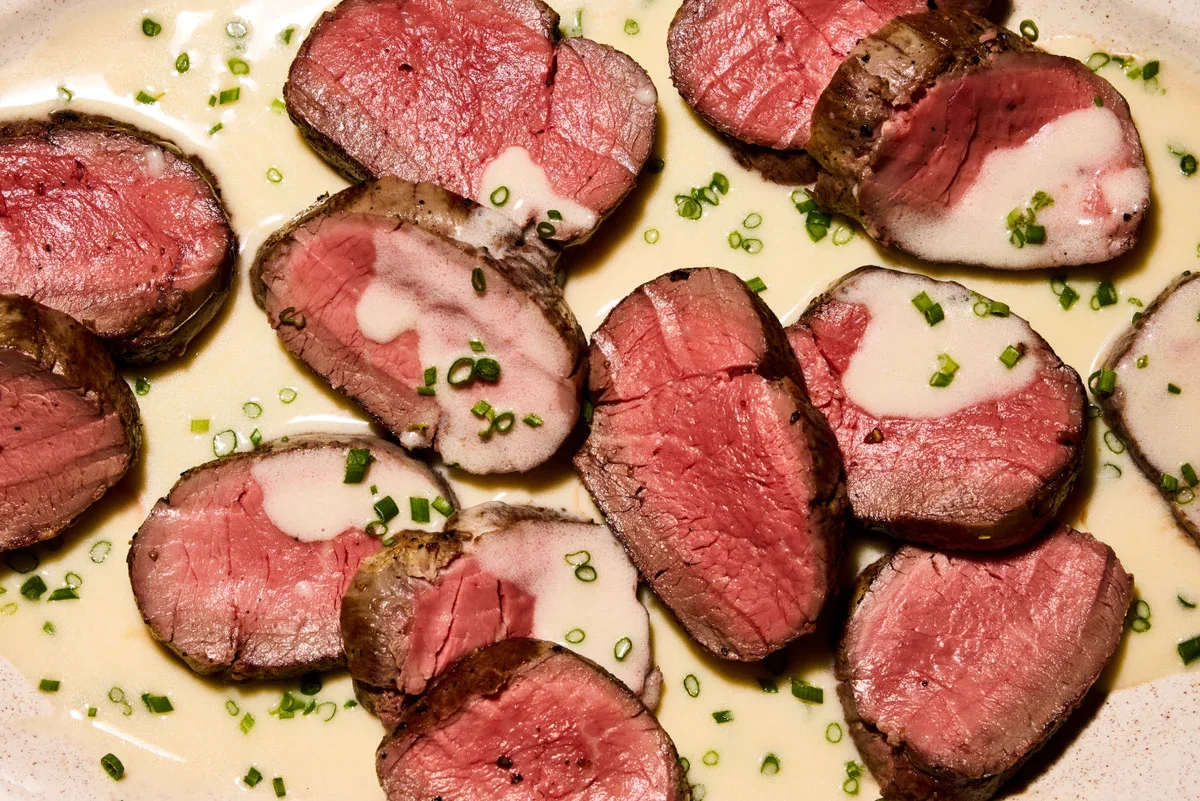
Roasted beef tenderloin is seared for a browned exterior, then finished in the oven and served with a tangy, creamy beurre blanc. It makes a celebratory centrepiece, with a simple roast-and-rest method and a rich sauce for the platter.
Ingredients
- 1.36–1.81 kg (3–4 lb)beef tenderloin, trimmed and tied with butcher’s twine
- to tastekosher salt and freshly cracked black pepper
- 45 ml (3 tbsp)olive oil
- about 40 g (¼ cup)diced shallot
- 80 ml (⅓ cup)white wine vinegar
- 80 ml (⅓ cup)dry white wine
- 120 ml (½ cup)double cream
- 227 g (2 sticks; 8 oz)unsalted butter, cubed and chilled
- to tastethinly sliced fresh chives or chopped flat-leaf parsley
- to tasteflaky salt
Instructions
- 1
Season the beef
Season the tenderloin all over with kosher salt and black pepper. Cover and chill overnight. Take it out of the fridge at least 3 hours before cooking so it can come to room temperature.
- 2
Heat the oven
Preheat the oven to 220°C (425°F).
- 3
Sear the tenderloin
Heat the olive oil in an extra-large cast-iron pan over medium-high heat. If your pan is not large enough, cut the beef into two pieces. Sear each side for about 3 minutes, until a brown crust forms.
- 4
Roast and rest
Transfer the pan to the oven and roast for 20–22 minutes. Check the centre with a meat thermometer; for medium-rare, aim for 49–52°C (120–125°F). Rest the meat for 15 minutes.
- 5
Roast and rest
Transfer the pan to the oven and roast for 20–22 minutes. Check the centre with a meat thermometer; for medium-rare, aim for 49–52°C (120–125°F). Rest the meat for 15 minutes.
- 6
Emulsify the butter
Off the heat, slowly pour in the double cream while whisking until fully incorporated. Return the pan to very low heat and whisk in the butter two cubes at a time, allowing each addition to melt and emulsify before adding the next. The finished beurre blanc should be creamy, tangy and silky.
- 7
Slice and serve
Cut the tenderloin into rounds about 6 mm (¼ inch) thick and arrange them on a platter. Spoon over the beurre blanc and any juices from the pan. Garnish with the herbs and, if desired, flaky salt and more cracked pepper.
What is beef tenderloin with beurre blanc?
Beef tenderloin is a particularly tender cut, often roasted whole for a special meal. Beurre blanc is a French butter sauce, traditionally associated with the Loire region, with a rich texture and a sharp, wine-and-vinegar tang.
Here, a browned sear and a short oven roast give the beef colour while keeping the centre rosy. The ingredient list includes shallot, vinegar and wine for the sauce, though the supplied method does not explain how to prepare those ingredients.
Nutrition and macros by portion
The nutrition label shows one serving as written: 1060 calories, 80g protein, 3g carbs, 78g fat.
| Portion | Adjustment | kcal | Protein | Carbs | Fat |
|---|---|---|---|---|---|
| Lighter | Less beurre blanc | 742 kcal | 56g | 2g | 55g |
| This serving | As written | 1060 kcal | 80g | 3g | 78g |
| Hungry | Larger beef portion | 1590 kcal | 120g | 5g | 117g |
The beef supplies most of the protein, while the butter, cream and olive oil contribute most of the fat and saturated fat. The wine and vinegar add only a small amount of carbohydrate; serve a moderate amount of sauce alongside vegetables and a suitable portion of potatoes or another starch to balance the plate.
Seasoning and tempering the beef
Overnight seasoning: Salt and pepper the whole surface before chilling the beef covered. This gives the seasoning time to work into the exterior.
Before roasting: Take the tenderloin out of the fridge at least 3 hours ahead, as directed. Keep it covered while it comes towards room temperature.
Building a good crust
Hot pan: Heat the oil over medium-high heat before adding the beef. Sear each side for about 3 minutes, looking for a distinctly browned crust rather than relying on the timer alone.
Room to move: The recipe calls for an extra-large cast-iron pan. If yours is too small, divide the tenderloin into two pieces so each can make good contact with the pan.
Checking doneness and resting
Use a thermometer: For the recipe’s medium-rare target, check for 49–52°C (120–125°F) in the centre after 20–22 minutes in the oven. The timing is a guide; thickness and oven performance affect how quickly the beef cooks.
Rest before slicing: Leave the tenderloin for 15 minutes after roasting. This gives you time to finish the sauce and helps keep the meat’s juices on the platter rather than running away as soon as it is cut.
Getting a silky beurre blanc
Cold butter: Add the chilled cubes gradually, two at a time, whisking over very low heat. Give each addition time to melt and blend into the cream before adding more.
Gentle heat: Keep the pan off the heat while incorporating the cream, then return it to very low heat for the butter. The provided method does not specify what to do with the shallot, vinegar and wine, so follow the publisher’s full recipe for that part of the sauce.
Serving the roast
Slice across the tenderloin into rounds about 6 mm (¼ inch) thick and arrange them on a warm platter. Spoon over the sauce and any juices collected in the roasting pan.
A crisp green salad, roasted vegetables or potatoes make practical sides. Keep the sauce in a jug at the table if you want each person to choose how much to add.
Recipe notes & tips
- Tie the tenderloin securely so it cooks more evenly along its length.
- Pat the surface dry before searing if it has become damp during chilling.
- Use a large pan that lets the meat make contact with the hot surface on each side.
- Check the thickest part of the tenderloin with a thermometer rather than judging the centre by colour.
- Slice the beef just before serving to limit the time it loses heat.
- Whisk the butter in slowly and keep the sauce over very low heat to help it stay smooth.
Variations
- Herb finish: Use chives or flat-leaf parsley, as listed, for a fresh garnish.
- Peppery finish: Add extra freshly cracked black pepper at the table.
- Smaller roast: Cut the tenderloin into two pieces if your pan cannot fit it whole.
- Sauce on the side: Serve the beurre blanc separately so diners can choose their own amount.
- Seasoned sides: Pair with simply cooked vegetables or potatoes to complement the rich sauce.
Common mistakes to avoid
- Crowding the pan: The beef may not brown well; divide it into two pieces if needed.
- Skipping the rest: Slicing straight away lets more juices escape; rest it for 15 minutes.
- Adding butter too quickly: The sauce may not emulsify smoothly; whisk in only two cubes at a time.
- Using high heat for the sauce: Excessive heat can spoil its silky texture; keep it very low.
- Relying only on the timer: Roasts vary in thickness; check the centre with a meat thermometer.
How to store
Refrigerate leftover beef and sauce promptly in separate airtight containers and use within 3 days. Reheat the beef gently until just warmed through; warm the sauce slowly over low heat while whisking, and avoid boiling it.
Frequently asked questions
Can I prepare the beef the day before?
Yes. Season it, cover it and refrigerate overnight as directed. Take it out at least 3 hours before cooking.
How do I know when the tenderloin is medium-rare?
Check the centre with a meat thermometer; the recipe gives 49–52°C (120–125°F) as its medium-rare target. Follow the recipe’s 15-minute resting time.
Can I roast the beef without a cast-iron pan?
The method specifies an extra-large cast-iron pan. It suggests cutting the meat into two pieces if the pan is not large enough; use an oven-safe pan for the oven stage.
Why has my beurre blanc split?
It may have become too hot or the butter may have been added too quickly. Keep the heat very low and whisk in the chilled cubes two at a time.
What should I serve with the tenderloin?
Try potatoes or another starch with green vegetables or a crisp salad. Their simpler flavours work well alongside the rich sauce.
How should I use the shallot, vinegar and wine?
They are listed as ingredients, but their preparation is not described in the supplied method. Check the publisher’s complete recipe for instructions before making the sauce.
Cook it from the original
This recipe comes from fromourplace.ca. Their page has the author’s own photos, notes and tips — the best place to cook it from.
Open the recipe on fromourplace.ca