
Schulyer's kimchijigae
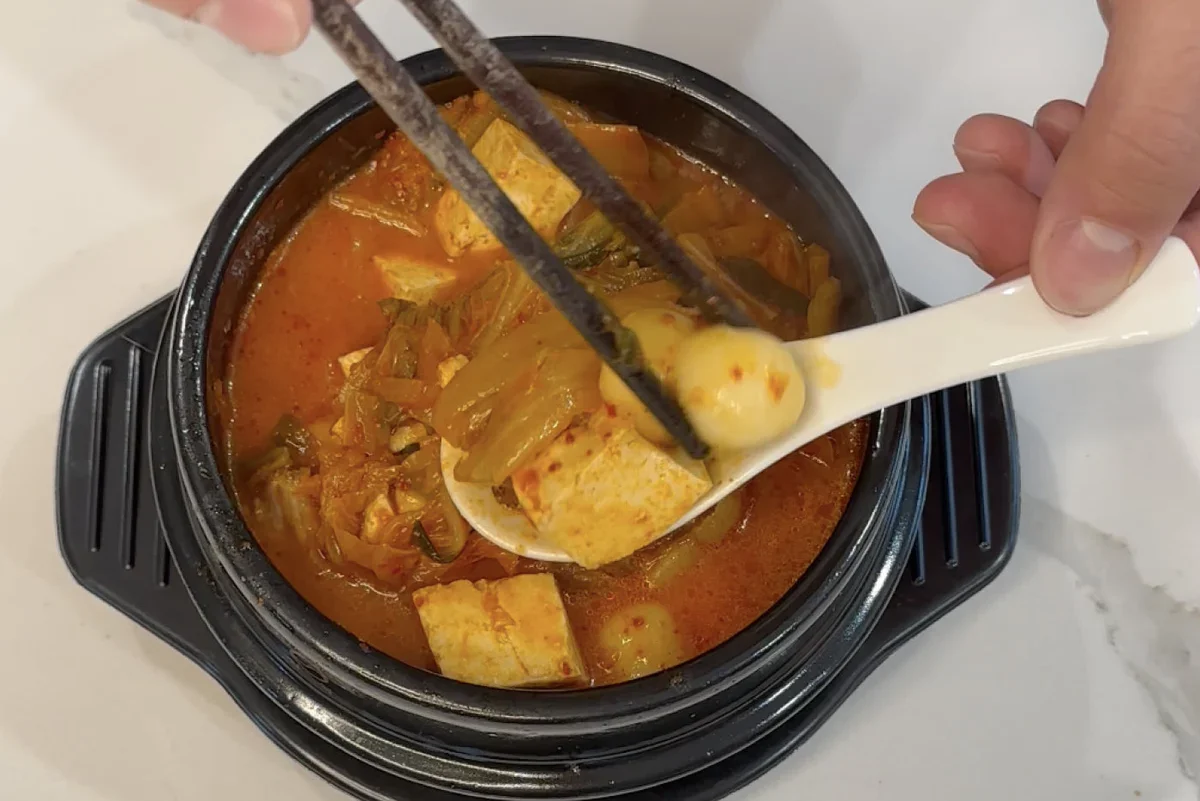
Schulyer’s kimchijigae is a hearty Korean stew of kimchi, pork ribs and tofu, with chewy rice cakes added just before serving. It’s a warming, generous pot of food that can be adjusted to your preferred level of spice.
Ingredients
- 454 g (1 pound)kimchi, with its juice
- 340–680 g (12–24 oz)tofu
- 1 bunchspring onions
- 240–480 ml (1–2 cups)rice cakes
- 30–45 ml (2–3 tablespoons)gochujang (Korean chilli paste)
- 30–45 ml (2–3 tablespoons)gochugaru (Korean chilli flakes)
- 950 ml (4 cups)water
- 6–8pork ribs
- 30–45 ml (2–3 tablespoons)neutral cooking oil, such as avocado oil
Instructions
- 1
Rinse the ribs
Rinse the pork ribs in water, then dry them well.
- 2
Slice the kimchi
Cut the kimchi into pieces about 2.5–4 cm (1–1½ inches) long and set aside.
- 3
Heat the pot
Heat a large pot over high heat. Once it is hot, add 30–45 ml (2–3 tablespoons) of neutral cooking oil.
- 4
Brown the ribs
Sear the ribs in the pot, turning them every few minutes so each side browns.
- 5
Add the kimchi
Layer all the kimchi over the ribs and pour in the kimchi juice from the jar.
- 6
Add the water
Pour in 950 ml (4 cups) of water, or enough for the water level to reach about the top of the kimchi.
- 7
Cook the stew
Lower the heat to medium-high and cook for 20 minutes.
- 8
Prepare the tofu
While the stew cooks, cut the tofu into cubes.
- 9
Chop the onions
Chop the spring onions.
- 10
Rinse the rice cakes
Rinse the rice cakes, or defrost them according to the packet instructions.
- 11
Stir the stew
Stir the stew, lifting the ribs from the bottom of the pot and mixing everything together.
- 12
Season to taste
Add gochujang and gochugaru to taste, bearing in mind that both are spicy.
- 13
Cook again
Let the stew cook for another 20 minutes.
- 14
Add tofu and onions
Add the tofu and three-quarters of the spring onions, reserving the rest for garnish.
- 15
Finish cooking
Cook for 5–10 minutes. The stew is ready at this point, though it can continue to simmer for hours; a longer simmer makes the ribs more tender and the stew more flavourful.
- 16
Cook the rice cakes
Add rice cakes only when you are ready to eat. Cook them in the stew over medium heat for about 5 minutes. Add them in batches if needed, as they can break down if left simmering for longer.
- 17
Garnish and serve
Serve in a Korean ttukbaegi (earthenware bowl) or a regular bowl, garnished with the reserved spring onions, alongside a bowl of rice.
What is kimchijigae?
Kimchijigae, also commonly written kimchi jjigae, is a Korean stew built around kimchi. It is a familiar, homely dish, with the fermented cabbage lending the broth its tangy, savoury character.
This version layers kimchi over browned pork ribs, then adds tofu and spring onions. The rice cakes go in at the end, so they stay pleasantly chewy.
Nutrition and macros by portion
The nutrition label shows one serving as written: 400 calories, 27g protein, 25g carbs, 21g fat.
| Portion | Adjustment | kcal | Protein | Carbs | Fat |
|---|---|---|---|---|---|
| Lighter | Use fewer ribs and less oil | 280 kcal | 19g | 18g | 15g |
| This serving | As written | 400 kcal | 27g | 25g | 21g |
| Hungry | Add more rice cakes | 600 kcal | 41g | 38g | 32g |
The pork ribs and tofu provide most of the protein, while rice cakes contribute much of the carbohydrate. Pork and cooking oil account for much of the fat, and kimchi, gochujang and gochugaru contribute flavour and some sodium. Serve with rice if you like, and balance the meal with an extra portion of vegetables.
Choosing the kimchi
Mukeunji: Well-aged kimchi gives the stew a deeper, more pronounced sourness. The recipe also works with fresh shop-bought kimchi, so use what you have.
Kimchi juice: Keep the liquid from the jar and add it with the kimchi. It brings extra flavour to the pot.
Browning the ribs
Dry first: Pat the rinsed ribs thoroughly dry so they can brown rather than steam in the pot.
Turn regularly: Brown each side over high heat, turning the ribs every few minutes. This step starts the cooking and builds savoury flavour before the kimchi and water go in.
Getting the broth right
Water level: Add the measured water, checking that it reaches about the level of the kimchi. The ingredients should cook together in the pot rather than be buried under excess liquid.
Chilli: Gochujang and gochugaru both bring heat. Add them to taste, especially if you prefer a milder broth.
When the stew is ready
Ribs: The stated cooking stages take 45–50 minutes after browning, including the final 5–10 minutes with tofu. A longer simmer can make the ribs more tender and the broth more flavourful.
Rice cakes: Add these just before eating and cook for about 5 minutes over medium heat. They are ready when warmed through and chewy; prolonged simmering can make them fall apart.
Serving the stew
Bowl: Serve it in a ttukbaegi or any deep bowl, with the reserved spring onions scattered on top.
Rice: A bowl of rice alongside makes a simple accompaniment and gives you something to eat with the richly flavoured broth.
Recipe notes & tips
- Dry the ribs well after rinsing to help them brown.
- Use the kimchi juice from the jar as well as the cabbage.
- Add gochujang and gochugaru gradually if you are unsure about the heat.
- Keep the rice cakes separate until close to serving time.
- Add rice cakes in batches if you expect to have leftovers.
- Reserve one-quarter of the chopped spring onions for the garnish.
Variations
- Older kimchi: Use mukeunji for a more deeply fermented, tangy flavour.
- Milder broth: Start with less gochujang and gochugaru, then season to taste.
- Extra tofu: Use the larger amount of tofu for more cubes in each bowl.
- No rice cakes: Leave them out and serve the stew with a bowl of rice.
- Longer simmer: Let the stew simmer longer for more tender ribs and a fuller-flavoured broth.
Common mistakes to avoid
- Wet ribs: They are less likely to brown; dry them thoroughly before searing.
- Skipping the kimchi juice: The broth misses out on its flavour; add the juice from the jar.
- Adding too much chilli at once: The stew may become hotter than you want; season to taste.
- Adding rice cakes too early: They can disintegrate during a long simmer; add them just before serving.
- Leaving rice cakes in leftovers: They can lose their chewy texture; cook only the amount you plan to eat.
How to store
Refrigerate leftover stew in a covered container and use within 3 days. Reheat it in a saucepan until hot throughout; cook rice cakes separately in the reheated stew for about 5 minutes, adding only what you plan to serve.
Frequently asked questions
Can I use fresh, shop-bought kimchi?
Yes. The recipe uses shop-bought kimchi as well as noting that older, well-fermented kimchi works especially well.
What is mukeunji?
Mukeunji is aged kimchi. A Korean market may stock it, but regular kimchi can be used here too.
How spicy is this stew?
Gochujang and gochugaru are both spicy, and the recipe gives a range so you can adjust them to taste. Start at the lower end if you prefer a gentler heat.
Can I simmer the stew for longer?
Yes. The recipe says a longer simmer can make the ribs more tender and the stew more flavourful. Wait to add the rice cakes until you are ready to eat.
When should I add the rice cakes?
Add them just before serving and cook for about 5 minutes over medium heat. They can lose their chewy texture if they simmer for too long.
What should I serve with kimchijigae?
Serve it garnished with chopped spring onions, alongside a bowl of rice.
Cook it from the original
This recipe comes from fromourplace.ca. Their page has the author’s own photos, notes and tips — the best place to cook it from.
Open the recipe on fromourplace.ca