
Biko pandan
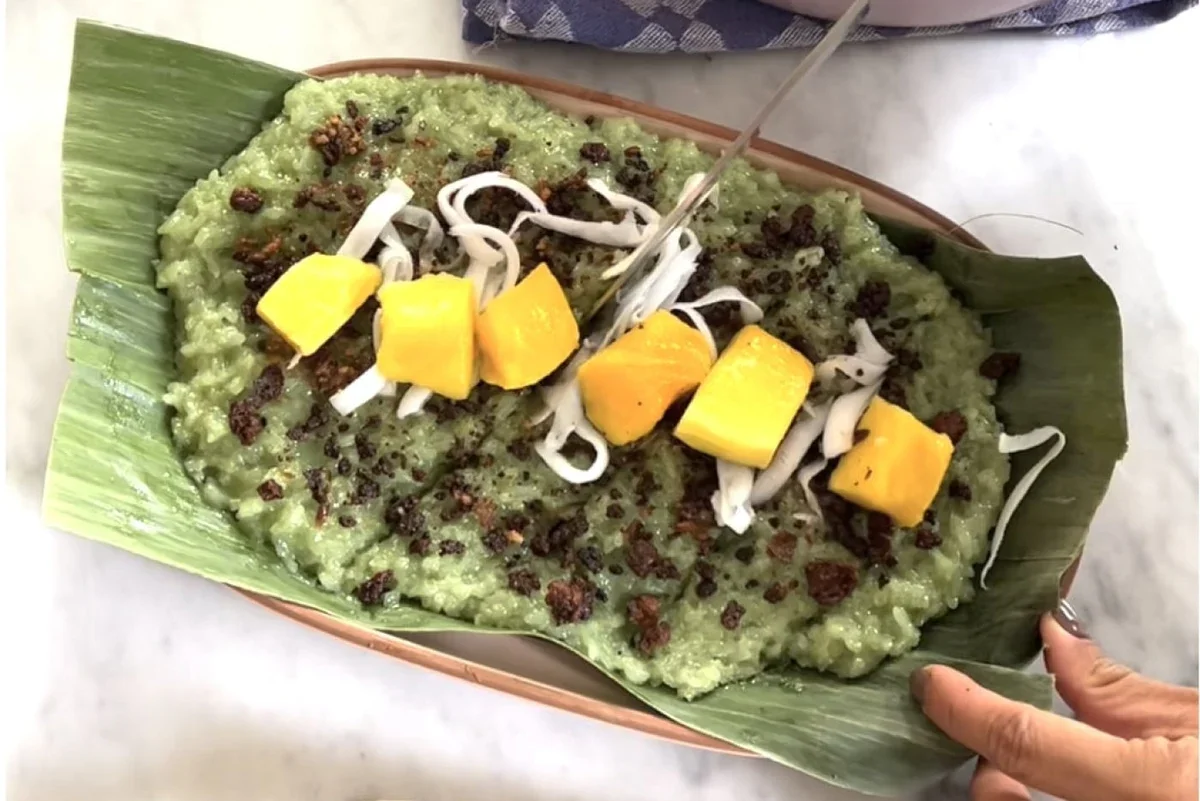
Biko pandan is a chewy Filipino rice cake made with glutinous rice, coconut milk, brown sugar and fragrant pandan. This version is finished with homemade latik and fresh fruit for a sweet, aromatic dessert with contrasting textures.
Ingredients
- 400 g (2 cups)glutinous rice
- 240 ml (1 cup)water
- 240 ml (1 cup)coconut milk
- a fewpandan leaves, dried or fresh
- 480 ml (2 cups)coconut milk
- to tastecooked rice
- 240 ml (1 cup)coconut milk
- 60 ml (1/4 cup)pandan extract
- 100 g (1/2 cup)brown sugar
- to tastebanana leaves
- to tastefresh fruit of your choice, such as coconut and mango
Instructions
- 1
Make the latik
Bring 480 ml (2 cups) of coconut milk to the boil in a pan over medium heat, until the coconut cream separates from the oil. Lower the heat and cook for 30–45 minutes, stirring occasionally at first to prevent burning. Once curds begin to form, stir more often until golden brown. Remove from the heat and leave to cool completely.
- 2
Cook the rice
Rinse the rice, then put it in a non-stick pot with 240 ml (1 cup) water, 240 ml (1 cup) coconut milk and the pandan leaves. Bring to the boil over medium-high heat, stir, then turn the heat to low and cover. Cook until the rice is fluffy, then leave it to cool.
- 3
Simmer the biko
Transfer the cooked rice to a separate large pan or pot. Add 240 ml (1 cup) coconut milk, 60 ml (1/4 cup) pandan extract and 100 g (1/2 cup) brown sugar. Stir and simmer until the mixture thickens to a rice-pudding consistency.
- 4
Garnish and serve
Line a serving platter with banana leaves and spread the biko evenly over them. Garnish with the cooled latik and add fresh fruit, such as coconut and mango, to complement the pandan.
What is biko pandan?
Biko is a Filipino rice cake traditionally made from glutinous rice, coconut milk and brown sugar. This version adds pandan, a fragrant leaf widely used in Southeast Asian cooking, for a sweet, grassy aroma.
Latik brings a toasted coconut finish, while fresh coconut and mango add a fresh contrast to the sticky, rich rice.
Nutrition and macros by portion
The nutrition label shows one serving as written: 607 calories, 6g protein, 95g carbs, 23g fat.
| Portion | Adjustment | kcal | Protein | Carbs | Fat |
|---|---|---|---|---|---|
| Lighter | Smaller piece, more fruit | 425 kcal | 4g | 67g | 16g |
| This serving | As written | 607 kcal | 6g | 95g | 23g |
| Hungry | Larger piece | 911 kcal | 9g | 143g | 35g |
Most of the carbohydrates come from the glutinous rice and brown sugar, while coconut milk and latik contribute most of the fat and saturated fat. Rice and coconut milk provide some protein, but the amount depends on the products used. Serve a moderate piece with fresh mango or other fruit for a fresher, more varied plate.
The rice and pandan
Glutinous rice: its high starch content gives biko its characteristic chewy, cohesive texture. Rinsing it first helps remove loose surface starch.
Pandan: the leaves infuse the rice as it cooks, while pandan extract is stirred in later for a more pronounced flavour. The recipe calls for both, so add each at its specified stage.
Making latik
Slow separation: simmering coconut milk gently allows its cream and oil to separate and the solids to form curds. Keep the heat low after it comes to the boil.
Watch the colour: stir more frequently once curds appear, as they can catch on the pan. Take the latik off the heat when golden brown and let it cool fully before garnishing.
Getting the right consistency
Cooked rice: the first stage is complete when the grains are fluffy and tender. Leave the rice to cool before moving on to the next stage.
Thickened biko: simmer the rice with coconut milk, pandan extract and sugar until it resembles rice pudding. Stir as it thickens so the mixture cooks evenly.
Serving the biko
Banana leaves: use them to line the platter before spreading out the biko. They make an attractive base for serving.
Fresh fruit: coconut and mango are suggested accompaniments that work well with pandan. Add them just before serving so they retain their fresh texture.
Timing and preparation
The listed total time is 60 minutes, though making latik involves 30–45 minutes of low simmering. You can prepare it while the rice cooks, keeping an eye on both pans.
Allow time for the latik to cool completely and for the cooked rice to cool before continuing with the method.
Recipe notes & tips
- Use a heavy-based pan for the latik to help distribute the heat evenly.
- Stir more often as the coconut curds start to form.
- Keep the rice covered on low heat while it cooks.
- Let the rice cool before stirring in the remaining coconut milk and sugar.
- Spread the biko evenly over the banana leaves for easier serving.
- Add the fruit close to serving time to keep it fresh.
Variations
- Mango topping: add sliced mango just before serving for juicy freshness.
- Fresh coconut: scatter over fresh coconut for extra texture and flavour.
- Pandan aroma: use fresh pandan leaves when available for the rice-cooking stage.
- Individual portions: divide the biko between banana-leaf-lined serving dishes.
- Latik finish: add the cooled coconut curds across the top for a toasted garnish.
Common mistakes to avoid
- High heat for latik: the coconut solids can burn; lower the heat after the milk boils.
- Infrequent stirring at the end: curds can stick and scorch; stir more often as they form.
- Stopping the latik too soon: wait until the curds turn golden brown.
- Skipping the rice rinse: rinse the glutinous rice before cooking as directed.
- Adding garnish too early: let the latik cool completely before topping the biko.
How to store
Store leftover biko in a covered container in the fridge for up to 3 days. Reheat gently in the microwave or in a covered pan until warmed through; the rice may firm up when chilled.
Frequently asked questions
What is latik?
Latik is made here by simmering coconut milk until the cream and oil separate and the coconut solids turn golden brown. It is used as a garnish for the biko.
Can I use dried pandan leaves?
Yes. The ingredient list allows either dried or fresh pandan leaves for cooking the rice.
How do I know when the rice is cooked?
The method describes it as fluffy. Keep the pot covered and cook over low heat after bringing it to the boil.
Why does the biko need to simmer after the rice is cooked?
The cooked rice is simmered with coconut milk, pandan extract and brown sugar until the mixture thickens to a rice-pudding consistency.
Can I make the latik ahead?
Yes. The method already calls for cooling it completely before serving, so you can prepare it in advance and keep it covered until needed.
Cook it from the original
This recipe comes from fromourplace.ca. Their page has the author’s own photos, notes and tips — the best place to cook it from.
Open the recipe on fromourplace.ca