
Italian meringue
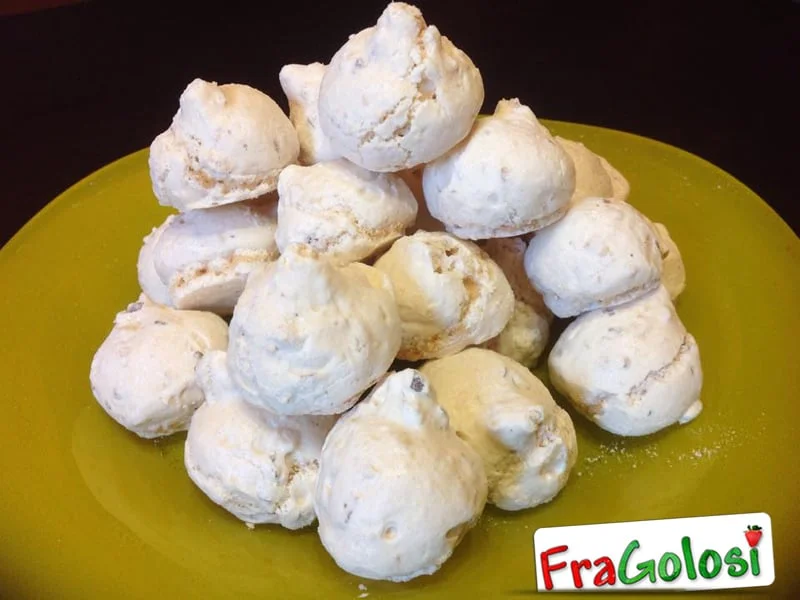
Italian meringue is made by beating hot sugar syrup into whipped egg whites, then drying the mixture slowly in the oven. It makes crisp, pale meringues with a dense, glossy interior and is a good way to use a small number of egg whites.
Ingredients
- 100 gcaster sugar
- 2very fresh egg whites, at room temperature
- 1 pinchvanilla
- 2 dropslemon juice
- 1 tablespoonwater
Instructions
- 1
Make the syrup
Put the water, sugar and lemon juice in a pan and cook to make a sugar syrup.
- 2
Cook the sugar
Continue cooking the syrup until it reaches the hard-ball stage.
- 3
Whip the whites
Beat the egg whites until very stiff, adding the vanilla.
- 4
Add the syrup
Pour the cooked sugar into the egg whites while beating, then continue beating for about 5 minutes.
- 5
Fill the piping bag
Once the mixture is very thick, transfer it to a piping bag fitted with a plain or star nozzle.
- 6
Pipe the meringues
Pipe walnut-sized or larger mounds, spaced well apart, onto a baking tray lined with buttered baking paper.
- 7
Dry the meringues
Bake at a low temperature of about 60–70°C for 2–3 hours.
- 8
Check the oven
Bear in mind that the drying time depends on the type of oven you use.
- 9
Vent the oven
If your oven is not fan-assisted, leave its door slightly ajar. The meringues should lose moisture rather than cook.
- 10
Cool completely
Keep the meringues pale; a brownish colour means they have been dried for too long. Leave them to cool.
What is Italian meringue?
Italian meringue is a style of meringue in which hot sugar syrup is beaten into whipped egg whites. It is associated with Italian pastry-making and differs from a simple uncooked egg-white mixture because the syrup is cooked before it is added.
This version pipes the thick mixture into individual mounds and dries them slowly at a very low temperature. The lemon juice and vanilla add small flavour accents without changing the meringue’s pale appearance.
Nutrition and macros by portion
The nutrition label shows one serving as written: 47 calories, 1g protein, 10g carbs, 0g fat.
| Portion | Adjustment | kcal | Protein | Carbs | Fat |
|---|---|---|---|---|---|
| Lighter | Smaller piped meringues | 33 kcal | 0g | 7g | 0g |
| This serving | As written | 47 kcal | 1g | 10g | 0g |
| Hungry | Larger portion | 71 kcal | 1g | 15g | 0g |
Most of the energy and carbohydrate in each serving comes from the sugar; egg whites provide a small amount of protein, while fat is negligible. Pair a meringue with fresh fruit and plain yoghurt or cream for a more substantial plate.
The ingredients that matter
Egg whites: use very fresh whites, as specified, and bring them to room temperature so they can whip readily. Take care that no yolk gets into them.
Sugar syrup: the sugar, water and lemon juice are cooked together to the hard-ball stage before being poured into the whites. The recipe uses only a tablespoon of water, so keep a close eye on the pan as the syrup cooks.
Vanilla: add the pinch while whipping the whites for a subtle aroma. A plain meringue remains lightly flavoured, which suits serving it with fruit or cream.
Getting the syrup right
Hard-ball stage: this is the key cue in the method; the syrup needs to reach the stated stage before it goes into the whites. A sugar thermometer can help you monitor it, while a reliable stage test is useful if you do not have one.
Pouring: add the syrup to the whites while beating, rather than letting it sit and cool in the pan. Keep the stream controlled so it is incorporated into the mixture.
Whipping to a thick mixture
Stiff whites: beat until the whites hold very firm peaks before adding the syrup. A clean, grease-free bowl helps the whites whip properly.
After the syrup: continue beating for about 5 minutes, as directed. The mixture should become dense enough to hold its shape when piped.
Drying rather than browning
Low heat: the oven is set to about 60–70°C, and the meringues need 2–3 hours. The aim is to remove moisture slowly, not to brown or cook them quickly.
Oven variation: drying time depends on the oven. If it is not fan-assisted, the recipe calls for the door to remain slightly ajar so moisture can escape; watch for any colour change.
Piping and serving
Shape: use a plain or star nozzle and make walnut-sized mounds, or larger ones if you prefer. Leave space between them on the lined tray.
Serving: let the meringues cool fully before serving. They work well alongside fresh fruit or as a crisp element with a spoonful of cream.
Recipe notes & tips
- Make sure the bowl and beaters are clean and free from grease before whipping the egg whites.
- Separate the eggs carefully so no yolk gets into the whites.
- Use a thermometer or a dependable sugar-stage test to judge when the syrup reaches hard-ball stage.
- Pipe the mounds evenly so they dry at a similar rate.
- Keep the meringues pale; check them as the drying time approaches its end.
Variations
- Citrus note: replace the vanilla with a little finely grated lemon zest for a brighter aroma.
- Different flavour: use a pinch of another extract in place of the vanilla.
- Smaller shapes: pipe petite mounds for bite-sized meringues and check them earlier as they dry.
- Larger nests: make wider, shallower shapes for serving with fruit.
- Serving idea: pair the cooled meringues with berries and a spoonful of cream.
Common mistakes to avoid
- Greasy bowl: the whites may not whip properly; use a clean, grease-free bowl and beaters.
- Yolk in the whites: even a little can hinder whipping; separate each egg carefully.
- Syrup short of hard-ball stage: the mixture may not reach the intended thickness; cook the syrup to the stated stage.
- Crowded tray: the mounds may not dry evenly; leave space between them.
- Oven too hot: the meringues can brown instead of drying; keep the temperature around 60–70°C.
- Door closed in a non-fan oven: moisture can linger; leave the door slightly ajar as directed.
How to store
Once completely cool, store the meringues in an airtight container in a dry place; moisture can make them sticky or soft. They are best eaten while crisp, and reheating is not recommended.
Frequently asked questions
Why is this called Italian meringue?
It is made by beating cooked sugar syrup into whipped egg whites, a technique associated with Italian meringue.
What does hard-ball stage mean?
It is a stage in cooking sugar syrup. Use a sugar thermometer or a reliable sugar-cooking stage test to check it.
Can I use egg whites straight from the fridge?
The recipe specifies room-temperature whites. Let them come to room temperature before whipping.
Why are my meringues browning?
They may be drying for too long or at too high a temperature. Keep the oven around 60–70°C and remove them if they start to colour.
How do I know when they are done?
They should remain pale and dry out as they lose moisture. The recipe gives a 2–3 hour range, but the exact time depends on your oven.
Can I make the meringues ahead?
Yes. Cool them completely and store them in an airtight container in a dry place to help keep them crisp.
Cook it from the original
This recipe comes from fragolosi.it. Their page has the author’s own photos, notes and tips — the best place to cook it from.
Open the recipe on fragolosi.it