
Tuna mousse and Emmental canapés
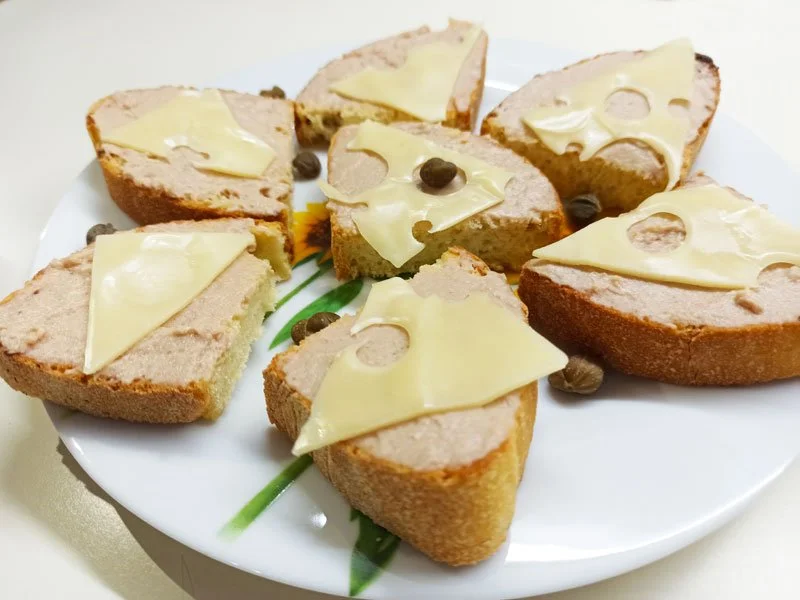
These Italian-style canapés pair crisp slices of bread with a savoury tuna, olive and egg mousse, finished with Emmental. They come together quickly and make an easy starter or party snack.
Ingredients
- 12 slicesbread
- 180 gtuna in oil
- 50 gpitted green olives
- 15 ml (1 tablespoon)rinsed capers
- 2hard-boiled eggs
- 15 ml (1 tablespoon)lemon juice
- 75 ml (5 tablespoons)mayonnaise
- As neededextra-virgin olive oil
- As neededEmmental
- Very little salt, and to tastesalt and black pepper
Instructions
- 1
Cut the bread
Cut the bread into 12 slices.
- 2
Prepare the mousse
Prepare the tuna mousse.
- 3
Drain the tuna
Drain the tuna, flake it and put it in a bowl.
- 4
Chop the olives
Finely chop the olives and capers, then add them to the tuna.
- 5
Add the egg
Finely chop the egg yolks and add them to the mixture with the mayonnaise and a drizzle of olive oil.
- 6
Mix and season
Stir everything together, adjusting the seasoning with very little salt and some black pepper.
- 7
Assemble the canapés
Spread the mixture over the bread slices and decorate each one with a small piece of Emmental.
What are tuna mousse and Emmental canapés?
These small Italian-style appetisers are slices of bread topped with a creamy tuna mixture and a piece of Emmental. The topping combines tuna with olives, capers, egg and mayonnaise for a salty, savoury flavour.
The recipe’s appeal is its contrast of soft mousse and firm cheese against bread. The combination of pantry ingredients also makes it straightforward to prepare for a gathering.
Nutrition and macros by portion
The nutrition label shows one serving as written: 343 calories, 17g protein, 30g carbs, 18g fat.
| Portion | Adjustment | kcal | Protein | Carbs | Fat |
|---|---|---|---|---|---|
| Lighter | Use less mayonnaise | 240 kcal | 12g | 21g | 13g |
| This serving | As written | 343 kcal | 17g | 30g | 18g |
| Hungry | Add another canapé | 515 kcal | 26g | 45g | 27g |
The bread supplies most of the carbohydrates, while the mayonnaise and olive oil contribute much of the fat. Tuna, egg and Emmental provide protein, with olives and capers adding flavour and some extra salt. Balance a serving with a green salad or crunchy vegetables.
Build the tuna mixture
Tuna: drain it well before flaking so the mousse does not become watery.
Olives and capers: chop them finely to spread their briny flavour evenly through the mixture.
Egg and mayonnaise: finely chopped yolks help bind the tuna, while mayonnaise gives the topping its creamy texture.
Season with a light hand
The tuna, olives, capers and mayonnaise can all bring plenty of salt, so start with very little salt as the recipe suggests. Mix in black pepper and taste before adding any more.
A little lemon juice brightens the rich mixture. Add it with the other ingredients, keeping the balance in mind as you season.
Get the texture right
Chop the olives, capers and egg yolks finely, but leave the tuna slightly flaky rather than mashing everything into a paste. The result should be easy to spread while still having some texture.
If the mixture seems loose, check that the tuna has been drained thoroughly. If it is difficult to spread, mix it again to distribute the mayonnaise and oil.
Choose and prepare the bread
Even slices help the canapés look neat and make portions easier to serve. The recipe does not specify toasting the bread, so use it as sliced unless you prefer a firmer base.
Spread the mousse close to serving time if you want the bread to keep its texture. Finish each slice with a small piece of Emmental.
Serve as a starter
Serve the canapés as an appetiser or part of a cold buffet. Their rich, savoury topping pairs well with a crisp green salad or raw vegetables.
For a larger spread, make them alongside other small bites and offer lemon wedges or extra pepper at the table.
Recipe notes & tips
- Drain the tuna thoroughly before mixing it into the topping.
- Chop the olives, capers and egg yolks finely so they distribute evenly.
- Begin with very little salt because several ingredients are already salty.
- Use a small piece of Emmental on each canapé so it complements rather than covers the mousse.
- Assemble close to serving time to help the bread retain its texture.
Variations
- Add parsley: finely chop a little fresh parsley into the tuna mixture.
- Use a different cheese: top each canapé with a small piece of another mild, firm cheese.
- Add lemon zest: grate a little zest into the mousse for a brighter citrus note.
- Try seeded bread: use seeded slices for a more textured base.
- Make it peppery: add extra freshly ground black pepper to the mixture.
Common mistakes to avoid
- Watery topping: drain the tuna well before flaking it into the bowl.
- Large olive pieces: chop the olives and capers finely for a more even spread.
- Too much salt: season cautiously because the tuna, olives and capers are savoury.
- Overmixing: combine the ingredients until spreadable while keeping some tuna texture.
- Soggy bread: spread the mousse shortly before serving rather than well in advance.
How to store
Keep any leftover tuna mixture covered in the fridge and use within 1–2 days. Store assembled canapés separately if possible, as the topping will soften the bread; serve them chilled rather than reheating.
Frequently asked questions
Can I make the tuna mousse ahead?
Yes. Mix it in advance, cover it and refrigerate it, then spread it on the bread shortly before serving.
Should I toast the bread?
The method calls for sliced bread but does not specify toasting. Toast it lightly if you would like a firmer base.
Can I use tuna in water?
Yes. Drain it well and add the olive oil gradually, as the tuna may be less rich than tuna packed in oil.
How much Emmental should I use?
The recipe gives no fixed amount; use a small piece to decorate each of the 12 canapés.
Can I leave out the capers?
Yes, though the topping will lose some of its sharp, briny flavour. Taste the mixture and adjust the lemon and pepper to suit.
How can I stop the bread going soft?
Drain the tuna carefully and assemble the canapés close to serving time. If you like, lightly toast the bread first.
Cook it from the original
This recipe comes from fragolosi.it. Their page has the author’s own photos, notes and tips — the best place to cook it from.
Open the recipe on fragolosi.it