
Milanese cutlet
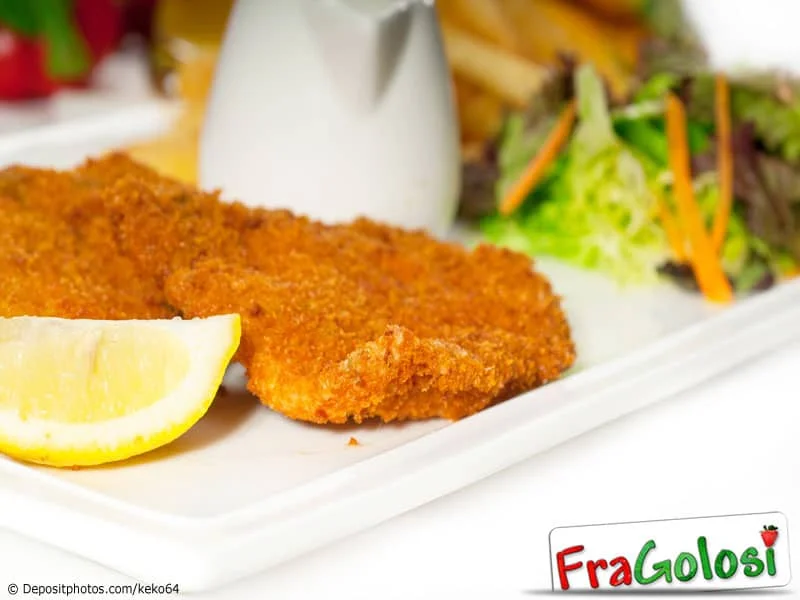
A classic Lombard main course, Milanese cutlet is a bone-in veal chop coated in breadcrumbs and fried in butter. Its crisp crust and tender centre make it a satisfying dish to serve simply with a fresh side.
Ingredients
- 4bone-in veal loin chops, at least 2 cm thick
- 2eggs
- to taste (optional)plain flour
- 250 gbreadcrumbs
- to tastebutter
Instructions
- 1
Coat the chops
If using flour, coat each chop in it first. Dip the chops in beaten eggs, then coat them with breadcrumbs.
- 2
Press the coating
Press the breadcrumbs gently with your hand so they adhere well to both sides of each chop.
- 3
Add a second coating
For a more secure crust, repeat the egg and breadcrumb coating so it is less likely to come away during cooking.
- 4
Melt the butter
Add plenty of butter to a frying pan, preferably a non-stick one, and let it melt.
- 5
Fry the cutlets
Cook one cutlet at a time over a low heat, turning it so both sides become golden.
- 6
Allow five minutes
Cook each side for about 5 minutes.
- 7
Season and serve
Salt the cutlets at the end of cooking. They should be crisp outside and soft, rosy inside.
What is a Milanese cutlet?
The Milanese cutlet is a Lombard dish made with a bone-in veal chop coated in breadcrumbs and fried in butter. This version follows the classic combination of a substantial chop and a crisp, golden coating.
Keeping the bone in and choosing chops at least 2 cm thick helps the meat stay tender while the outside browns.
Nutrition and macros by portion
The nutrition label shows one serving as written: 650 calories, 38g protein, 47g carbs, 31g fat.
| Portion | Adjustment | kcal | Protein | Carbs | Fat |
|---|---|---|---|---|---|
| Lighter | Use less butter | 455 kcal | 27g | 33g | 22g |
| This serving | As written | 650 kcal | 38g | 47g | 31g |
| Hungry | Add a larger side | 975 kcal | 57g | 71g | 47g |
The breadcrumbs provide most of the carbohydrates, while butter and the egg coating contribute much of the fat. Veal and eggs provide protein; the actual amounts depend on the size of the chops and how much butter is used. Pair a cutlet with vegetables or salad for a more balanced plate.
Choosing the coating
Flour: It is optional, but a light layer can help the egg cling to the meat.
Breadcrumbs: The recipe uses 250 g for four chops. Press them onto both sides so the coating stays in place as the cutlets cook.
Double coating: Repeating the egg and breadcrumb layers gives the crust extra hold, as the method recommends.
Frying gently in butter
Use plenty of butter in a frying pan, preferably non-stick, and let it melt before adding a cutlet. Keep the heat low so the coating has time to turn golden without scorching.
Cook one cutlet at a time. This gives you room to turn it carefully and watch how the crust is colouring.
How to judge doneness
Timing: Allow about 5 minutes per side, as in the recipe. The cutlet should be golden on both sides.
Texture: The intended result is a crisp outside and a soft, rosy centre. The thickness of the chops can affect how quickly they cook, so use the stated time as a guide alongside these cues.
Serving the cutlets
Serve the cutlets shortly after frying, while the breadcrumb crust is crisp. A fresh salad or simply cooked vegetables make a good contrast to the buttery coating.
Keep accompaniments straightforward so the tender veal and golden crust remain the focus.
Salting at the end
The method seasons the cutlets after cooking. This keeps the instruction simple and lets you adjust the salt to taste at the table.
Handle the cooked cutlets gently when seasoning so the crisp coating stays intact.
Recipe notes & tips
- Choose bone-in chops that are at least 2 cm thick.
- Beat the eggs thoroughly so they coat the chops evenly.
- Press the breadcrumbs gently onto both sides.
- Try the recommended double coating if the crumb layer seems loose.
- Fry one cutlet at a time over a low heat.
- Salt the cutlets after frying, as directed.
Variations
- Skip the flour: Leave it out for a simpler coating.
- Double the crust: Repeat the egg and breadcrumb layers for a sturdier coating.
- Use a fresh side: Serve with salad or vegetables alongside.
- Adjust the butter: Use less in the pan if you prefer a less buttery result.
- Cook to preference: Keep the centre rosy or allow more cooking time if you prefer it less pink.
Common mistakes to avoid
- Loose breadcrumbs: Press the coating gently onto both sides before frying.
- Coating coming away: Use the recommended double coating to help it adhere.
- Scorching the crust: Keep the heat low while frying.
- Crowding the pan: Fry one cutlet at a time, as the method specifies.
- Overcooking the meat: Check the cutlet around the 5-minute-per-side mark and look for a soft, rosy centre.
How to store
Refrigerate leftovers in a covered container and eat within 2 days. Reheat in a frying pan or oven until hot; the coating may be less crisp than when freshly cooked.
Frequently asked questions
Is the flour essential?
No. The recipe marks it as optional; the chops can be dipped in egg and then breadcrumbs without it.
Why use a double coating?
The extra layer helps the breadcrumbs stay attached to the meat during frying.
How long should I fry each cutlet?
The recipe suggests about 5 minutes per side over a low heat. Look for a golden crust and a soft, rosy centre.
Should I cook all the cutlets together?
No. Fry one at a time, as directed, so each can brown evenly and be turned easily.
When should I add salt?
The method says to salt the cutlets at the end of cooking.
Cook it from the original
This recipe comes from fragolosi.it. Their page has the author’s own photos, notes and tips — the best place to cook it from.
Open the recipe on fragolosi.it