
Sarmale
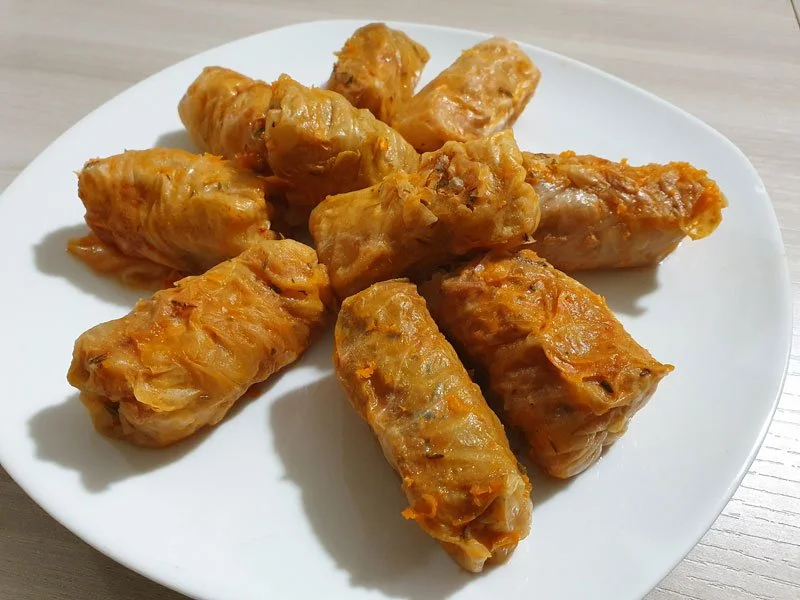
Sarmale are Romanian cabbage rolls filled with pork, rice and onion, then slowly cooked in a tomato-seasoned broth. They make a hearty, make-ahead meal, with tender leaves wrapped around a savoury filling.
Ingredients
- 500 gsavoy cabbage (or vine leaves)
- 2 tablespoonswhite wine vinegar
- 500 gminced pork
- 250 ground-grain rice
- 1 largeonion, finely chopped
- 2 tablespoonstomato purée
- 1 teaspoonpaprika
- to tastesalt
- to tasteblack pepper
- about 500 ml, plus extra for topping upmeat stock (or stock made from a cube)
- 1 teaspoontomato purée
- a few sprigsthyme
- 3 tablespoonsextra-virgin olive oil
- to tastesalt
- to tasteblack pepper
Instructions
- 1
Prepare the cabbage
Wash the cabbage, remove damaged outer leaves and cut out the core. Carefully separate the largest leaves one at a time, keeping them whole.
- 2
Blanch the leaves
Use a sharp knife to trim away the tough white central rib. Boil the leaves for 5 minutes from when the water returns to the boil, in water with the vinegar added.
- 3
Cool the leaves
Transfer the leaves straight into cold water to stop them cooking. Trim away the tough central rib again with a sharp knife.
- 4
Start the filling
Drain the leaves on a clean tea towel, pat them dry and set aside. For the filling, soften the onion in a non-stick frying pan until golden, then add the rice.
- 5
Season the filling
Toast the rice, then stir in the tomato purée and paprika. Add the pork, salt and pepper, and cook for just a couple of minutes so the meat stays tender; it will cook through inside the rolls. Mix thoroughly.
- 6
Roll the leaves
Lay the cabbage leaves on a work surface or in your palm. Put a tablespoon of filling in the centre of each leaf, fold in the sides and roll it up.
- 7
Arrange the rolls
Place the sarmale in a large pot in layers, leaving a little space between them because the filling will expand as it cooks.
- 8
Cook the sarmale
Pour in enough meat stock to cover the rolls and boil briskly for a couple of minutes. Reduce the heat to its lowest setting, add the thyme and 1 teaspoon of tomato purée, then cook covered for 90 minutes and uncovered for about 30 minutes.
- 9
Keep them covered
Cooking may take 90–120 minutes, depending on the size of the rolls. Keep them well covered with liquid, adding more stock gradually as needed.
- 10
Check and serve
Check occasionally whether more stock is needed. When cooked, adjust the salt and pepper and serve the sarmale hot.
What are sarmale?
Sarmale are Romanian cabbage rolls, usually filled with meat and rice and gently cooked in a seasoned liquid. This version uses pork, onion, paprika and tomato, wrapped in savoy cabbage.
The slow simmer gives the filling time to cook through and allows the leaves to become tender. Keeping the rolls loosely arranged also leaves room for the rice to expand.
Nutrition and macros by portion
The nutrition label shows one serving as written: 450 calories, 18g protein, 38g carbs, 24g fat.
| Portion | Adjustment | kcal | Protein | Carbs | Fat |
|---|---|---|---|---|---|
| Lighter | Use leaner pork | 315 kcal | 13g | 27g | 17g |
| This serving | As written | 450 kcal | 18g | 38g | 24g |
| Hungry | Add another roll | 675 kcal | 27g | 57g | 36g |
The rice provides most of the carbohydrates, while the pork and olive oil contribute much of the protein and fat. Serve a moderate number of rolls with a generous side of vegetables or salad to balance the meal.
Choosing and preparing the leaves
Whole leaves: choose the largest intact cabbage leaves you can separate from the head. Blanching them with vinegar makes them more pliable for rolling.
Tough ribs: trim away the thick central rib so it does not make the leaves difficult to fold. Cool and dry the leaves before filling to make them easier to handle.
Building the filling
Rice and onion: toasting the rice briefly with the softened onion and seasonings lets it take on their flavour before it goes into the rolls.
Pork: brown it for only a couple of minutes at this stage. The filling finishes cooking during the long simmer, so avoid cooking the meat fully in the pan.
Rolling and arranging
Filling: use a tablespoon per leaf, as directed, and keep it in the centre. Fold the sides in before rolling so the mixture stays enclosed.
Room to expand: arrange the rolls in layers but do not pack them tightly. The rice grows as it cooks, and a little space helps prevent the rolls from splitting.
Getting the simmer right
Initial boil: bring the stock to a brisk boil for a couple of minutes, then turn the heat down to its lowest setting. A gentle simmer helps the rolls hold their shape during the long cooking time.
Liquid level: keep the sarmale covered with stock and top it up gradually if the level drops. Cook covered for 90 minutes, then uncovered for about 30 minutes; larger rolls may need longer.
Serving the sarmale
Serve the rolls hot with some of their cooking liquid. The filling is already substantial, so a crisp salad or simply cooked vegetables can make a fresh contrast.
Check the seasoning at the end, as stock can vary in saltiness. Add salt and pepper to taste just before serving.
Recipe notes & tips
- Keep the cabbage leaves intact when separating them so they are easier to roll.
- Pat the blanched leaves dry before adding the filling.
- Do not fully cook the pork in the pan; it will finish cooking in the pot.
- Leave a little space between rolls so the rice can expand.
- Top up the stock gradually whenever the rolls are no longer covered.
- Check the seasoning after cooking, especially if your stock is already salty.
Variations
- Use vine leaves: wrap the filling in vine leaves instead of savoy cabbage, as suggested in the ingredient list.
- Add herbs: include chopped parsley in the filling for a fresh herbal note.
- Make it spicier: add a pinch of chilli alongside the paprika.
- Use beef: replace some or all of the pork with minced beef for a different flavour.
- Serve with soured cream: add a spoonful at the table for a cool, tangy contrast.
Common mistakes to avoid
- Tearing the leaves: separate them carefully from the base and choose the largest intact leaves.
- Leaving thick ribs in place: trim the tough central rib so the leaves fold more easily.
- Overcooking the pork in the pan: brown it for only a couple of minutes because it cooks further in the rolls.
- Packing the pot tightly: leave a little space so the filling can expand as it cooks.
- Letting the liquid run low: check from time to time and add stock gradually to keep the rolls covered.
- Cooking at too high a heat: lower the hob to its minimum after the initial brisk boil.
How to store
Cool leftovers promptly and refrigerate them in a covered container for up to 3 days. Reheat gently in a covered pan with a splash of stock until piping hot throughout, or freeze for up to 2 months and defrost in the fridge before reheating.
Frequently asked questions
Can I use vine leaves instead of cabbage?
Yes. Vine leaves are listed as an alternative, though the leaves may differ in size, so adjust how much filling you put in each one.
Why blanch the cabbage leaves?
Blanching softens the leaves so they can be folded around the filling without tearing as easily. The cold-water dip stops them cooking further.
How do I know the sarmale are cooked?
The leaves should be tender and the filling cooked through. The recipe gives a cooking time of 90–120 minutes, depending on the size of the rolls.
How much stock should I add?
Start with about 500 ml and add enough to cover the rolls. Top up gradually with more stock if the level drops during cooking.
Can I make the sarmale ahead?
Yes. Cook them in advance and refrigerate once cooled, then reheat gently with a little stock. Their slow-cooked texture makes them convenient to prepare ahead.
Cook it from the original
This recipe comes from fragolosi.it. Their page has the author’s own photos, notes and tips — the best place to cook it from.
Open the recipe on fragolosi.it