
Imburracciate artichokes
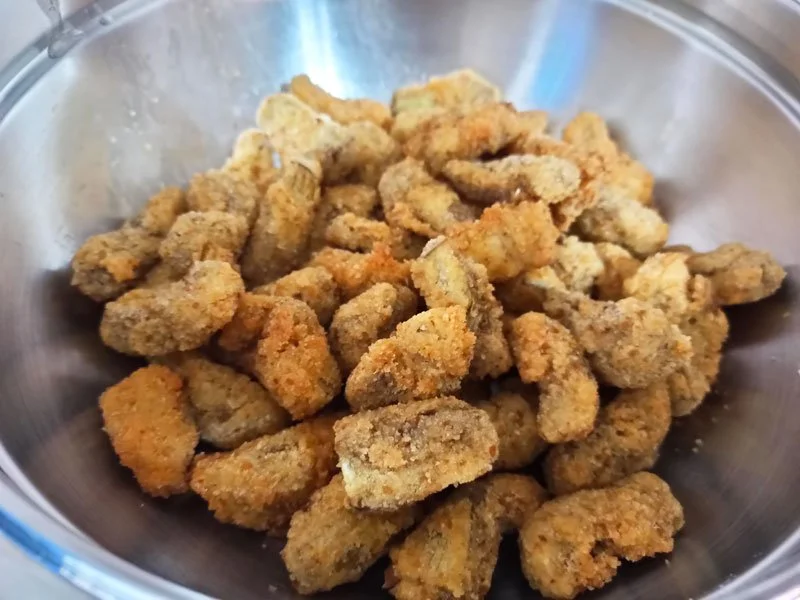
These Italian-style artichokes are briefly blanched, coated in flour, egg and breadcrumbs, then fried until crisp. The short blanch softens them before frying while keeping the centres tender.
Ingredients
- 10artichokes
- 2eggs
- as neededplain flour
- as neededbreadcrumbs
- as neededpeanut oil
- to tastesalt
- as neededlemon
Instructions
- 1
Clean the artichokes
Remove the tough outer leaves and trim away part of each stem.
- 2
Cut into wedges
Cut each artichoke into 6 wedges, remove the fuzzy inner choke and put the pieces into water with lemon juice as you work, to help prevent browning.
- 3
Keep them submerged
Leave the artichoke pieces in the lemon water until they are all cleaned.
- 4
Blanch briefly
Drain the artichokes and blanch them for 3 minutes in a little salted water.
- 5
Cool the artichokes
Drain and rinse them straight away to stop the cooking, then leave them to cool.
- 6
Coat in flour
Once cool, dust the artichokes with flour.
- 7
Beat the eggs
In a separate bowl, beat the eggs with a little salt.
- 8
Dip in egg
Shake off excess flour, then dip the artichokes into the beaten egg.
- 9
Add breadcrumbs
Coat the artichokes thoroughly in breadcrumbs, making sure they are well drained of excess egg first.
- 10
Fry until crisp
Shake off excess breadcrumbs and fry the artichokes in seed oil.
What are imburracciate artichokes?
The name describes artichokes coated and fried in a crisp crumb layer. This is an Italian preparation; the supplied recipe does not identify a more specific regional origin.
Here, the wedges are blanched before they are breaded. That gives the centres a head start, so the coating can crisp in the oil without needing a long fry.
Nutrition and macros by portion
The nutrition label shows one serving as written: 380 calories, 12g protein, 49g carbs, 17g fat.
| Portion | Adjustment | kcal | Protein | Carbs | Fat |
|---|---|---|---|---|---|
| Lighter | Use less frying oil | 266 kcal | 8g | 34g | 12g |
| This serving | As written | 380 kcal | 12g | 49g | 17g |
| Hungry | Serve a larger portion | 570 kcal | 18g | 74g | 26g |
The artichokes provide most of the carbohydrates and fibre, while the flour and breadcrumbs add more carbohydrate. Eggs and frying oil contribute much of the protein and fat respectively; serve a moderate portion with salad and a lean protein to make a more balanced plate.
Preparing the artichokes
Outer leaves: remove the tough leaves and trim part of the stem, while keeping enough of the heart and tender inner leaves for each wedge.
Lemon water: add the cut pieces as you work and keep them submerged. This helps limit discolouration while you finish cleaning the batch.
The quick blanch
Three minutes: blanch the wedges in a little salted water, as directed, rather than cooking them until fully tender. They will continue to cook when fried.
Cool and drain: rinse them promptly to halt the cooking, then let them cool. Excess water can make the flour and crumbs adhere unevenly.
Building the coating
Flour first: dust the cooled artichokes and shake away loose flour before dipping them in egg. A light, even layer helps the egg cling.
Breadcrumbs last: let excess egg drip off, then turn the wedges in the crumbs until covered. Remove loose crumbs before frying so they are less likely to burn in the oil.
Frying and doneness
Use a pan with enough oil for the artichokes to fry rather than sit in a thin film. The recipe does not give an oil temperature or frying time, so watch the pieces closely.
Look for an evenly golden, crisp coating, and check that the artichoke inside is tender. Fry in batches if needed so the pan does not become crowded.
Serving ideas
Serve the artichokes soon after frying, while the crumb is at its crispest. A fresh salad or simply dressed vegetables make a light contrast to the fried coating.
They can also be served as part of an Italian-style spread alongside other vegetables and a source of protein.
Recipe notes & tips
- Trim and cut the artichokes before heating the blanching water so they can go straight into the lemon water.
- Keep the wedges submerged in lemon water while cleaning the rest.
- Let the blanched artichokes cool before coating them.
- Shake off excess flour, egg and breadcrumbs at each coating stage.
- Fry in batches if the wedges would otherwise crowd the pan.
- Drain the fried artichokes briefly before serving.
Variations
- Add black pepper: season the beaten eggs with a little freshly ground pepper.
- Use fine breadcrumbs: choose a fine crumb for a more even coating.
- Add herbs: mix finely chopped parsley into the breadcrumbs.
- Serve with lemon: offer lemon wedges at the table for a bright finish.
- Make smaller pieces: cut the wedges in half after cleaning for bite-sized portions.
Common mistakes to avoid
- Skipping the lemon water: the cut artichokes may discolour; keep them submerged as you work.
- Overcooking the blanch: the wedges can become too soft to coat neatly; stick to the stated 3 minutes.
- Coating while wet: water can loosen the flour and crumb; drain and cool the artichokes first.
- Leaving excess flour: a thick dusty layer can make the coating patchy; shake each piece before dipping.
- Crowding the pan: the coating may not fry evenly; cook the artichokes in batches.
- Walking away from the oil: crumbs can darken quickly; stay nearby and watch for a golden coating.
How to store
Refrigerate leftovers in a sealed container for up to 2 days. Reheat in an oven or air fryer until hot and crisp; the coating will soften if reheated in a microwave.
Frequently asked questions
Do I need to remove the fuzzy choke?
Yes. The recipe calls for removing the inner 'beard' from each wedge before cooking.
Why put the artichokes in lemon water?
The lemon water helps prevent the cut surfaces from browning while you clean the remaining artichokes.
Can I prepare the artichokes ahead?
You can clean and blanch them ahead, then cool and refrigerate them. For the crispest coating, flour, egg and breadcrumb them shortly before frying.
How can I tell when they are cooked?
The crumb should be crisp and golden, and the artichoke inside should be tender. The recipe does not specify an exact frying time.
Can I use another frying oil?
Yes. The recipe specifies seed oil; choose another neutral oil suitable for frying if peanut oil is not suitable for you.
Cook it from the original
This recipe comes from fragolosi.it. Their page has the author’s own photos, notes and tips — the best place to cook it from.
Open the recipe on fragolosi.it