
Lemon cake
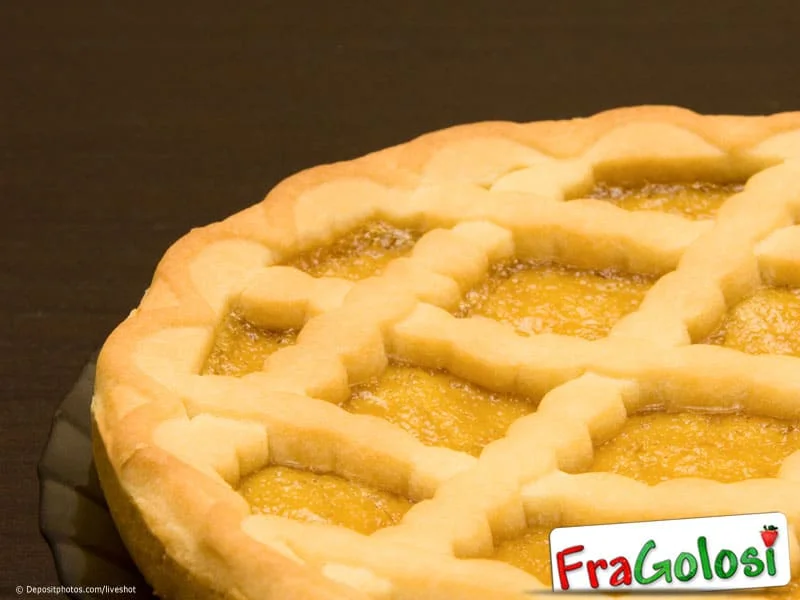
This Italian lemon cake has a crisp, buttery pastry shell filled with a gently thickened lemon and milk cream, finished with a pastry lattice. It is a good choice when you want a citrusy tart that can be prepared ahead and shared in slices.
Ingredients
- 500 gplain flour
- 170 gbutter, melted
- 170 gsugar
- 4eggs
- 1 sachetvanillin
- ¾ sachetbaking powder
- a pinchsalt
- 3 tablespoonsplain flour
- juice and a little grated zest from 3untreated lemons
- 75 gbutter
- 750 gmilk
- 120 gsugar
Instructions
- 1
Mix the pastry
Sift the flour and baking powder onto a work surface. Make a well in the centre and add the melted butter, sugar, vanillin, eggs one at a time, and salt.
- 2
Rest the dough
Work the dough quickly, shape it into a ball, cover it and leave it to rest in a cool place for 30 minutes.
- 3
Line the tin
After resting, roll out two-thirds of the dough to a few millimetres thick. Use it to line a buttered cake tin.
- 4
Shape the edge
Use some of the remaining dough to make a braid for the edge. Then prepare the cream.
- 5
Melt the butter
Put the butter in a small pan and melt it over a low heat. Take the pan off the heat and add the flour all at once.
- 6
Mix until smooth
Stir quickly until the mixture is well combined, taking care to avoid lumps.
- 7
Thicken the cream
Add the milk, lemon zest and lemon juice. Return the pan to the heat and cook, stirring continuously, until the cream thickens slightly.
- 8
Fill the pastry
Pour the cream over the pastry base.
- 9
Add pastry strips
Use some of the remaining dough to make strips and arrange them over the cream, 1 cm apart.
- 10
Bake the cake
Cross the strips with more strips to make a lattice. Bake in a preheated oven at 180°C for about 45 minutes.
What is Italian lemon cake?
This is a pastry tart filled with a lemon-scented milk cream and topped with a woven pastry lattice. It draws on the Italian tradition of crostate: tarts made with a pastry base and a sweet filling.
Here, the lemon juice and zest give the creamy filling its freshness, while the pastry braid and lattice make use of dough saved from lining the tin.
Nutrition and macros by portion
The nutrition label shows one serving as written: 940 calories, 17g protein, 120g carbs, 41g fat.
| Portion | Adjustment | kcal | Protein | Carbs | Fat |
|---|---|---|---|---|---|
| Lighter | Smaller slice, fresh fruit | 658 kcal | 12g | 84g | 29g |
| This serving | As written | 940 kcal | 17g | 120g | 41g |
| Hungry | Larger slice | 1410 kcal | 26g | 180g | 62g |
The flour and sugars provide most of the carbohydrates, while the butter carries much of the fat; the eggs and milk contribute protein. Serve a slice with fresh fruit to add freshness and balance the rich pastry and cream.
The pastry dough
Quick mixing: The method calls for working the dough quickly, then resting it in a cool place for 30 minutes. That pause makes it easier to roll and shape.
Even base: Roll two-thirds of the dough to a few millimetres thick and line the tin without stretching it. Keep the remaining dough for the braided edge and lattice.
Making the lemon cream
Flour mixture: Add the flour to the melted butter all at once, then stir briskly so it combines evenly before the milk goes in.
Citrus: The recipe uses both the juice and a little grated zest from three untreated lemons. Add both with the milk, and stir continuously as the cream thickens slightly.
Building the lattice
Spacing: Arrange the first set of pastry strips about 1 cm apart across the filling. Lay the next set across them to form the classic grid.
Handling: If the strips become soft while you shape them, handle them gently and work with the dough left from lining the tin.
Baking and doneness
Oven: Bake the assembled tart in a preheated oven at 180°C for about 45 minutes. The recipe does not give a more specific visual doneness cue, so use the stated time as a guide.
Cooling: Let the cake cool before slicing so the filling has time to settle and the pastry is easier to cut neatly.
Serving the cake
This tart is rich enough to serve in modest slices, either on its own or with tea or coffee. Fresh berries can add a contrasting fruity note without changing the baking method.
Recipe notes & tips
- Measure the pastry dough into portions before rolling so enough remains for the edge and lattice.
- Keep the pastry covered while it rests so the surface does not dry out.
- Stir the flour into the melted butter promptly to help keep the cream smooth.
- Add the milk gradually enough to incorporate it evenly, while following the recipe's order.
- Keep stirring the cream as it heats so it thickens evenly.
- Allow the baked tart to cool before cutting for cleaner slices.
Variations
- More citrus: Add a little extra grated lemon zest to the cream for a more pronounced lemon aroma.
- Orange version: Replace the lemons with untreated oranges, using their juice and a little grated zest.
- Berry topping: Serve each slice with fresh berries for a fruity contrast.
- Vanilla aroma: Use vanilla instead of vanillin if you prefer that flavour.
- Neat finish: Leave off the braided edge and use the remaining pastry for a simpler lattice.
Common mistakes to avoid
- Overworking the dough: Mix it quickly as directed, then let it rest for 30 minutes.
- Stretching the pastry: Fit it gently into the tin so it keeps an even shape.
- Lumpy cream: Stir the flour briskly into the melted butter before adding the milk.
- Leaving the cream unattended: Stir continuously while it heats and thickens.
- Crowding the lattice: Keep the first strips about 1 cm apart before laying the cross-strips.
- Cutting while hot: Let the cake cool first so the filling can settle.
How to store
Once cool, cover and store the cake in the fridge for up to 3 days. Bring slices to room temperature before serving, or warm them gently in a low oven.
Frequently asked questions
Can I make the pastry ahead?
Yes. Make the dough and keep it covered in the fridge, then let it soften enough to roll and shape before assembling the tart.
How thick should I roll the pastry?
The recipe says to roll it to a few millimetres thick. Keep the layer even so the base cooks consistently.
How thick should the lemon cream be before filling the tart?
Cook it until it has thickened slightly, as stated in the method. It will continue to settle as the tart cools.
Can I use treated lemons?
The recipe specifies untreated lemons because it uses grated zest. If using other lemons, wash and dry them thoroughly before zesting.
How do I know when the cake is ready?
Bake it at 180°C for about 45 minutes, as directed. Check towards the end of the baking time, since ovens can vary.
Can I freeze this lemon cake?
The recipe does not specify freezing. For the best pastry texture, store it covered in the fridge and eat it within 3 days.
Cook it from the original
This recipe comes from fragolosi.it. Their page has the author’s own photos, notes and tips — the best place to cook it from.
Open the recipe on fragolosi.it