
Fried fish
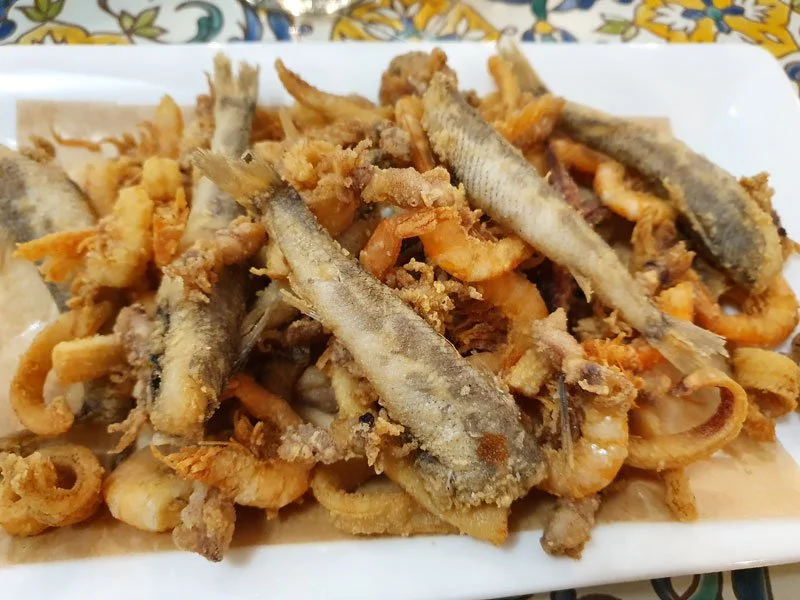
Sicilian-style fried fish brings together small fish, prawns and squid in a crisp semolina coating. Frying each type separately keeps the oil hot and lets you serve the seafood piping hot with lemon.
Ingredients
- 1.5 kgmixed fish and seafood for frying (small whitings, franceschini, small prawns and squid rings)
- as neededdurum wheat semolina
- 1lemon
- as neededpeanut oil
- to tastesalt
Instructions
- 1
Clean the seafood
Clean the fish, crustaceans and molluscs, or ask your fishmonger to do this for you.
- 2
Prepare the small fish
Remove the heads and guts from the small whitings. Rinse them and leave them to dry on kitchen paper. Rinse the tiny franceschini; they do not need cleaning, then pat them dry.
- 3
Clean prawns and squid
Remove the heads, legs and shells from the prawns. Take out the intestinal vein, rinse and dry them. Clean the squid by removing the innards, eyes, beak, cartilage and skin.
- 4
Cut the squid
Separate the tentacles and fins from the bodies and cut them into small pieces. Slice the bodies into rings, then rinse and dry the squid with kitchen paper.
- 5
Coat in semolina
Pour plenty of semolina into a small tray and coat each type of seafood separately.
- 6
Shake off excess
Transfer each type of coated seafood to a sieve in turn and shake it to remove excess semolina.
- 7
Heat the oil
Pour plenty of peanut oil into a deep-sided frying pan or wok and heat it to no more than 180°C.
- 8
Fry in batches
Fry small batches to help keep the oil at temperature, starting with the larger pieces. The suggested order is small whitings, squid rings, prawns, then franceschini.
- 9
Drain each batch
Fry the different types of seafood separately. As each batch is done, transfer it to a double layer of kitchen paper to drain off some of the oil.
- 10
Season and serve
When all the seafood is cooked, combine it and season lightly with salt, then transfer it to a serving plate. Serve hot, with the lemon cut into quarters on the side.
What is Sicilian fried fish?
Fried fish, or frittura di pesce, is a familiar seafood dish in Sicily and elsewhere in Italy. It brings together a selection of small fish and seafood, coated in flour and fried until crisp.
This version uses durum wheat semolina, which gives the seafood a lightly textured coating. Cooking each type separately helps you manage the different sizes and cooking times.
Nutrition and macros by portion
The nutrition label shows one serving as written: 500 calories, 48g protein, 30g carbs, 19g fat.
| Portion | Adjustment | kcal | Protein | Carbs | Fat |
|---|---|---|---|---|---|
| Lighter | Smaller fried portion | 350 kcal | 34g | 21g | 13g |
| This serving | As written | 500 kcal | 48g | 30g | 19g |
| Hungry | Larger seafood portion | 750 kcal | 72g | 45g | 29g |
The seafood provides most of the protein, while semolina contributes carbohydrates. Fat comes mainly from the frying oil, and the amount absorbed can vary with the seafood and frying conditions. Serve a portion with salad or vegetables for a more balanced plate.
Choose and prepare the seafood
The mix: small whitings, tiny franceschini, prawns and squid give the platter a range of shapes and textures. The exact mix can depend on what your fishmonger has available.
Dry well: rinsing is followed by thorough drying with kitchen paper. Removing surface moisture helps the coating cling and limits spluttering when the seafood goes into the oil.
Why use semolina?
The coating: durum wheat semolina forms a fine, crisp layer around the fish and seafood. Coat one type at a time so the pieces are evenly covered.
The sieve: shaking off excess semolina prevents loose flour from clouding the oil or forming a thick layer on the finished seafood.
Fry in separate batches
Batch size: add only a few pieces at a time so the oil temperature does not drop sharply. Crowded seafood is more likely to cook unevenly.
Order: the method starts with small whitings, then squid rings, prawns and finally the tiny franceschini. Keep each kind separate while frying, then combine them for serving.
Watch the oil and texture
Temperature: heat the peanut oil to no more than 180°C. A thermometer makes it easier to keep within that limit as you cook successive batches.
Doneness: look for a crisp, lightly golden coating and seafood that is cooked through. Lift each batch out and drain it on a double layer of kitchen paper.
Serve it hot with lemon
Timing: fry the seafood shortly before serving and bring it to the table while still hot. A platter lets you combine all the types after they have been cooked separately.
On the side: offer lemon quarters for squeezing over the fish. A simple green salad or vegetables can round out the meal.
Recipe notes & tips
- Ask your fishmonger to clean the seafood if you would rather skip the preparation.
- Dry each type thoroughly before coating it in semolina.
- Coat only one type of seafood at a time and shake off loose semolina.
- Keep the oil at or below 180°C and allow it to return to temperature between batches.
- Use a double layer of kitchen paper to drain each batch.
- Cut the lemon into quarters before frying so it is ready to serve.
Variations
- Change the mix: use the same total quantity of other small fish or seafood suited to frying.
- Use plain flour: coat the seafood in plain flour instead of semolina for a different finish.
- Add parsley: scatter chopped fresh parsley over the cooked seafood just before serving.
- Serve with extra lemon: offer additional lemon wedges for a sharper citrus flavour.
- Add a salad: serve with a crisp green salad to make the meal more substantial.
Common mistakes to avoid
- Wet seafood: the coating can turn patchy and the oil may splutter; pat every piece dry before coating.
- Too much semolina: excess coating can make the seafood heavy; shake it off in a sieve.
- Overcrowding the pan: the oil temperature can fall; fry just a few pieces at a time.
- Oil too hot: the coating can brown before the seafood cooks through; keep the oil at no more than 180°C.
- Mixing types while frying: different pieces cook at different rates; fry each type separately.
- Salting too early: salt can draw moisture onto the coating; season lightly after frying.
How to store
Fried seafood is best eaten straight away. If needed, refrigerate leftovers in a covered container and eat within 1 day; reheat briefly in a hot oven until warmed through, though the coating may soften.
Frequently asked questions
Can I ask the fishmonger to clean the seafood?
Yes. The method suggests asking your trusted fishmonger to clean the fish, crustaceans and molluscs.
Why fry each type separately?
The seafood pieces differ in size and cook at different rates. Separate batches also make it easier to keep the oil temperature steady.
How hot should the oil be?
Heat the peanut oil to no more than 180°C. Keep an eye on it as you fry the batches.
Can I use a different oil?
The recipe specifies peanut oil. If substituting, choose an oil suitable for frying and check that it meets any dietary requirements.
How do I know when the seafood is cooked?
The coating should be crisp and lightly golden, and the seafood should be cooked through. Exact cooking time varies by type and piece size.
Can I prepare it ahead?
You can clean and dry the seafood ahead and keep it chilled, but coat and fry it shortly before serving for the best crispness.
Cook it from the original
This recipe comes from fragolosi.it. Their page has the author’s own photos, notes and tips — the best place to cook it from.
Open the recipe on fragolosi.it