
Pasta with aubergine and cheese sauce
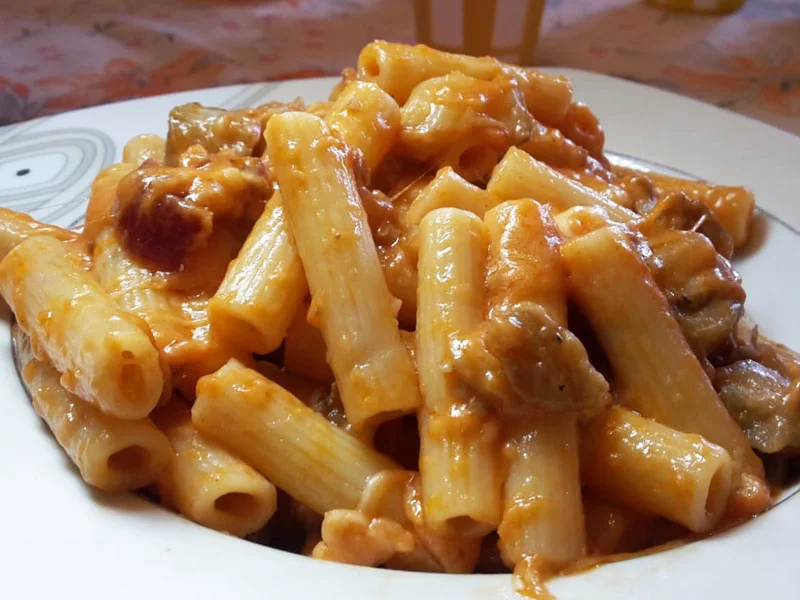
This Sicilian-style pasta combines tomato-coated aubergine with cubes of melting cheese and savoury mortadella or salami. It is a generous, satisfying dish for when you want a slow-simmered sauce and plenty of flavour in every bite.
Ingredients
- 400 gsedani rigati pasta
- 2aubergines
- 100 gTuma cheese
- 50 gGalbanino cheese
- 50 gNebrodi provola (or another provola)
- 50 gfresh pecorino
- 50–70 ggrated Parmesan
- 100 gdiced mortadella or cacciatorino-style salami
- 1 clovegarlic, peeled
- ½red onion
- 1 tablespoontomato purée
- 750 mlpassata
- 1 teaspoonsugar (or bicarbonate of soda)
- to tasteextra-virgin olive oil
- to tastepeanut oil
- to tastecoarse and fine salt
- to tastebasil
Instructions
- 1
Prepare aubergines
Trim, rinse and dry the aubergines. Peel them in alternating strips, then cut them into fairly large dice. Arrange the pieces in layers in a colander, sprinkling coarse salt over each layer.
- 2
Drain aubergines
Set a lid and a weight on top of the aubergines and leave them to drain for at least 30 minutes.
- 3
Fry aubergines
Rinse the aubergines after draining and pat them dry. Fry them in plenty of peanut oil until soft.
- 4
Drain the oil
Transfer the fried aubergines to double layers of kitchen paper to absorb excess oil, changing the paper at least twice.
- 5
Soften aromatics
Warm a little extra-virgin olive oil in a large frying pan. Brown the crushed garlic and chopped onion in it, then remove the garlic and add the aubergine.
- 6
Add tomato sauce
Let the aubergine take on the flavour of the aromatics for a couple of minutes, then add the passata, tomato purée and basil torn by hand.
- 7
Season the sauce
Add fine salt and loosen the passata with a couple of ladlefuls of hot water. As soon as it starts to boil, stir in 1 teaspoon of sugar to soften the tomato's sharpness.
- 8
Simmer and cook
Simmer the sauce gently for about 30 minutes, stirring from time to time. Meanwhile, dice the cheeses and mortadella or salami. Cook the pasta in plenty of salted water and drain it very al dente.
- 9
Combine ingredients
Return the pasta to the pan and coat it with the tomato sauce. Add the cheeses and mortadella or salami, then season generously with Parmesan.
- 10
Melt and serve
Stir everything together carefully with a wooden spoon, the Sicilian method known as “arriminare”. Let the cheeses melt over very low heat, then serve straight away.
What is Sicilian aubergine pasta?
This is a hearty Sicilian-style pasta with aubergine in a tomato sauce, finished with several cheeses and a little mortadella or salami. The combination gives the dish a savoury, rich character rather than making it a simple aubergine-and-tomato pasta.
This version relies on a slow-simmered sauce and a final gentle stir so the diced cheeses soften around the pasta. Sedani rigati works well because its ridges and hollow shape catch the sauce.
Nutrition and macros by portion
The nutrition label shows one serving as written: 900 calories, 41g protein, 104g carbs, 40g fat.
| Portion | Adjustment | kcal | Protein | Carbs | Fat |
|---|---|---|---|---|---|
| Lighter | Use less cheese | 630 kcal | 29g | 73g | 28g |
| This serving | As written | 900 kcal | 41g | 104g | 40g |
| Hungry | Larger pasta portion | 1350 kcal | 62g | 156g | 60g |
Most of the carbohydrates come from the pasta, while the cheeses and mortadella or salami contribute much of the fat and protein. Aubergine and tomato add vegetables and some fibre; serve a portion with a simple salad or other vegetables to balance the plate.
Choosing the ingredients
Aubergines: Peeling in alternating strips leaves some skin on while keeping the pieces tender. Cut the dice fairly large so they hold their shape through frying and simmering.
Cheeses: Tuma, Galbanino, provola and fresh pecorino make a varied mix of melting and savoury flavours. Parmesan is added at the end for a punchier finish.
Salume: Mortadella gives a mild, rounded savouriness, while cacciatorino-style salami brings a more assertive cured-meat flavour. Use one or the other, as listed.
Salting and frying the aubergine
Drain the salted aubergine for at least 30 minutes with a weight on top, then rinse and dry it thoroughly. This is the recipe's first preparation stage and gives the pieces time to drain before frying.
Fry until the dice are soft, then let them sit on fresh kitchen paper. Dry pieces are easier to fold into the sauce without carrying excess frying oil with them.
Building the tomato sauce
Aromatics: Brown the crushed garlic and chopped red onion in a little olive oil, removing the garlic before adding the aubergine. The onion stays in the sauce while the garlic flavours the oil.
Simmer: Add the passata, tomato purée and hand-torn basil, then thin with hot water and season. Keep the sauce at a gentle simmer for about 30 minutes, stirring occasionally.
Getting the texture right
Pasta: Cook the sedani rigati until very al dente, since it will be mixed with the sauce and warmed again with the cheeses. Drain it well before returning it to the pan.
Cheese: Keep the heat very low for the final mixing, stirring carefully until the cubes begin to melt. The aim is a coated pasta with softened cheese, not a fierce boil.
Timing the stages
The aubergines need at least 30 minutes to drain, and the sauce simmers for about 30 minutes. Use the sauce's cooking time to dice the cheeses and salume and cook the pasta, as directed.
The stated total time is 60 minutes, but the draining and other preparation stages overlap with cooking. Have the diced additions ready before the pasta is drained so it can be combined promptly.
What to serve with it
Serve the pasta as soon as the cheese has melted, while the sauce is hot and the pasta still has a firm bite. A simple green salad or lightly dressed vegetables make a fresh contrast to the rich sauce.
Keep extra Parmesan at the table for anyone who wants a stronger finish. The recipe already seasons the pasta generously with it, so taste before adding more.
Recipe notes & tips
- Dry the rinsed aubergine thoroughly before frying to limit splattering.
- Change the kitchen paper at least twice, as directed, to absorb excess oil.
- Keep the sauce at a gentle simmer and stir it occasionally during the 30 minutes.
- Dice the cheeses and salume while the sauce cooks so they are ready to add.
- Drain the pasta very al dente because it will be warmed again with the sauce.
- Use very low heat for the final mixing so the cheeses soften without the sauce boiling hard.
Variations
- Choose salami: Use cacciatorino-style salami instead of mortadella for a more pronounced cured flavour.
- Change the provola: Swap Nebrodi provola for another provola, as the recipe allows.
- Adjust the Parmesan: Use 50 g for a subtler finish or up to 70 g for more savoury depth.
- Use bicarbonate: The ingredient list offers bicarbonate of soda as an alternative to sugar for the tomato sauce.
- Vary the pasta: Choose another ridged, sauce-catching pasta shape if sedani rigati is unavailable.
Common mistakes to avoid
- Skipping the drain: Give the salted aubergine at least 30 minutes under a weight before rinsing and drying it.
- Frying damp aubergine: Pat the pieces dry first to avoid adding water to hot oil.
- Leaving excess oil: Drain the fried pieces on double kitchen paper and replace it at least twice.
- Boiling the sauce hard: Keep it at a gentle simmer for about 30 minutes, stirring occasionally.
- Overcooking the pasta: Drain it very al dente because it will be mixed and warmed with the sauce.
- Using high heat at the end: Stir over very low heat so the cheeses melt gently.
How to store
Refrigerate leftovers in a covered container and use within 2 days. Reheat gently in a pan, stirring with a small splash of water if the pasta has become firm; the cheese texture may be less smooth after chilling.
Frequently asked questions
Do I need to salt the aubergines?
The recipe calls for layering them with coarse salt and leaving them to drain under a weight for at least 30 minutes. Rinse and dry them afterwards, as directed.
Can I use a different pasta shape?
Yes. Choose a shape with ridges or hollows that can hold the tomato sauce and cheese. Keep the cooking time guided by the packet, but drain the pasta very al dente.
Which salume should I use?
Use either diced mortadella or cacciatorino-style salami. Mortadella is milder, while salami gives the dish a stronger cured flavour.
Can I use another kind of provola?
Yes. The ingredient list explicitly allows another provola in place of Nebrodi provola.
How do I stop the cheese from becoming stringy or sticking?
Add the diced cheeses after coating the pasta with sauce, then stir carefully over very low heat. Serve as soon as they have softened.
Can I prepare parts of the recipe ahead?
You can dice the cheeses and salume while the sauce simmers, as the method suggests. For the best texture, cook and combine the pasta just before serving.
Cook it from the original
This recipe comes from fragolosi.it. Their page has the author’s own photos, notes and tips — the best place to cook it from.
Open the recipe on fragolosi.it