
Linguine with white cod and clam ragù
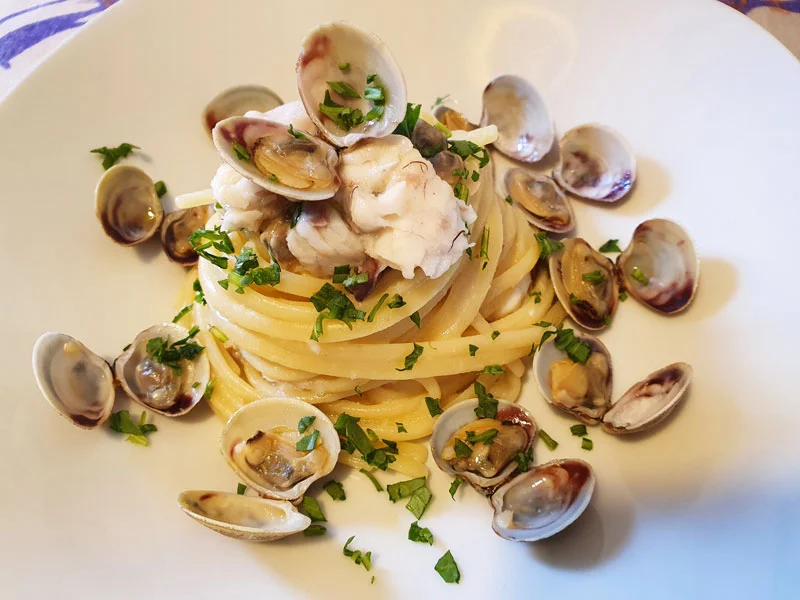
Linguine with white cod and clam ragù is a savoury seafood pasta, with flaky cod and clams tossed in a light, garlicky cooking liquor. It makes a special-feeling meal from a short list of ingredients, though the clams need time to purge before cooking.
Ingredients
- 350 glinguine
- 800 g (weight with shells)clams
- 400 gfrozen cod fillets
- 2peeled garlic cloves
- 100 ml (½ glass)dry white wine
- 1 small bunchwashed and chopped parsley
- 45–60 ml (3–4 tablespoons)extra-virgin olive oil
- to tastesalt
- to tastefreshly ground black pepper
- to tastechilli
Instructions
- 1
Rinse the clams
Clean the clams and place them in a large bowl of cold water lightly salted with salt.
- 2
Purge the clams
Leave them to purge for at least 2 hours so they can release any sand.
- 3
Warm the oil
Heat 3–4 tablespoons of oil in a pan. Add the garlic cloves and a small piece of chilli and cook until the garlic is lightly golden.
- 4
Cook the cod
Add the cod fillets while still frozen and sauté them for a few minutes.
- 5
Add the wine
Season the fillets with salt and pour in the white wine. Once the alcohol has evaporated, add the clams.
- 6
Open the clams
Cover the pan and cook until the shells open. Take the pan off the heat, transfer the clams to a bowl and remove them from their shells.
- 7
Save some shells
Keep a few clams in their shells to decorate the plates.
- 8
Cook the linguine
Strain the cooking liquid and return it to the pan. Boil the linguine in plenty of salted water, then drain it al dente.
- 9
Toss the pasta
Toss the linguine with the cod and clams, then sprinkle with chopped parsley and season with freshly ground pepper.
- 10
Serve straight away
Transfer the linguine with white cod and clam ragù to plates and bring them to the table immediately.
What is linguine with cod and clam ragù?
This is an Italian-style seafood pasta, combining linguine with cod, clams, garlic, wine and parsley. Here, ragù describes the savoury seafood mixture that coats the pasta rather than a meat-based sauce.
The recipe works by using the clam and wine cooking liquid to bring the fish and pasta together. Chilli adds a little warmth, while parsley keeps the finish fresh.
Nutrition and macros by portion
The nutrition label shows one serving as written: 555 calories, 39g protein, 64g carbs, 15g fat.
| Portion | Adjustment | kcal | Protein | Carbs | Fat |
|---|---|---|---|---|---|
| Lighter | Less oil, more greens | 389 kcal | 27g | 45g | 11g |
| This serving | As written | 555 kcal | 39g | 64g | 15g |
| Hungry | Larger pasta portion | 833 kcal | 59g | 96g | 23g |
The linguine provides most of the carbohydrates, while olive oil contributes much of the fat. Cod and the edible clam meat provide protein; clams, added salt and salted pasta water also contribute to the sodium. Pair a serving with a generous green salad or vegetables for a balanced plate.
The clams need time
Purge the clams in lightly salted cold water for at least 2 hours, as directed, to help them release sand. Clean them before soaking, and discard any that are already open and do not close when tapped.
After cooking, discard any clams that have not opened. Straining the cooking liquid helps keep grit out of the finished pasta.
Build the seafood base
Garlic and a small piece of chilli flavour the olive oil first; let the garlic turn lightly golden rather than dark, which can make it taste bitter. Add the cod frozen, as the method specifies, and sauté it for a few minutes.
White wine adds acidity to the pan, while the clams contribute their briny juices. Let the alcohol evaporate before adding the clams.
Watch the clams and cod
Cover the pan so the clams steam in the cooking liquid, and check them as their shells open. Remove them from the heat once open, then shell most of them and reserve a few whole for the plates.
The cod should be cooked through and flake easily when tossed with the pasta. Handle it gently at this stage so it does not break up more than you want.
Keep the linguine al dente
Cook the linguine in plenty of salted water and drain it while it still has a slight bite. It will be tossed briefly with the seafood and its cooking liquid, so avoid cooking it until soft.
Strain the clam liquid before returning it to the pan. Toss the pasta with the fish and clams so the strands pick up the savoury juices.
Finish and serve
Add the chopped parsley and freshly ground pepper at the end, as the method directs. Serve immediately, with a few shell-on clams arranged on each plate.
A crisp green salad or simply cooked vegetables make a fresh accompaniment. Keep other sides fairly simple so the seafood and pasta remain the focus.
Recipe notes & tips
- Allow at least 2 hours for the clams to purge, in addition to the stated 45-minute total time.
- Use a large bowl for soaking so the clams have room to release sand.
- Strain the clam cooking liquid carefully before adding it back to the pan.
- Keep a few clams in their shells for the finished plates, as the method suggests.
- Drain the linguine al dente so it holds its texture when tossed with the seafood.
- Serve the pasta as soon as it is dressed with the cooking liquid.
Variations
- Adjust the chilli: use a little more for extra heat or leave it out for a milder dish.
- Add lemon: finish with a little grated zest for a brighter seafood flavour.
- Use another long pasta: spaghetti can stand in for linguine if needed.
- Add extra parsley: increase the chopped parsley for a fresher, herb-forward finish.
Common mistakes to avoid
- Skipping the purge: grit can remain in the clams; soak them for at least 2 hours.
- Over-browning the garlic: it can turn bitter; cook only until lightly golden.
- Leaving out the straining: sand may end up in the sauce; filter the clam liquid before reusing it.
- Overcooking the pasta: it can turn soft when tossed; drain it al dente.
- Keeping unopened clams: discard any that remain closed after cooking.
How to store
Refrigerate leftovers in a covered container and eat within 1 day. Reheat gently in a pan with a splash of water, until piping hot; the pasta may soften and seafood can become tougher on reheating.
Frequently asked questions
How long do the clams need to purge?
The method calls for at least 2 hours in cold, lightly salted water. This gives them time to release any sand.
Can I use fresh cod instead of frozen?
The recipe specifies frozen fillets, added while still frozen. If using fresh cod, it may cook faster, so watch it closely and ensure it is cooked through.
What should I do with clams that stay closed?
Discard any clams that do not open during cooking.
Can I prepare the clams ahead?
You can clean and soak them for the required 2 hours before cooking. Cook and combine the seafood with the pasta close to serving time.
What does al dente mean here?
The linguine should be cooked through but still have a slight firmness when bitten. It is then tossed with the seafood and cooking liquid.
What can I serve alongside it?
A green salad or simply cooked vegetables make a good accompaniment without competing with the seafood.
Cook it from the original
This recipe comes from fragolosi.it. Their page has the author’s own photos, notes and tips — the best place to cook it from.
Open the recipe on fragolosi.it