
Octopus on potato foam with Taggiasca olives
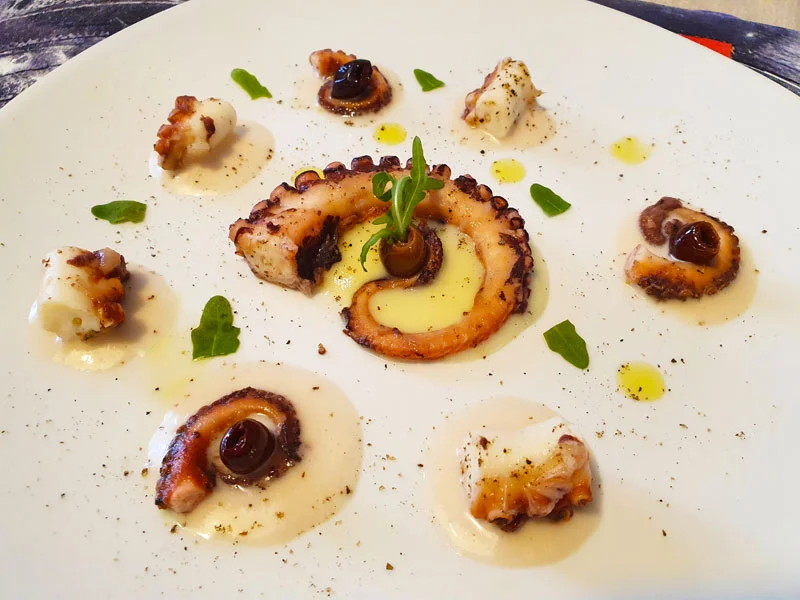
Tender octopus is served with a smooth potato foam, a creamy sauce made from reduced cooking liquor and Taggiasca olives. It is an elegant Italian-style dish for a special meal, with the potatoes and sauce prepared ahead to make plating easier.
Ingredients
- 1, about 1 kgoctopus
- 1 glassdry white wine
- 1bay leaf
- 50 gpitted Taggiasca olives
- Juice of 1lemon
- To tasteextra-virgin olive oil
- To tastesalt
- To tastepepper
- 500 gpotatoes, similar in size
- 250 mldouble cream
- 50 ggrated Parmesan
- 1 pinchnutmeg
- 35 gbutter
- To tastesalt
- 300 mloctopus cooking liquor
- 210 mlsunflower oil
- 1/2 tablespoonlemon juice
- To tastepepper
Instructions
- 1
Clean the octopus
Rinse the octopus thoroughly, removing any sand from the suckers. Partly turn the head inside out, remove the innards and other unwanted material, then pull away the loose inner membrane.
- 2
Prepare the cooking liquor
Turn the head back, remove the eyes and beak, and rinse the octopus again. Bring plenty of salted water to the boil in a large pan, add the wine and bay leaf, and bring it back to the boil. Holding the head, dip the tentacles into the water for a few seconds and lift them out; repeat twice more so they curl.
- 3
Cook the octopus
Lower the whole octopus into the boiling water. Once the water returns to the boil, cook over a medium heat with the pan covered for 20 minutes. Take the pan off the heat and leave the octopus to cool in its cooking liquor. Keep the liquor for the sauce.
- 4
Marinate and strain
Cut the octopus into pieces and place them in a bowl with oil, lemon juice, salt and pepper. Meanwhile, strain the cooking liquor several times through a fine sieve or very fine linen cloth.
- 5
Reduce the liquor
Pour 300 ml of the strained liquor into a saucepan and simmer over a low heat until it becomes a thick reduction. Skim it from time to time.
- 6
Start the sauce
Measure out 100 ml of the finished reduction and let it cool completely. Pour it into a tall-sided bowl, add a few drops of lemon juice and whisk with an electric mixer at medium speed, gradually drizzling in the oil in several additions.
- 7
Finish the sauce
Once half the oil has been incorporated, gradually add the remaining lemon juice and oil. Whisk until the sauce is creamy and smooth like mayonnaise, then season with white pepper and salt, remembering that the cooking liquor was already slightly salty. Set aside and begin the potato foam: put the unpeeled potatoes into lightly salted cold water and bring it to the boil.
- 8
Make the potato foam
Cook the potatoes for about 30 minutes, then drain and peel them. Blend to a purée with a hand blender. Warm the cream and gradually whisk it into the potato purée.
- 9
Season and plate
Keep stirring as you add the butter a little at a time, then stir in the Parmesan. Season the potato foam with salt, pepper and nutmeg, and keep it warm. Before serving, drain the octopus. Put the foam into a piping bag and pipe small mounds on the base of each plate, placing a piece of octopus on each mound.
- 10
Add the garnish
Put a small mound of the octopus mayonnaise in the centre of each plate, then place a tentacle and an olive on it. Scatter the remaining olive pieces around the plate, season with pepper and garnish with an aromatic herb of your choice before serving.
What is octopus with potato foam?
This is a composed seafood dish that pairs cooked octopus with a soft potato purée and a mayonnaise-style sauce made from the octopus cooking liquor. It draws on Italian coastal cooking, with Taggiasca olives adding a briny, fruity accent.
The contrast is what makes this version work: tender, lightly marinated octopus sits alongside rich potato foam, while the reduced liquor gives the sauce a concentrated savoury flavour.
Nutrition and macros by portion
The nutrition label shows one serving as written: 1050 calories, 42g protein, 29g carbs, 76g fat.
| Portion | Adjustment | kcal | Protein | Carbs | Fat |
|---|---|---|---|---|---|
| Lighter | Less cream and oil | 735 kcal | 29g | 20g | 53g |
| This serving | As written | 1050 kcal | 42g | 29g | 76g |
| Hungry | Larger potato portion | 1575 kcal | 63g | 44g | 114g |
The potatoes provide most of the carbohydrate, while the octopus supplies much of the protein. Cream, butter, Parmesan and the two oils contribute most of the fat, so serve with a generous portion of vegetables or salad to balance the plate.
Cleaning and cooking the octopus
Clean thoroughly: remove sand from the suckers, along with the eyes, beak and innards. The recipe briefly dips the tentacles three times before cooking so they curl attractively.
Gentle timing: cook the whole octopus for 20 minutes after the water returns to the boil, then let it cool in the liquor. Keeping it in the cooking liquid helps retain flavour and supplies the base for the sauce.
Building the octopus mayonnaise
Reduce first: simmer and skim the strained cooking liquor until thick, then measure 100 ml and cool it completely. A fully cooled base is important before whisking in the oil.
Add gradually: whisk in the sunflower oil in stages rather than pouring it in all at once. The sauce is ready when it looks creamy and smooth; season carefully because the liquor is already salted.
Getting smooth potato foam
Even potatoes: use potatoes of similar size so they cook at roughly the same rate. Boil them whole and unpeeled for about 30 minutes, then peel and blend them.
Warm additions: heat the cream and add it gradually, then work in the butter and Parmesan. Keep stirring to make a smooth, rich purée, and hold it warm for plating.
Balancing the flavours
Taggiasca olives: their savoury, gently fruity character brings contrast to the cream and potato. Keep some whole or in larger pieces for the garnish, and scatter the rest around the plate.
Seasoning: lemon juice brightens the marinated octopus and the mayonnaise, while pepper and nutmeg round out the potato foam. Taste before adding more salt, especially to the sauce.
Plating and serving
Pipe the potato foam into small mounds and place a piece of octopus on each one. Add the sauce in the centre, then arrange a tentacle and an olive on top.
Serve soon after assembling so the potato foam stays warm and the separate textures remain distinct. A simple green salad or lightly dressed vegetables make a fresh accompaniment.
Recipe notes & tips
- Choose potatoes of similar size so they finish cooking together.
- Strain the cooking liquor carefully to remove fine particles before reducing it.
- Let the measured sauce base cool completely before whisking in the oil.
- Add the oil to the sauce slowly to help it become creamy and cohesive.
- Taste the sauce before salting, as the octopus liquor may already be salty.
- Keep the potato foam warm while you finish the sauce and prepare the plates.
Variations
- Fresh herbs: finish the plates with parsley or another aromatic herb.
- More citrus: add a little extra lemon to the octopus marinade for a brighter finish.
- Olive garnish: reserve a few whole Taggiasca olives to make the presentation more striking.
- Pepper finish: use freshly ground pepper at the table for a more pronounced aroma.
Common mistakes to avoid
- Skipping the rinse: sand can remain in the suckers, so clean and rinse the octopus carefully.
- Adding oil too quickly: the sauce may not turn creamy, so whisk it in gradually.
- Using warm reduction: it can hinder the sauce from emulsifying, so cool the measured 100 ml completely.
- Overcooking the potatoes: they can become waterlogged, so check them after about 30 minutes.
- Salting without tasting: the cooking liquor is already slightly salty, so season the sauce cautiously.
How to store
Refrigerate leftover octopus, sauce and potato foam separately in covered containers and use within 2 days. Reheat the octopus and potato gently; the sauce is best served cold or brought just to room temperature, rather than boiled.
Frequently asked questions
Can I use cleaned octopus?
Yes. Rinse it thoroughly and check the suckers for any remaining sand before cooking.
How can I tell when the octopus is cooked?
Follow the stated 20-minute cooking time after the water returns to the boil, then let the octopus cool in the liquor as directed.
Can I make the sauce ahead?
You can reduce the cooking liquor in advance and chill it. Cool the measured 100 ml completely before whisking in the oil, and keep the finished sauce refrigerated.
What if I do not have a piping bag?
Spoon small mounds of potato foam onto the plates instead. The dish will still have the same flavours, though the presentation will be less defined.
Can I prepare the potatoes ahead?
You can cook and peel them ahead, then make the foam nearer serving time. Reheat the finished foam gently so it remains smooth.
Cook it from the original
This recipe comes from fragolosi.it. Their page has the author’s own photos, notes and tips — the best place to cook it from.
Open the recipe on fragolosi.it