
Prawn bisque
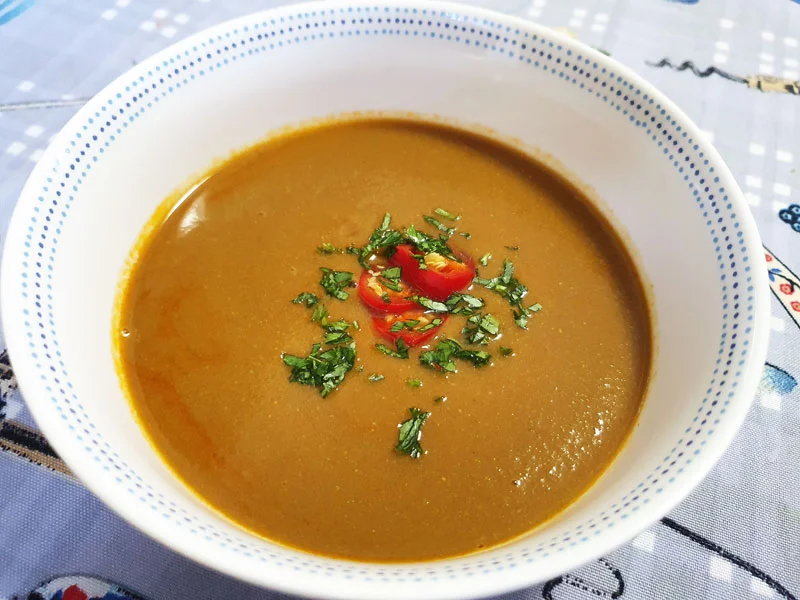
This French-style prawn bisque is a deeply flavoured broth made by simmering prawn heads and shells with vegetables, wine and herbs. Serve it with croutons or use it to enrich fish dishes and sauces.
Ingredients
- 500 gprawn heads and shells
- 2shallots
- 2carrots
- 2celery sticks
- 2 tablespoonstomato purée
- 1 litrehot water
- 200 mldry white wine
- 3 sprigsthyme
- 1 tablespoonchopped parsley
- 2 clovesgarlic
- 1bay leaf
- 1/2 teaspooncinnamon
- 1/2 teaspoonpaprika
- 1 knobbutter
- 2–3 tablespoonsextra-virgin olive oil
- to tastesalt
- to tasteblack pepper
Instructions
- 1
Prepare the vegetables
Peel and rinse the carrots and shallots, rinse the celery, then finely chop all three. Rinse the prawn heads and shells; the shells can also be kept for another recipe.
- 2
Soften the vegetables
Warm the oil in a deep saucepan. Add the chopped carrots, shallots and celery, then season with the thyme and parsley.
- 3
Cook until golden
Stir with a spoon and cook for 5 minutes, or until the shallots turn golden.
- 4
Add the prawn shells
Add the prawn heads and shells and cook for a further 5 minutes, or until the shells become pink.
- 5
Crush and flavour
As they cook, press the prawn heads to release their juices. Stir in the tomato purée and garlic and cook for 1 minute.
- 6
Add wine and water
Pour in the white wine and let the alcohol evaporate over a high heat. Add the hot water and bay leaf.
- 7
Simmer the bisque
Bring to the boil, then cover the pan and simmer over a low heat for 45–50 minutes. The longer the bisque cooks, the more it will reduce.
- 8
Strain the liquid
Pass the bisque through a fine-mesh sieve, pressing the heads and shells with the back of a spoon to extract their juices.
- 9
Season the bisque
Return the bisque to the heat for a few minutes. Season with salt and pepper, then add the cinnamon, paprika and chilli.
- 10
Finish with butter
Just before using the bisque, stir in a knob of butter to give it a richer, smoother finish.
What is prawn bisque?
Bisque is a rich, smooth shellfish broth associated with French cooking. It is served as a soup, often with croutons, or used to add depth to fish dishes and sauces.
This version builds its flavour from prawn heads and shells, simmered with vegetables, wine and herbs. Straining the broth at the end leaves a concentrated liquid without the shell fragments.
Nutrition and macros by portion
The nutrition label shows one serving as written: 95 calories, 5g protein, 8g carbs, 5g fat.
| Portion | Adjustment | kcal | Protein | Carbs | Fat |
|---|---|---|---|---|---|
| Lighter | Use less butter | 67 kcal | 4g | 6g | 4g |
| This serving | As written | 95 kcal | 5g | 8g | 5g |
| Hungry | Serve with extra croutons | 143 kcal | 8g | 12g | 8g |
The carrots, shallots and tomato purée contribute most of the carbohydrates, while olive oil and butter provide most of the fat. Some protein and minerals come from the prawn heads and shells, though the strained broth is not a substantial protein serving. Pair a bowl with a protein-rich main or serve it alongside fish and vegetables for a more balanced meal.
The shellfish base
Prawn heads: press them gently as they cook to release their juices into the vegetables and oil. This step helps give the broth its characteristic seafood depth.
Shells: cook them until they turn pink before adding the liquid. They are strained out later, so use a fine-mesh sieve for a smoother result.
Build flavour in stages
Vegetables: finely chopping the carrots, celery and shallots helps them soften evenly during the short initial cooking. Let the shallots turn golden, rather than rushing straight to the shells.
Wine: pour it in after the tomato purée and garlic, then let it evaporate over a high heat before adding the water. This keeps the broth from tasting sharply of raw wine.
The long simmer
Gentle heat: once the water is in, bring the mixture to the boil and then reduce it to a low simmer with the pan covered. Keep it at a steady, gentle bubble for 45–50 minutes.
Reduction: the bisque concentrates as it cooks, so check its level towards the end of the simmer. If it has reduced more than you want, keep that in mind when deciding how to use it.
Straining and finishing
Fine sieve: strain the broth into a clean container and press the solids with the back of a spoon. Avoid forcing shell fragments through the mesh.
Final seasoning: add the salt, pepper, cinnamon and paprika after straining, then taste and adjust. Stir in the butter just before using the bisque.
How to serve it
As soup: serve the bisque hot with croutons for a simple starter. Its concentrated flavour means a small bowl can make a satisfying first course.
As a cooking base: use it to enrich fish dishes or sauces, adding it gradually so the seafood flavour stays balanced. A little chopped parsley can echo the herb used in the broth.
Recipe notes & tips
- Finely chop the vegetables so they soften evenly before the shells go in.
- Press the prawn heads gently while cooking to release their juices.
- Keep the simmer low and steady after adding the water.
- Use a fine-mesh sieve and press the solids to extract as much broth as possible.
- Add the butter just before serving or using the bisque.
- Taste after straining before adding the final amount of salt and pepper.
Variations
- Add prawns: serve cooked prawn meat in the soup rather than straining it with the shells.
- Use a different herb: swap the thyme for a small sprig of rosemary for a more pronounced herbal note.
- Make it creamier: stir a splash of cream into the finished bisque just before serving.
- Add croutons: top each bowl with crisp croutons for contrast.
- Adjust the spice: reduce or omit the chilli mentioned in the method if you prefer a milder broth.
Common mistakes to avoid
- Skipping the shell cooking: cook the shells until pink so their flavour has time to infuse the base.
- Rushing the vegetables: give them the full 5 minutes, until the shallots are golden.
- Boiling hard throughout: lower the heat after bringing the liquid to the boil and simmer gently.
- Straining without pressing: use the back of a spoon to extract the juices from the heads and shells.
- Adding butter too early: stir it in just before using the bisque for a smooth finish.
How to store
Cool the strained bisque promptly and store it in a covered container in the fridge for up to 2 days. Reheat gently in a saucepan until steaming, without letting it boil vigorously. It can also be frozen in portions and thawed in the fridge before reheating.
Frequently asked questions
Can I make the bisque ahead?
Yes. Prepare and strain it ahead, cool it promptly, then refrigerate it in a covered container for up to 2 days. Add the butter when reheating or just before serving.
Why should I press the prawn heads when straining?
Pressing helps release the juices trapped in the heads and shells into the broth. Use the back of a spoon and avoid pushing shell pieces through the sieve.
How do I know when the bisque has reduced enough?
The recipe simmers it for 45–50 minutes and notes that it thickens as it reduces. Check the liquid level towards the end and stop cooking when it has the concentration you want.
Can I use the bisque as a sauce base?
Yes. The recipe describes it as a flavouring for fish dishes, and it can also enrich sauces. Add it gradually so its concentrated seafood flavour does not overwhelm the dish.
What can I serve with prawn bisque?
Croutons are a natural accompaniment when serving it as soup. For a fuller meal, serve it with fish and vegetables.
Cook it from the original
This recipe comes from fragolosi.it. Their page has the author’s own photos, notes and tips — the best place to cook it from.
Open the recipe on fragolosi.it