
Two-tone tart with crème pâtissière
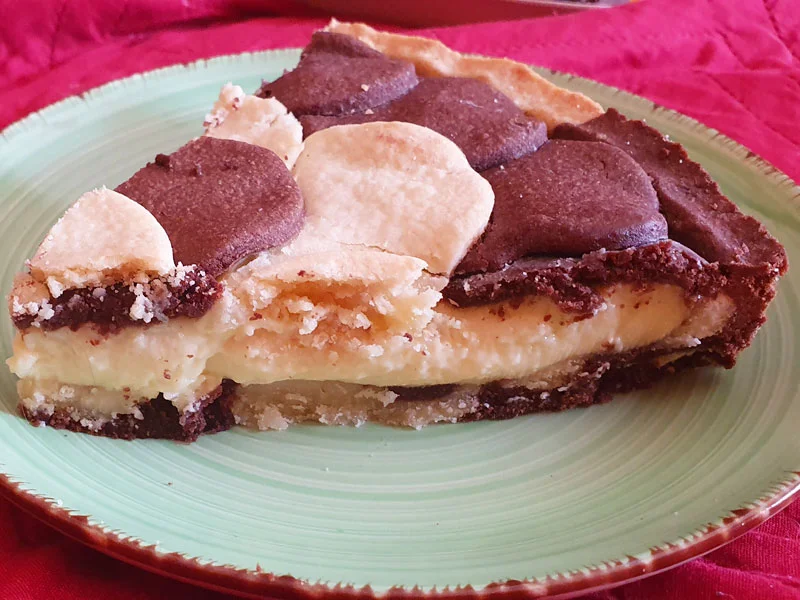
This Italian tart pairs vanilla crème pâtissière with a shortcrust pastry shell and a patchwork of light and cocoa-coloured pastry. It makes a striking centrepiece for a dessert table and can be prepared in stages.
Ingredients
- 300 gplain flour
- 80 gicing sugar
- 1whole egg
- 130 gbutter, at room temperature and cut into pieces
- 1lemon flavouring
- 1 pinchsalt
- 250 gplain flour
- 100 gicing sugar
- 1whole egg
- 130 gbutter, at room temperature and cut into pieces
- 40 gunsweetened cocoa powder
- 1 pinchsalt
- 40 gplain flour
- 15 gcornflour (or potato starch)
- 6egg yolks
- 150 gsugar
- 700 mlwhole milk
- 1 sachetvanillin
Instructions
- 1
Make light pastry
Sift the flour onto the work surface and make a well. Add the butter pieces and a pinch of salt, then rub them together with the flour until the mixture resembles coarse sand.
- 2
Finish light pastry
Mix in the icing sugar, then add the egg and lemon flavouring. Work quickly until a smooth, even dough forms, taking care not to warm it too much.
- 3
Chill light pastry
Shape the dough into a flat disc, wrap it in cling film and refrigerate for at least 30 minutes. Meanwhile, sift together the flour, cocoa and salt for the dark pastry.
- 4
Make dark pastry
Tip the cocoa-flour mixture onto the work surface and make a well. Add the butter and icing sugar, rub together with your fingertips until sandy, then add the egg and work quickly to make a soft, even dough.
- 5
Chill and start custard
Shape the dark dough into a disc, wrap it in cling film and refrigerate for at least 30 minutes. For the crème pâtissière, sift together the flour, cornflour and vanillin. Warm the milk in a small saucepan. In a separate bowl, whisk the egg yolks with the sugar, then whisk in the flour mixture. When the milk boils, pour it gradually over the yolks, whisking, then return everything to the saucepan.
- 6
Cook the custard
Cook over a low heat, whisking continuously so the mixture does not stick to the bottom of the pan. As soon as the custard begins to thicken, take it off the heat and transfer it to a container.
- 7
Cool the custard
Leave the custard to cool at room temperature with cling film pressed directly onto its surface. Once the pastry has chilled, line a 24–26 cm springform tin with baking paper.
- 8
Build tart shell
Divide each pastry dough in half and set one half of each aside for the top. Break the remaining dough into small pieces and arrange them side by side in the tin, alternating the colours. Press them together with your fingers to cover the base and bring the pastry about 2 cm up the sides.
- 9
Add the custard
Pour the crème pâtissière into the pastry shell and level the surface. Roll out the reserved light and cocoa dough separately.
- 10
Top and bake
Cut discs from both rolled doughs and arrange them over the custard, alternating the colours as you like. Bake in a preheated oven at 180°C for about 50 minutes, checking it closely during the final minutes. Remove the tart from the oven and leave it to cool before taking it out of the tin and serving.
What is a two-tone tart with crème pâtissière?
This is an Italian-style crostata: a pastry case filled with crème pâtissière and finished with a pastry topping. Here, pale lemon-scented pastry and cocoa pastry create the two-tone effect.
The version works by using the same crumbly shortcrust method for both doughs, while the creamy filling contrasts with the firm baked pastry. Its patchwork appearance comes from alternating small pieces in the base and pastry discs on top.
Nutrition and macros by portion
The nutrition label shows one serving as written: 790 calories, 15g protein, 101g carbs, 36g fat.
| Portion | Adjustment | kcal | Protein | Carbs | Fat |
|---|---|---|---|---|---|
| Lighter | Smaller slice, fresh fruit | 553 kcal | 11g | 71g | 25g |
| This serving | As written | 790 kcal | 15g | 101g | 36g |
| Hungry | Larger slice | 1185 kcal | 23g | 152g | 54g |
The flour, sugar and milk provide most of the carbohydrates, while butter and egg yolks contribute much of the fat. Eggs, milk and flour also supply some protein. Serve a slice with fresh fruit to add a lighter, refreshing contrast to the rich pastry and custard.
Two pastry doughs
Light pastry: rubbing the butter into the flour until sandy helps create a short, tender texture. Work swiftly once the egg is added so the dough does not become warm and difficult to handle.
Cocoa pastry: sift the cocoa with the flour and salt so the colour and flavour are evenly distributed. The two doughs chill for at least 30 minutes, making them easier to shape.
Getting smooth crème pâtissière
Flour mixture: sift the flour, cornflour and vanillin before adding them to the yolks and sugar. This helps the dry ingredients blend into the mixture without lumps.
Hot milk: pour it over the yolk mixture gradually while whisking, then return everything to the pan. Keep whisking over low heat as the custard thickens so it does not catch on the base.
Assembling the shell and top
Mottled base: alternate small pieces of the two doughs in the tin, then press them together to cover the base and form sides about 2 cm high. Aim for an even thickness so the pastry cooks consistently.
Patchwork topping: roll out the reserved doughs separately and cut discs from each. Arrange them over the levelled custard in alternating colours; the pattern can be irregular.
Baking and doneness
Oven: bake at 180°C for about 50 minutes, as directed, and keep a close eye on the tart during the final minutes. The pastry should be baked through and the top set.
Cooling: let the tart cool before removing it from the tin. This gives the filling time to settle and makes slicing easier.
When to serve it
The tart is suitable for a dessert table, an afternoon treat or a make-ahead pudding. Serve it once cool so the pastry and custard hold their shape when cut.
A small serving of fresh fruit alongside adds a bright contrast to the buttery pastry and sweet filling. The tart is also enjoyable on its own.
Recipe notes & tips
- Keep both pastry doughs chilled for at least 30 minutes before assembling the tart.
- Work the pastry quickly after adding the egg to avoid warming the dough.
- Whisk continuously while the custard cooks over low heat.
- Press cling film directly onto the custard to prevent a skin forming as it cools.
- Check the tart closely during the final minutes of its 50-minute bake.
- Allow the tart to cool before removing it from the tin.
Variations
- Citrus note: use finely grated lemon zest in place of the lemon flavouring.
- Potato starch: use the stated 15 g of potato starch instead of cornflour.
- Uneven patchwork: vary the size of the light and cocoa discs for a less regular top.
- Plain finish: arrange the pastry discs in broad alternating sections rather than a patchwork.
- Fruit accompaniment: serve each slice with fresh berries or sliced seasonal fruit.
Common mistakes to avoid
- Warm pastry: working it for too long can soften it; handle it quickly and chill it for at least 30 minutes.
- Lumpy custard: adding the dry mixture carelessly can leave lumps; sift it and whisk it into the yolks and sugar.
- Caught custard: leaving the pan unattended can make the cream stick; whisk continuously over low heat.
- Uneven base: leaving gaps between pastry pieces can expose the tin; press the pieces together until the base is covered.
- Rushed cooling: removing the tart while hot can make it difficult to handle; let it cool before taking it out of the tin.
How to store
Store the cooled tart covered in the fridge and eat within 2–3 days. Bring a slice to room temperature before serving, or warm it gently in a low oven if preferred.
Frequently asked questions
Can I make the pastry ahead?
Yes. Keep each wrapped dough in the fridge after shaping it, then use it once chilled. The method calls for at least 30 minutes of chilling.
Can I use potato starch instead of cornflour?
Yes. The recipe lists 15 g of potato starch as an alternative to cornflour.
How do I stop a skin forming on the custard?
Press cling film directly onto the surface of the custard while it cools.
What size tin should I use?
Use a springform tin about 24–26 cm in diameter and line it with baking paper.
How can I tell when the tart is ready?
Bake at 180°C for about 50 minutes and check it closely towards the end. The pastry should be baked through and the top set.
Should I remove the tart from the tin while it is hot?
No. Leave it to cool first, then remove it from the tin and serve.
Cook it from the original
This recipe comes from fragolosi.it. Their page has the author’s own photos, notes and tips — the best place to cook it from.
Open the recipe on fragolosi.it