
Creamed salt cod (baccalà mantecato) by Daniel Canzian
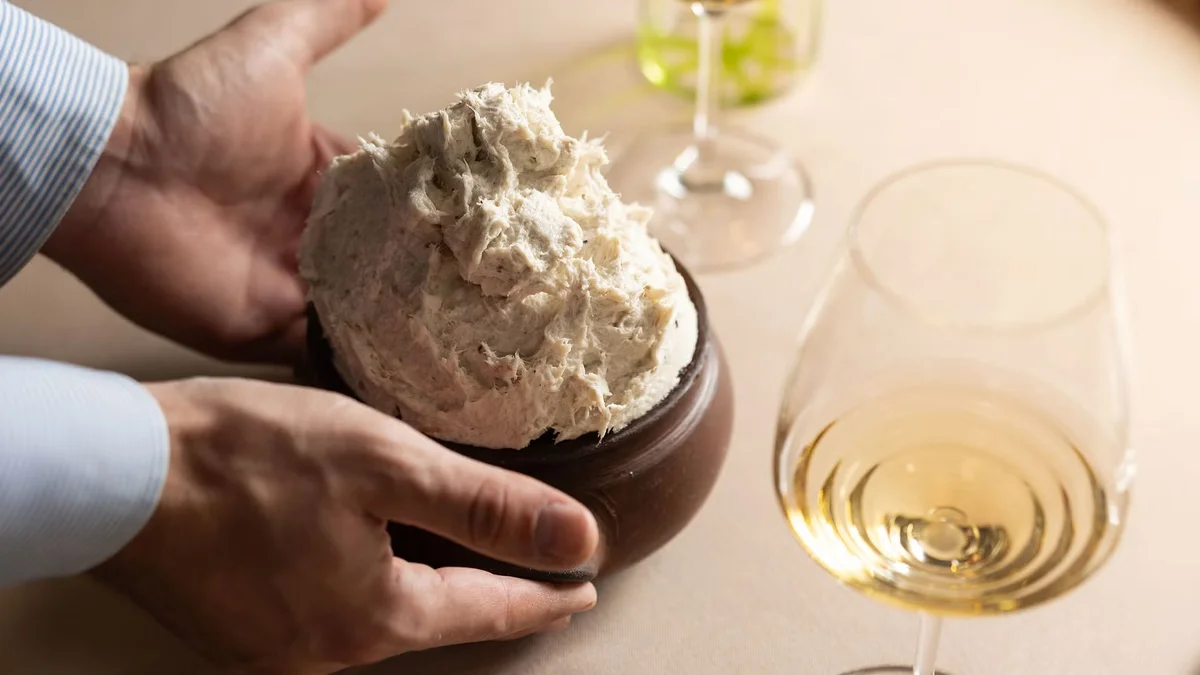
Baccalà mantecato is a Venetian spread of rehydrated stockfish whipped with oil until light and creamy. This version takes time to soak and cook, but the mixing turns a few simple ingredients into a rich dish for serving as an antipasto or snack.
Ingredients
- 1 kgstockfish
- 1 kgvegetable oil
- to tastesalt
Instructions
- 1
Soak the fish
Soak the stockfish for three days, changing the water every 24 hours. When it has rehydrated, fillet it and clean the belly.
- 2
Boil and clean
Put the fish in a pan of unsalted cold water and bring it to the boil. Cook for one hour, then drain and leave it to cool slightly. Clean it before it becomes completely cold, removing any bones and debris so only the white flesh remains.
- 3
Whip with oil
Bring the cod to room temperature, then shred it in a stand mixer. Gradually pour in 1 kg of vegetable oil in a thin stream, occasionally loosening the mixture with a little cooking liquid. After about 30 minutes, it should form a frothy white cream; season with salt to taste.
What is baccalà mantecato?
Baccalà mantecato is a Venetian preparation of fish beaten with oil into a smooth, airy spread. Despite the name, this recipe specifies stockfish, which is dried cod, rather than salted cod.
Here the fish is rehydrated, boiled and whipped until creamy. It is traditionally served as an antipasto, often on bread or polenta.
Nutrition and macros by portion
The nutrition label shows one serving as written: 2290 calories, 60g protein, 0g carbs, 250g fat.
| Portion | Adjustment | kcal | Protein | Carbs | Fat |
|---|---|---|---|---|---|
| Lighter | Use less oil | 1603 kcal | 42g | 0g | 175g |
| This serving | As written | 2290 kcal | 60g | 0g | 250g |
| Hungry | Serve with extra polenta | 3435 kcal | 90g | 0g | 375g |
The fish provides most of the protein, while the vegetable oil supplies nearly all the fat and energy; the dish has very little carbohydrate. Serve a smaller spoonful with vegetables or salad, and add bread or polenta according to appetite.
Choose the right fish
Stockfish: dried fish needs a long soak to regain moisture, so allow the full three days and change the water every 24 hours. The recipe calls for unsalted cooking water because the fish is seasoned at the end.
Oil: add the vegetable oil gradually, rather than tipping it in all at once. A slow stream helps the shredded fish take on the oil evenly as it is whipped.
Clean while warm
Timing: once boiled, let the fish cool just enough to handle, then clean it before it becomes completely cold. This is the point in the method when you remove bones and debris.
Check the flesh carefully as you work, and keep only the white fish. Any remaining bones or dark fragments will affect the finished texture.
Watch the texture
Start with room-temperature fish and shred it in the stand mixer before adding oil. Pour in a thin stream and give the mixture time to incorporate it.
The method gives about 30 minutes of mixing as a guide. Look for a frothy white cream, and add a little cooking liquid occasionally if the mixture needs loosening.
Plan the timing
The three-day soak is the longest stage, followed by an hour of boiling and about 30 minutes of mixing. The listed total time of 120 minutes does not include the soaking period.
A stand mixer is useful for the extended whipping. Have the cooking liquid nearby so you can add a little as needed while the machine runs.
Serve it simply
Spoon the cream onto toasted bread or serve it with polenta for a Venetian-style antipasto. Mild accompaniments let the fish remain the focus.
For a more balanced plate, pair a modest portion with vegetables or a crisp salad. The spread is rich, so a little can go a long way.
Recipe notes & tips
- Set a reminder to change the soaking water every 24 hours.
- Begin the boil with the fish in cold, unsalted water as directed.
- Remove the bones while the fish is still slightly warm.
- Bring the cleaned fish to room temperature before mixing.
- Add the oil in a slow, steady stream rather than all at once.
- Season only after the mixture has become creamy.
Variations
- Serve on polenta: use small pieces of warm or grilled polenta as a base.
- Add black pepper: grind a little over the finished cream for a gentle aromatic note.
- Add parsley: fold in finely chopped parsley just before serving.
- Use toasted bread: spoon the spread onto crisp slices for an easy antipasto.
- Serve with vegetables: offer raw or cooked vegetables alongside the creamy fish.
Common mistakes to avoid
- Rushing the soak: the fish needs three days to rehydrate, with fresh water every 24 hours.
- Adding oil too quickly: pour it in a thin stream so it can incorporate gradually.
- Cleaning when fully cold: remove bones and debris while the fish is still slightly warm.
- Leaving bones behind: check the flesh carefully before putting it in the mixer.
- Adding salt too early: taste and season the finished cream, since the fish may already contribute salt.
How to store
Refrigerate leftovers promptly in a covered container and use within 2 days. Serve chilled or bring to room temperature before eating; if gently warming, do so over low heat and stir carefully.
Frequently asked questions
Is stockfish the same as salted cod?
No. Stockfish is dried cod, while salted cod is preserved with salt. This recipe specifically calls for stockfish and rehydrates it by soaking.
Why does the fish need to soak for three days?
The soaking rehydrates the dried fish before cooking. Change the water every 24 hours, as the method specifies.
Can I skip the stand mixer?
The recipe relies on about 30 minutes of mixing to shred and whip the fish into a frothy cream. A stand mixer is the equipment specified for that step.
How do I know when the cream is ready?
After about 30 minutes of mixing, it should look like a frothy white cream. Add a little cooking liquid occasionally if it needs loosening.
What should I serve with it?
Serve it as an antipasto on toasted bread or with polenta. Vegetables or salad also make a fresh accompaniment.
Cook it from the original
This recipe comes from finedininglovers.asia. Their page has the author’s own photos, notes and tips — the best place to cook it from.
Open the recipe on finedininglovers.asia