
Oysters with vegetable stuffing for Christmas
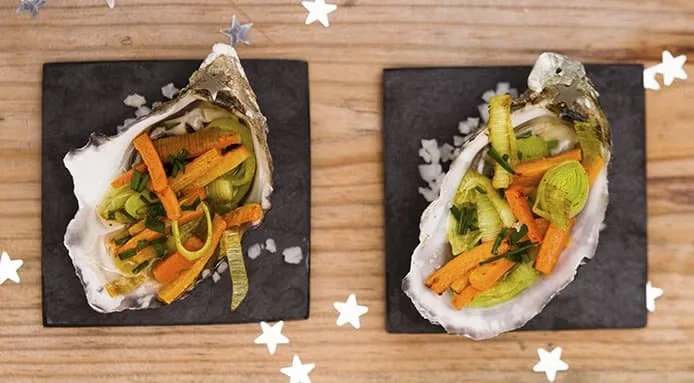
These oysters are topped with a warm, lightly sweet-and-sour mixture of leeks and carrots, finished with fresh chives. They make a quick festive starter, with the vegetables kept slightly crunchy to contrast with the oysters.
Ingredients
- 30 ml (2 tbsp)olive oil
- 1leek, chopped into 1 cm pieces
- 2–3carrots, peeled and cut into sticks
- 5 ml (1 tsp)honey
- 30–45 ml (2–3 tbsp)lemon juice
- Freshly grated, to tastenutmeg
- 8 largeoysters
- 30 ml (2 tbsp)chives, chopped
Instructions
- 1
Fry the vegetables
Heat the oil in a pan over a medium heat. Fry the leek and carrots for 2–3 minutes, until lightly browned.
- 2
Add honey and lemon
Drizzle the honey over the vegetables and stir it in. Add the lemon juice and 3–4 tbsp water.
- 3
Season the mixture
Season with salt and freshly grated nutmeg.
- 4
Cook until crisp
Cook uncovered for about 5 minutes, keeping the vegetables slightly crunchy.
- 5
Prepare the oysters
Meanwhile, open and trim the oysters, then arrange them on a dish.
- 6
Finish and serve
Stir the chopped chives into the vegetables, then spoon the mixture over the oysters.
What are oysters with vegetable stuffing?
Oysters are often served as a festive starter, and this version pairs them with a warm topping rather than serving them plain. The recipe combines leeks and carrots with honey, lemon and nutmeg, then finishes the mixture with chives.
The method is simple and quick: briefly fry the vegetables, simmer them until just tender, and spoon them over freshly opened oysters. Keeping the vegetables slightly crunchy gives the topping contrast.
Nutrition and macros by portion
The nutrition label shows one serving as written: 510 calories, 21g protein, 44g carbs, 30g fat.
| Portion | Adjustment | kcal | Protein | Carbs | Fat |
|---|---|---|---|---|---|
| Lighter | Use less olive oil | 357 kcal | 15g | 31g | 21g |
| This serving | As written | 510 kcal | 21g | 44g | 30g |
| Hungry | Add more oysters | 765 kcal | 32g | 66g | 45g |
Most of the energy and fat come from the olive oil, while the carrots, leek and honey supply most of the carbohydrates. Oysters contribute protein and some fat, alongside the vegetables. For a balanced plate, serve this starter before a meal with additional vegetables and a modest portion of a filling side.
Choosing the vegetables
Leek: Cut it into pieces about 1 cm across so it softens quickly and is easy to spoon over the oysters.
Carrots: Peel them and cut them into sticks of similar thickness, helping them cook evenly while retaining a little bite.
Balancing the flavour
Honey: A small amount rounds out the sharpness of the lemon without turning the topping into a sweet glaze.
Lemon and nutmeg: Lemon adds brightness, while freshly grated nutmeg gives the vegetables a warm, fragrant note. Season with salt to taste, keeping in mind that oysters are naturally briny.
Keeping the vegetables crisp
Brief frying: Cook the leek and carrots over a medium heat for 2–3 minutes, stopping when they are lightly browned rather than deeply coloured.
Final cooking: Leave the pan uncovered for about 5 minutes and check the vegetables as they cook. They should be tender enough to eat but still slightly crunchy.
Opening and serving the oysters
Open and trim the oysters while the vegetables cook, then arrange them on a dish as directed. Take care when handling the shells and use an oyster knife and a protective cloth if you have them.
Spoon the warm vegetable mixture over the oysters just before serving. This keeps the topping fresh and avoids leaving the prepared oysters sitting for longer than necessary.
What to serve alongside
Serve the oysters as a starter, with lemon wedges or plain bread if you want something alongside the topping. The bread can be useful for catching the lemony juices.
For a fuller meal, follow with a simple salad or plainly cooked vegetables so they do not compete with the oysters’ savoury flavour.
Recipe notes & tips
- Cut the leek and carrots to similar sizes so they cook at roughly the same rate.
- Keep the heat at medium to brown the vegetables lightly without scorching the honey later.
- Add the lemon juice and water after stirring in the honey so the liquid loosens the mixture.
- Taste before adding salt, as oysters can bring plenty of briny flavour.
- Prepare the topping close to serving time so it stays warm and the oysters remain fresh.
Variations
- Add parsley: Replace some of the chives with chopped parsley for a different fresh finish.
- Use orange: Swap part of the lemon juice for orange juice for a softer citrus flavour.
- Add celery: Include a little finely cut celery with the leek and carrots for extra crunch.
- Make it peppery: Add a small pinch of black pepper with the nutmeg.
- Serve with toast: Offer small pieces of toasted bread alongside to catch the juices.
Common mistakes to avoid
- Overcooking the vegetables: They lose their bite; stop when they are tender but still slightly crunchy.
- Cutting uneven pieces: Larger pieces may remain firm; aim for similar-sized leek and carrot pieces.
- Burning the honey: It can darken quickly; stir it in briefly before adding the lemon juice and water.
- Adding too much salt: Oysters are already briny; taste the topping before seasoning further.
- Preparing too far ahead: The topping can cool and the oysters can lose freshness; assemble shortly before serving.
How to store
For best quality, assemble and serve the oysters straight away. Keep any unused topping in a covered container in the fridge for up to 2 days and reheat it gently in a pan; only spoon it over oysters that have been stored safely and are still fresh.
Frequently asked questions
Can I make the vegetable topping ahead?
You can cook the topping ahead and chill it in a covered container for up to 2 days. Reheat it gently and assemble the oysters shortly before serving.
How can I tell when the vegetables are done?
They should be lightly browned and tender, but still have a little crunch. Check them after about 5 minutes of uncovered cooking.
Can I use frozen oysters?
Use oysters intended for cooking and thaw them according to their packaging instructions. The recipe calls for opening and trimming the oysters, so check whether your product is already shucked.
Can I use dried chives?
Fresh chopped chives give the brightest finish. If using dried chives, add a small amount and taste, as their flavour and texture differ from fresh.
What can I serve with these oysters?
They work well as a starter with plain bread or a simple salad. Keep accompaniments mild so they do not overwhelm the oyster and lemon flavours.
Cook it from the original
This recipe comes from finedininglovers.co.uk. Their page has the author’s own photos, notes and tips — the best place to cook it from.
Open the recipe on finedininglovers.co.uk