
Citrus salad
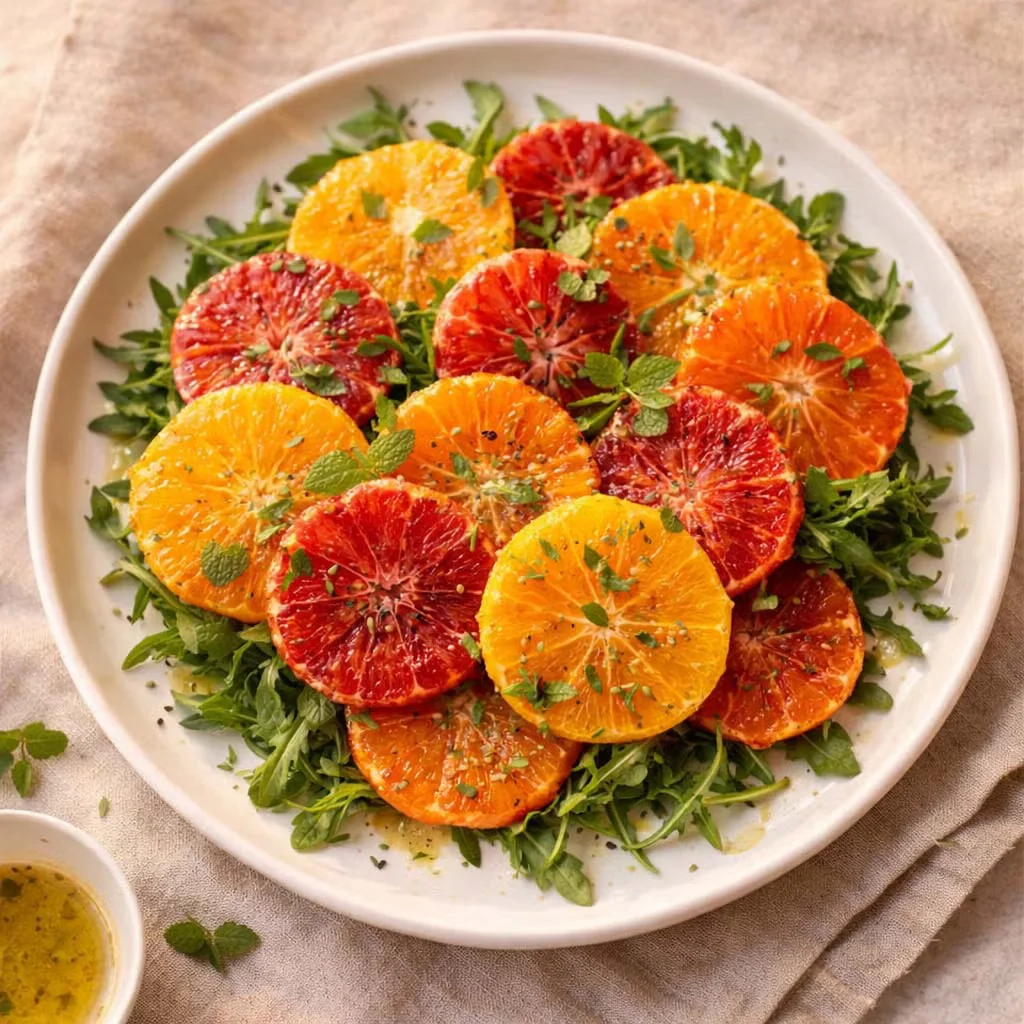
This bright winter salad pairs sweet orange and blood orange with peppery rocket, fresh mint and a honey-and-olive-oil dressing. It is quick to assemble and works as a light lunch or a colourful side.
Ingredients
- 4oranges
- 2blood oranges
- 60 grocket
- 2 tbsp, choppedmint
- 60 mlcitrus juice
- 2 tbspolive oil
- 1 tbsphoney
- to tastesalt
Instructions
- 1
Prepare the fruit
Separate the oranges and blood oranges into segments, removing the membranes. Put the segments in a large mixing bowl with the rocket and chopped mint.
- 2
Mix the dressing
Squeeze the juice from the orange and blood orange membranes into a jug. Add the olive oil, honey and salt, then whisk until combined.
- 3
Toss and serve
Drizzle the dressing over the salad and toss gently to coat. Serve straight away.
What is citrus salad?
Citrus salad is a simple dish built around fresh citrus fruit, often served with herbs or leafy greens. Versions vary across cuisines, so this recipe keeps the combination straightforward rather than tying it to one particular tradition.
Here, sweet oranges and tangy blood oranges meet peppery rocket and mint. A honey dressing softens the sharper notes and brings the ingredients together.
Nutrition and macros by portion
The nutrition label shows one serving as written: 700 calories, 6g protein, 113g carbs, 28g fat.
| Portion | Adjustment | kcal | Protein | Carbs | Fat |
|---|---|---|---|---|---|
| Lighter | Use less olive oil | 490 kcal | 4g | 79g | 20g |
| This serving | As written | 700 kcal | 6g | 113g | 28g |
| Hungry | Add beans and bread | 1050 kcal | 9g | 170g | 42g |
Most of the carbohydrates and natural sugars come from the six oranges, with additional sugar from the honey; the olive oil supplies most of the fat. The rocket contributes a little protein, while the salad overall is not a high-protein meal. Pair it with beans, eggs or another protein-rich food, and add bread or grains if you want a more filling plate.
Choose ripe fruit
Oranges: Choose fruit that feels heavy for its size and has firm, unblemished skin. Juicy fruit makes clean segments and gives the dressing membranes more flavour to contribute.
Blood oranges: Their colour and flavour can vary with the fruit, but they add a pleasing contrast to ordinary oranges. Use them alongside the oranges rather than as a replacement for all the fruit.
Segment without the pith
Clean segments: Removing the membranes takes a little care, but it leaves the salad tender and easier to eat. Work over a bowl if you want to catch any juice as you cut.
Keep the membranes: Squeeze them into the jug for the dressing, as the method directs. Avoid pressing so hard that pith gets into the juice, which can taste bitter.
Balance the dressing
Olive oil: Whisk it with the citrus juice to make a dressing that lightly coats the fruit and leaves. Add it gradually if you prefer a less oily finish.
Honey and salt: Honey rounds out the citrus acidity, while a little salt lifts the flavours. Taste the dressing before adding it, and adjust the salt to suit the fruit.
Keep the leaves fresh
Rocket: Add it to the bowl shortly before serving so it stays lively rather than wilting in the citrus juice. Toss gently, since the segments can break apart.
Mint: Chop it just before you need it to preserve its fresh aroma. Distribute it through the salad rather than leaving it in one concentrated spot.
Serve it as a meal or side
On its own, this salad makes a fresh, fruit-forward lunch. For a more substantial plate, serve it with bread, grains or a protein-rich accompaniment such as beans or grilled cheese.
It also pairs well with savoury dishes where the citrus can cut through richer flavours. Dress only what you plan to serve immediately.
Recipe notes & tips
- Use a sharp knife to cut away the peel and pith cleanly before segmenting the fruit.
- Squeeze the membranes over a jug to catch the juice for the dressing.
- Whisk the honey thoroughly into the citrus juice before adding the olive oil.
- Taste the dressing before tossing, as the sweetness and acidity of the fruit can vary.
- Toss gently just before serving to keep the segments intact and the rocket crisp.
Variations
- Add fennel: Slice it thinly for a crisp, anise-like note.
- Use another leaf: Swap some rocket for watercress or mixed salad leaves.
- Add toasted nuts: Scatter them over the salad for crunch.
- Make it savoury: Add crumbled feta for a salty contrast.
- Change the sweetener: Use maple syrup instead of honey for a different dressing flavour.
Common mistakes to avoid
- Leaving too much pith: Trim it away with the peel, as it can taste bitter.
- Breaking the segments: Toss gently so the fruit stays in distinct pieces.
- Overdressing the leaves: Add the dressing gradually and stop when the salad is lightly coated.
- Dressing too early: Wait until just before serving so the rocket does not wilt.
- Skipping the taste check: Try the dressing first and adjust the salt to balance the fruit.
How to store
The undressed salad is best eaten fresh; keep any components separate in airtight containers in the fridge and use within a day. Once dressed, the rocket will wilt, so serve it immediately rather than storing leftovers.
Frequently asked questions
Can I prepare the citrus ahead of time?
You can segment the fruit a few hours ahead and chill it in a covered container. Keep the rocket, mint and dressing separate until just before serving.
What can I use instead of blood oranges?
Use more regular oranges, or try another sweet citrus fruit such as mandarins. The colour and flavour will differ, but the salad will still work.
Can I make the dressing without honey?
Yes. Leave it out for a sharper dressing, or use maple syrup if you want a similar touch of sweetness.
How do I keep the salad from becoming watery?
Drain the segments if they release a lot of juice, and add the dressing only when you are ready to serve. Toss the salad gently rather than letting it sit in the bowl.
What goes well with citrus salad?
Serve it alongside bread, grains, beans or a savoury main. Its bright citrus flavour also suits richer dishes.
Cook it from the original
This recipe comes from finedininglovers.asia. Their page has the author’s own photos, notes and tips — the best place to cook it from.
Open the recipe on finedininglovers.asia