
Lobster risotto
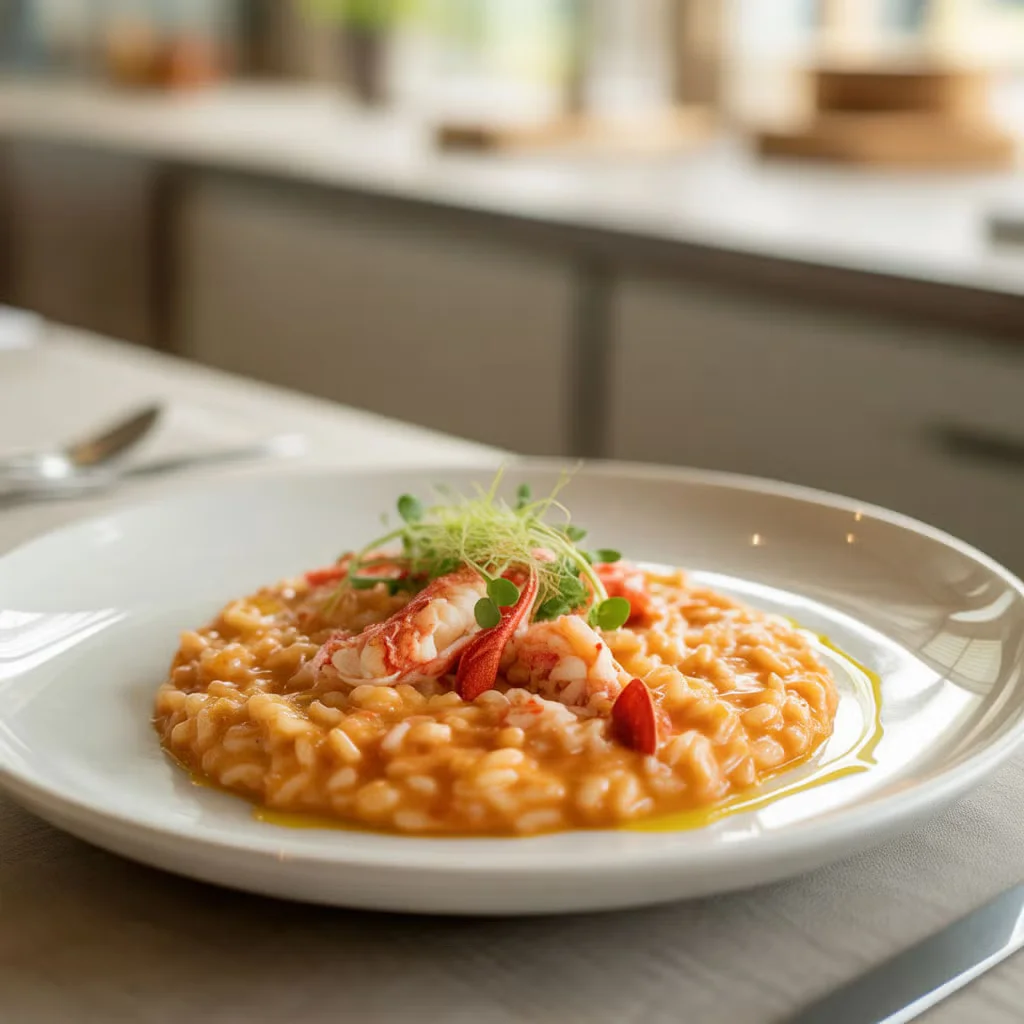
Lobster risotto pairs creamy, slowly cooked Arborio rice with sweet lobster and a buttery parsley base. It makes a special Italian-inspired meal, with the shells simmered in the broth to add flavour.
Ingredients
- 110 gButter
- 2 tbspChopped parsley
- 420 gLobster tails
- 470 mlChicken broth
- 440 mlWater
- to tasteSalt
- 5Minced garlic cloves
- 1Minced shallot
- 230 gArborio rice
- 180 mlDry white wine
- to garnishParmesan cheese
Instructions
- 1
Warm the butter
Put the butter and chopped parsley in a saucepan and bring to a simmer over low heat.
- 2
Remove the meat
Meanwhile, take the lobster tails out of their shells and carefully lift out the meat.
- 3
Cook the lobster
Add the lobster meat to the butter and sauté for 3 minutes on each side, until opaque. Take it out of the pan, chop it and set it aside, keeping the butter.
- 4
Simmer the broth
In a separate saucepan, combine the chicken broth, water, salt and lobster shells. Simmer for 15 minutes.
- 5
Soften the aromatics
Set a frying pan over low heat and add the lobster butter. Stir in the minced garlic and shallot, then sauté until soft, about 2 minutes.
- 6
Toast the rice
Add the Arborio rice and toss to coat. Toast for 3 minutes, until translucent and lightly toasted, then pour in the dry white wine and stir. Cook for 2 minutes.
- 7
Add broth gradually
Add the broth a little at a time, letting the rice absorb each addition before adding more. Stir continuously to help keep the rice from sticking to the pan.
- 8
Check the rice
Once most of the broth has been added, check whether the rice is al dente. If it is still hard, add more broth gradually as needed.
- 9
Finish and serve
Take the pan off the heat and stir in the lobster meat. Serve straight away with Parmesan grated over the top.
What is lobster risotto?
Risotto is an Italian rice dish made by adding liquid gradually and stirring as the grains cook. This version combines creamy Arborio rice with lobster, white wine and a parsley butter.
Lobster shells simmered in the broth lend extra flavour, while the meat is cooked separately and stirred in at the end so it stays distinct.
Nutrition and macros by portion
The nutrition label shows one serving as written: 2200 calories, 105g protein, 191g carbs, 101g fat.
| Portion | Adjustment | kcal | Protein | Carbs | Fat |
|---|---|---|---|---|---|
| Lighter | Use less butter | 1540 kcal | 74g | 134g | 71g |
| This serving | As written | 2200 kcal | 105g | 191g | 101g |
| Hungry | Add a larger side | 3300 kcal | 158g | 287g | 152g |
Most of the carbohydrates come from the Arborio rice, while the butter supplies much of the fat and the lobster provides most of the protein. For a more balanced plate, serve the risotto with a generous side of green vegetables or salad.
Build flavour with the shells
Shell broth: simmering the lobster shells with chicken broth, water and salt gives the cooking liquid a seafood note. Keep it at a gentle simmer so it is ready to add to the rice.
Make the parsley butter
Butter and parsley: warming these together creates the fat used to cook the lobster and then soften the garlic and shallot. Keep the heat low, as the butter can brown if left too hot.
Toast before adding liquid
Rice: coating the Arborio grains in the lobster butter and toasting them for 3 minutes helps them take on flavour before the liquid goes in. Stir in the wine and cook it for 2 minutes before starting with the broth.
Stir and check for doneness
Gradual additions: add broth in small amounts and wait for each to be absorbed before adding more. Continuous stirring helps prevent sticking and makes it easier to judge how quickly the rice is cooking.
Al dente: taste the rice once most of the broth is in; it should be tender but still have a slight bite. Add more broth gradually if the centre is still hard.
Finish at the right moment
Lobster: stir the cooked meat in after taking the pan off the heat, as the recipe directs. This keeps the lobster from cooking for the full risotto-making time.
Serve the risotto immediately, topped with grated Parmesan. A simple green salad or lightly cooked vegetables make a fresh contrast to its buttery richness.
Recipe notes & tips
- Keep the broth gently simmering so it does not cool the rice with each addition.
- Stir frequently and scrape the base of the pan to catch rice before it sticks.
- Add salt cautiously, since chicken broth and Parmesan can both contribute saltiness.
- Check the lobster for opacity after the stated cooking time, as the thickness of the tails can affect how quickly they cook.
- Grate the Parmesan just before serving for the freshest flavour.
Variations
- Add lemon: finish with a little lemon zest for a bright note.
- Use fish stock: replace the chicken broth with fish stock for a more seafood-forward flavour.
- Add peas: stir in cooked peas at the end for colour and sweetness.
- Include extra herbs: add a little chopped chives alongside the parsley.
- Change the cheese: use a small amount of finely grated hard Italian cheese in place of Parmesan.
Common mistakes to avoid
- Boiling the broth hard: keep it at a simmer so it is ready to add without reducing too quickly.
- Adding all the broth at once: add it gradually so you can control the rice's texture.
- Leaving the rice unstirred: stir continuously as directed to help prevent it sticking to the pan.
- Overcooking the lobster: remove it when opaque, then add it back only after the risotto is off the heat.
- Adding Parmesan too early: grate it over the finished dish just before serving.
How to store
For best texture, serve this risotto straight away. If you have leftovers, refrigerate them in a covered container and use within 2 days; reheat gently in a pan with a splash of water or broth, stirring until piping hot.
Frequently asked questions
Can I use frozen lobster tails?
Yes. Thaw them fully in the refrigerator and remove the meat from the shells before cooking. Use the shells in the broth as described.
Can I make the broth ahead?
Yes. Simmer the shells with the chicken broth, water and salt, then strain and chill the liquid. Reheat it to a gentle simmer before adding it to the rice.
What if I run out of broth before the rice is tender?
The method allows for more broth as needed. Add it gradually; if you have no more prepared broth, use hot water in small additions.
How do I know when the risotto is ready?
Taste the rice once most of the broth has been absorbed. It should be tender but retain a slight bite, rather than having a hard centre.
Can I reheat lobster risotto?
Yes, though the rice will soften further and the texture may be less creamy. Reheat it gently with a splash of water or broth, stirring until piping hot.
Cook it from the original
This recipe comes from finedininglovers.asia. Their page has the author’s own photos, notes and tips — the best place to cook it from.
Open the recipe on finedininglovers.asia