
French omelette
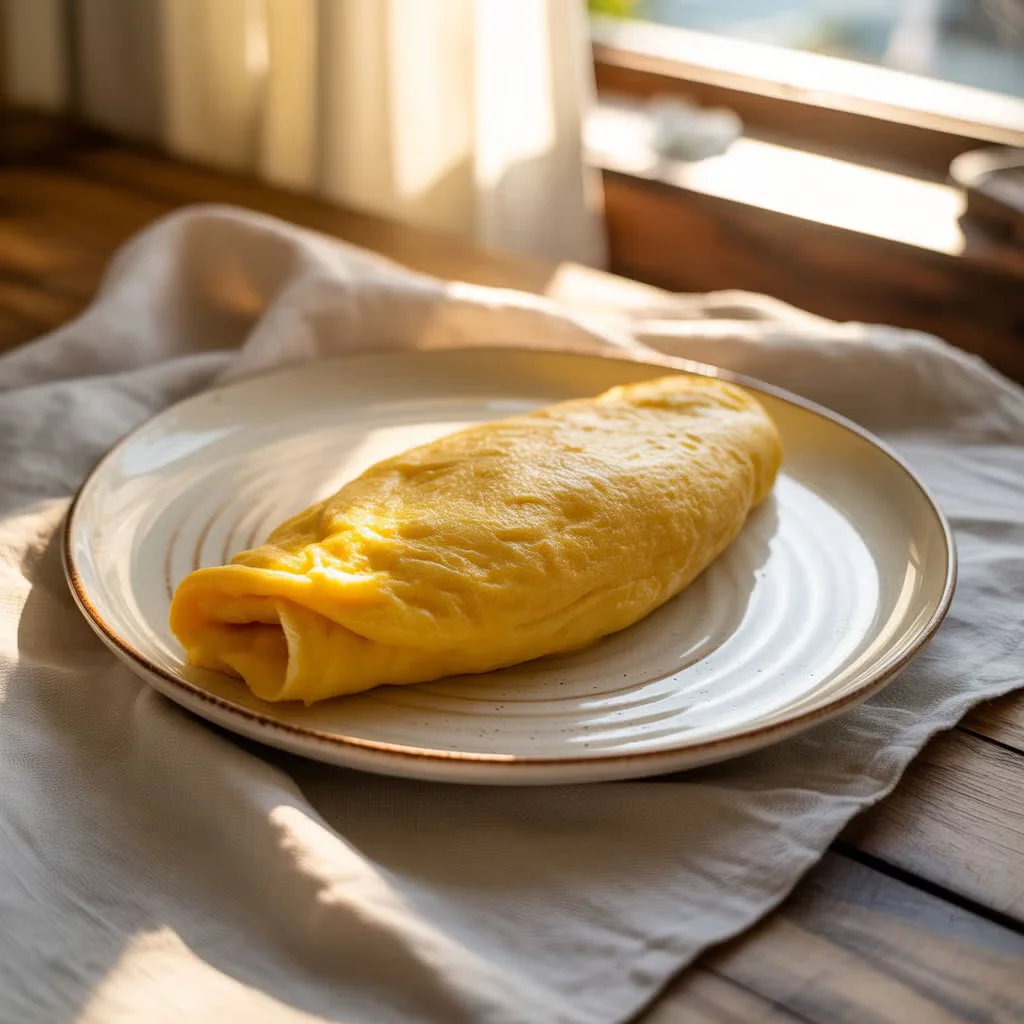
A classic French omelette is made with eggs and butter, cooked until soft and silky, then gently folded. It makes a quick, satisfying lunch with just a few ingredients.
Ingredients
- 3eggs
- to tastesalt
- to tasteblack pepper
- 15 ml (1 tbsp)unsalted butter
Instructions
- 1
Beat the eggs
Beat the eggs with a fork in a bowl. Season with salt and black pepper to taste.
- 2
Cook the eggs
Melt the butter in a non-stick frying pan over a medium heat until foamy. Add the eggs and stir quickly with a spatula. After about 1 minute, when they are softly scrambled, spread them into an even layer across the pan.
- 3
Fold and serve
Take the pan off the heat. Tilt it and gently roll the omelette until it folds in half. Use the spatula to fold the overhanging edge over and close the omelette. Hold the pan directly over a serving plate and turn the omelette out onto it. Serve immediately.
What is a French omelette?
A French omelette is a simple egg dish associated with French cooking, prized for its soft, delicate texture rather than a browned exterior. This version uses only eggs, seasoning and butter, so the cooking technique does the work.
Nutrition and macros by portion
The nutrition label shows one serving as written: 318 calories, 19g protein, 1g carbs, 25g fat.
| Portion | Adjustment | kcal | Protein | Carbs | Fat |
|---|---|---|---|---|---|
| Lighter | Use less butter | 223 kcal | 13g | 1g | 18g |
| This serving | As written | 318 kcal | 19g | 1g | 25g |
| Hungry | Add a slice of toast | 477 kcal | 28g | 2g | 38g |
Most of the carbohydrates are negligible, while the eggs provide the protein and both the eggs and butter contribute fat. Serve it with salad or vegetables and a modest portion of bread for a more balanced plate.
The role of each ingredient
Eggs: three eggs make a substantial single-serving omelette and provide its structure. Beat them just enough with a fork to combine the whites and yolks.
Butter: unsalted butter melts in the pan and gives the eggs a rich flavour. Foaming is the cue to add the eggs.
Stir before spreading
Rapid stirring at the start helps the eggs set into soft curds. Once they are softly scrambled, stop stirring and spread them evenly so the omelette can form a single layer.
Look for a soft set
The method gives about 1 minute for the eggs to become softly scrambled before they are spread out. They should remain tender at this point; avoid waiting for a firm, dry surface before folding.
Fold while warm
Taking the pan off the heat before folding helps keep the eggs from cooking further as you shape them. Tilt the pan and use a gentle roll, then tuck the overhanging edge over with the spatula.
Serve it straight away
The omelette is best served immediately, while its centre is still soft. Pair it with a crisp green salad or a slice of toast for a simple lunch.
Recipe notes & tips
- Beat the eggs with a fork until the whites and yolks are combined.
- Use a non-stick pan so the omelette releases more easily.
- Wait for the butter to foam before adding the eggs.
- Stir rapidly at first, then spread the eggs once they are softly scrambled.
- Fold the omelette gently with the pan off the heat.
- Have the serving plate ready before you start folding.
Variations
- Fresh herbs: stir chopped chives or parsley into the beaten eggs.
- Cheese: scatter a little grated cheese over the eggs just before spreading them.
- Mushrooms: cook sliced mushrooms separately and add them before folding.
- Spinach: wilt the spinach first and add it as a filling.
- Peppery finish: add extra black pepper at the table.
Common mistakes to avoid
- Overbeating: whisking too vigorously can make the texture less delicate; use a fork to combine the eggs.
- Butter too hot: browned butter can affect the flavour; add the eggs when it is foamy, not dark.
- Stirring too long: the eggs may become dry; stop once they are softly scrambled and spread them.
- Cooking after the scramble: the eggs can firm up before folding; take the pan off the heat at the stated stage.
- Forcing the fold: the omelette may tear; tilt the pan and roll it gently with the spatula.
How to store
This omelette is best eaten immediately for its soft texture. If needed, refrigerate it in a covered container and eat within 1 day; reheat gently in a pan until just warmed through.
Frequently asked questions
How long does this omelette take to cook?
The stated total time is 10 minutes. The eggs spend about 1 minute cooking before they are spread out and folded.
How can I tell when the eggs are ready to spread?
They should look softly scrambled after about 1 minute of rapid stirring. Spread them into an even layer at that point.
Why take the pan off the heat before folding?
It helps prevent the eggs from cooking too firmly while you shape the omelette. The method specifies folding it away from the heat.
Can I make this in advance?
It is best served immediately because the texture is soft and delicate. You can prepare the eggs and seasoning beforehand, then cook just before serving.
Can I add fillings?
Yes. Cook fillings such as mushrooms or spinach separately, then add them before folding so they do not release excess moisture into the eggs.
What can I serve with a French omelette?
A green salad, vegetables or toast all work well. Choose a side that suits whether you want a light lunch or a more substantial meal.
Cook it from the original
This recipe comes from finedininglovers.asia. Their page has the author’s own photos, notes and tips — the best place to cook it from.
Open the recipe on finedininglovers.asia