
Pad Thai
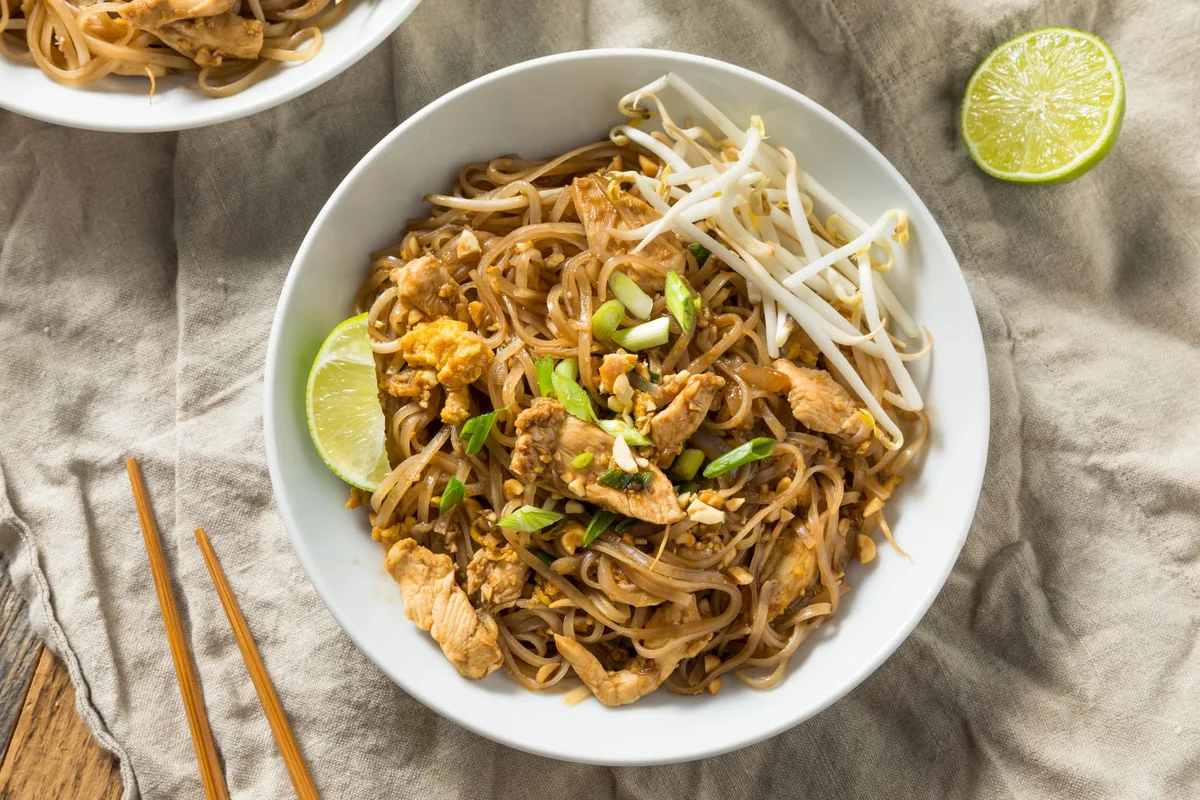
Pad Thai is a Thai stir-fried noodle dish that brings together tangy lime, savoury fish sauce, a hint of sweetness and crunchy peanuts. This quick version uses cooked prawns and softened rice noodles for a satisfying meal in about 30 minutes.
Ingredients
- 128 g (4.5 oz)flat rice noodles
- 45 ml (3 tbsp)lime juice
- 2.5 ml (0.5 tsp)cayenne pepper
- 10 ml (2 tsp)palm sugar
- 30 ml (2 tbsp)fish sauce
- 30 ml (2 tbsp)vegetable oil
- 198 g (7 oz), cooked and peeledprawns
- 4, slicedspring onions
- 142 g (5 oz)bean sprouts
- 28 g (1 oz), finely choppedpeanuts
- to garnishfresh coriander leaves
- 2, to servelime wedges
Instructions
- 1
Soften the noodles
Put the flat rice noodles in a large heatproof bowl and cover with boiling water. Leave them for 4 minutes to soften, then drain and rinse under cold water.
- 2
Mix the sauce
In a bowl, combine the freshly squeezed lime juice, cayenne pepper, palm sugar and fish sauce, mixing well.
- 3
Stir-fry the ingredients
Heat the vegetable oil in a frying pan and fry the prawns until warmed through. Add the spring onions and noodles, then toss to combine. Pour in the lime juice mixture and stir in the bean sprouts. Add half the chopped peanuts and some fresh coriander leaves, then cook for 1 minute, until everything is warmed through.
- 4
Garnish and serve
Transfer the noodles to serving bowls and garnish with the remaining peanuts and coriander leaves. Serve with 1 lime wedge on the side.
What is Pad Thai?
Pad Thai is a Thai stir-fried noodle dish, commonly built around rice noodles and a balance of tangy, sweet and savoury flavours. Its mix of sauce, vegetables and toppings gives each mouthful a contrast of soft noodles and fresh crunch.
This version keeps the method straightforward by using cooked prawns and a quick lime-and-fish-sauce mixture. Peanuts and coriander finish the dish with crunch and freshness.
Nutrition and macros by portion
The nutrition label shows one serving as written: 1170 calories, 67g protein, 128g carbs, 44g fat.
| Portion | Adjustment | kcal | Protein | Carbs | Fat |
|---|---|---|---|---|---|
| Lighter | Less oil, more sprouts | 819 kcal | 47g | 90g | 31g |
| This serving | As written | 1170 kcal | 67g | 128g | 44g |
| Hungry | Larger noodle portion | 1755 kcal | 101g | 192g | 66g |
Most of the carbohydrates come from the rice noodles, with a little more from palm sugar and bean sprouts. The vegetable oil and peanuts provide much of the fat, while prawns contribute most of the protein. Serve with extra vegetables or a fresh salad to balance the plate.
Build the flavour balance
Lime and fish sauce: the lime brings acidity while fish sauce supplies a salty, savoury base. Palm sugar rounds out those sharper flavours, and cayenne adds gentle heat.
Taste the finished noodles with the lime wedge at the table; a squeeze can brighten the dish further. The chopped peanuts add a toasted, nutty contrast.
Get the noodles right
Soaking: four minutes in boiling water is the stated softening time, but noodle thickness can affect how quickly they become pliable. Drain and rinse them as directed before adding them to the pan.
Rinsing: cold water stops the noodles cooking further and helps wash away excess surface starch. Drain them well so they do not water down the sauce.
Keep the prawns tender
Cooked prawns: they only need to be warmed through, so avoid frying them for longer than necessary. Add them to the hot oil first, then move on to the spring onions and noodles.
Bean sprouts: stir them in with the sauce and cook for the final minute. This warms them while leaving some fresh crunch.
Serve while hot
The final minute in the pan brings the noodles, sauce and sprouts together and warms the toppings added at that stage. Have the bowls and garnish ready before you start that short finishing cook.
Serve straight away with the remaining chopped peanuts, coriander and a lime wedge. A simple side of extra bean sprouts or sliced cucumber can add freshness without competing with the noodles.
Make the single serving smoothly
Small batch: use a frying pan wide enough to toss the noodles without packing them tightly together. If they clump, separate them gently as you toss.
Prep first: slice the spring onions, chop the peanuts and mix the sauce before heating the oil. The cooking stage moves quickly once the pan is hot.
Recipe notes & tips
- Measure out the sauce ingredients before heating the pan so they are ready to add.
- Drain the noodles thoroughly after rinsing to keep the sauce from becoming diluted.
- Use a broad pan so the noodles and sprouts can be tossed evenly.
- Add the cooked prawns only long enough to warm them through.
- Keep some of the peanuts and coriander aside for the finishing garnish.
- Serve the lime wedges alongside so each person can adjust the acidity.
Variations
- More vegetables: add extra bean sprouts for a fresher, crunchier bowl.
- Extra heat: increase the cayenne pepper slightly to make the sauce spicier.
- Tofu swap: use cooked tofu in place of the prawns for a meat-free variation.
- Different nuts: replace the peanuts with chopped cashews for a different crunch.
- Herb change: add sliced Thai basil alongside the coriander for a fragrant finish.
Common mistakes to avoid
- Over-soaking noodles: they can turn too soft in the pan; drain them after the stated 4 minutes.
- Wet noodles: excess rinsing water can dilute the sauce; drain them well before cooking.
- Crowded pan: the ingredients are harder to toss evenly; choose a broad frying pan.
- Overcooking prawns: they can become firm; fry only until warmed through.
- Adding all the peanuts early: the garnish loses its crunch; reserve half for serving.
- Skipping the lime wedge: the dish may taste less bright; serve the wedges on the side.
How to store
Refrigerate leftovers promptly in a sealed container and eat within 2 days. Reheat in a frying pan over medium heat until hot throughout, adding a small splash of water if the noodles have dried out.
Frequently asked questions
Can I use uncooked prawns?
This recipe specifies cooked, peeled prawns. If substituting raw prawns, cook them fully before continuing with the noodles and other ingredients.
Can I prepare the noodles ahead?
You can soften and rinse them shortly before cooking, then drain them well. They are best added to the pan soon after preparation so they do not stick together.
How spicy is this Pad Thai?
The recipe uses 0.5 teaspoon of cayenne, which gives it a noticeable kick. Use less if you prefer a milder dish.
What can I use instead of palm sugar?
A similar amount of soft brown sugar can be used as a substitute. The flavour will differ slightly, but it will still add sweetness to the sauce.
Can I make this without fish sauce?
You can substitute soy sauce, though it will change the dish's savoury flavour. Add it gradually and taste the sauce before mixing it into the noodles.
How do I stop the noodles sticking?
Rinse them under cold water after draining, let excess water run off and toss them well in the pan. A sufficiently large pan also makes them easier to separate.
Cook it from the original
This recipe comes from finedininglovers.asia. Their page has the author’s own photos, notes and tips — the best place to cook it from.
Open the recipe on finedininglovers.asia