
Eggplant Caponata
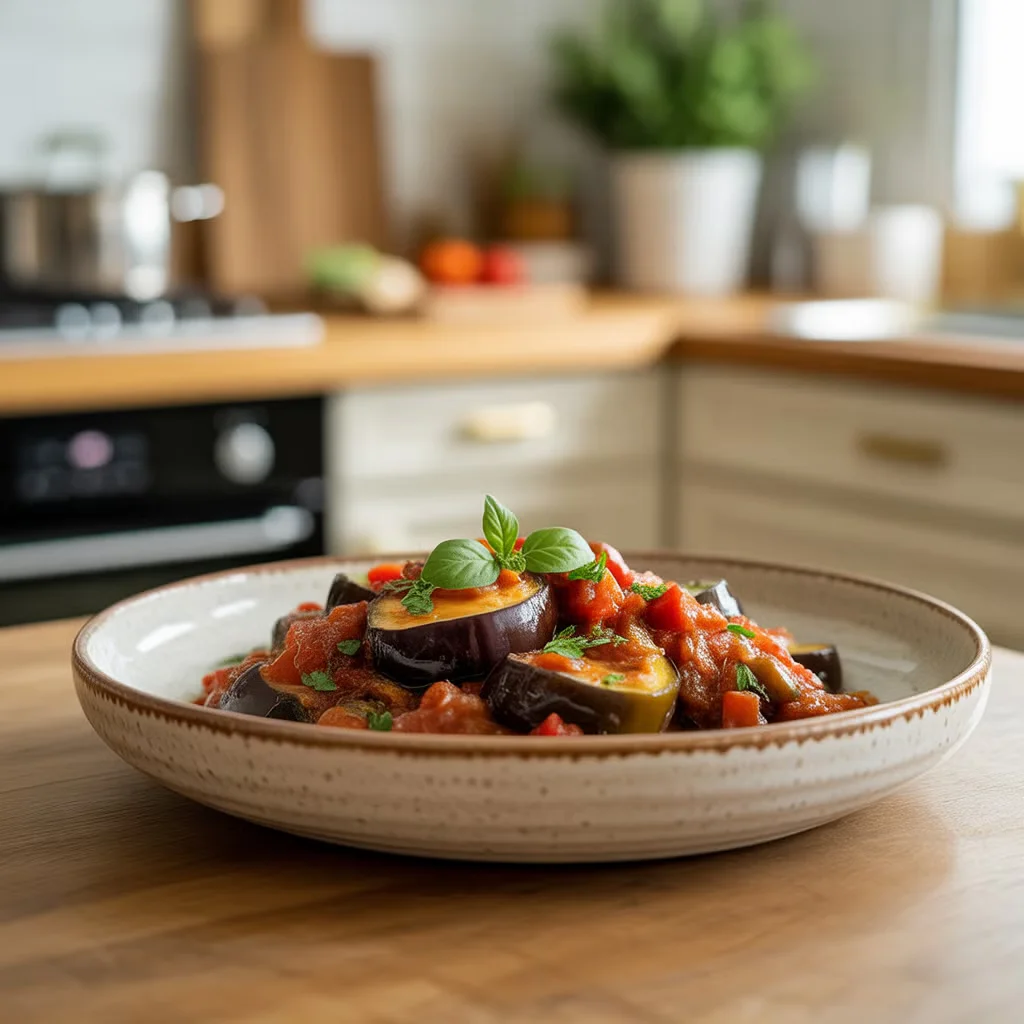
Eggplant caponata is a sweet-and-savoury Italian vegetable dish, served here at room temperature with fresh basil and crostini. It makes a relaxed starter or snack for sharing, with tender aubergine, tomatoes, capers and vinegar in every bite.
Ingredients
- 3 tbspRaisins
- 3 tbspSherry vinegar
- 2 tbspCapers
- 2 tbspOlive oil
- 1, choppedOnion
- 1, deseeded and dicedRed pepper
- To tasteSea salt
- 1 tbspTomato purée
- 3, gratedGarlic cloves
- 454 g (16 oz), cored and dicedTomatoes
- 0.5 tspGranulated sugar
- 1, roasted and dicedAubergine
- To garnishFresh basil leaves
Instructions
- 1
Soak the raisins
Put the raisins, sherry vinegar and capers in a small bowl and set aside.
- 2
Cook the vegetables
Warm the olive oil in a large frying pan over a medium heat. Add the chopped onion and cook for 5 minutes, until softened. Stir in the diced red pepper and sea salt to taste, then cook for another 5 minutes.
- 3
Reduce the tomatoes
Add the tomato purée, grated garlic, diced tomatoes and granulated sugar. Cook, stirring regularly, until the tomatoes have reduced.
- 4
Add the aubergine
Add the diced aubergine, raisins, sherry vinegar and capers to the pan. Cook for 5 minutes, then season to taste.
- 5
Cool and serve
Let the caponata cool to room temperature. Garnish with fresh basil leaves and serve with crostini.
What is caponata?
Caponata is a Sicilian dish of cooked vegetables, best known for its tender aubergine and contrasting sweet, sour and savoury flavours. It is commonly served as an antipasto or side dish, often at room temperature.
This version builds flavour from softened onion, pepper and tomatoes, then adds capers, vinegar and raisins for a sharp-sweet finish. Roasted aubergine brings a soft, substantial texture to the mixture.
Nutrition and macros by portion
The nutrition label shows one serving as written: 640 calories, 13g protein, 100g carbs, 29g fat.
| Portion | Adjustment | kcal | Protein | Carbs | Fat |
|---|---|---|---|---|---|
| Lighter | Use less olive oil | 448 kcal | 9g | 70g | 20g |
| This serving | As written | 640 kcal | 13g | 100g | 29g |
| Hungry | Serve with extra crostini | 960 kcal | 20g | 150g | 44g |
Most of the carbohydrates come from the tomatoes, raisins, onion, pepper and sugar; the olive oil contributes much of the fat, while the vegetables and capers provide a modest amount of protein. Serve a smaller scoop with extra salad or vegetables to balance the plate, or add crostini when serving it as a more filling snack.
The sweet-sour balance
Vinegar and capers: These give the dish its tangy, salty edge. The raisins soften that sharpness with little bursts of sweetness.
Sugar: A small amount rounds out the tomatoes rather than making the caponata taste overtly sweet. Taste at the end and adjust the seasoning as directed.
Build the tomato base
Onion and pepper: Give them the full cooking time so they soften before the tomato mixture goes in. This creates a mellow base rather than leaving the vegetables crisp.
Tomatoes: Stir regularly as they reduce, so the mixture thickens without catching on the bottom of the pan. The recipe gives no fixed time for this stage, so use the change in consistency as your cue.
Add aubergine gently
Roasted aubergine: It is already cooked when it is added, so the final 5 minutes are for bringing it together with the tomato and seasoning. Fold it in carefully to help the pieces keep their shape.
Raisins and capers: Add these along with their soaking vinegar. Stir through so their flavours spread across the dish.
Serve at room temperature
Cooling: Let the caponata come to room temperature before serving, as the method specifies. This also makes it practical to prepare ahead while you get the rest of a meal ready.
To serve: Add the basil just before bringing it to the table, and offer crostini alongside for scooping up the vegetables and sauce.
Choose the right accompaniments
Crostini: Crisp bread gives a contrast to the soft vegetables and makes this work as a snack or starter. Serve it separately so it stays crunchy.
A larger spread: Caponata also suits a table of antipasti-style dishes. Pair it with other vegetables or a simple green salad if you want a more varied plate.
Recipe notes & tips
- Chop the vegetables to a similar size so they cook more evenly.
- Stir the tomato mixture regularly as it reduces to help prevent sticking.
- Taste before adding more salt, as capers bring a salty flavour.
- Allow the caponata to cool to room temperature before garnishing.
- Add the basil just before serving to keep its fresh flavour prominent.
Variations
- More herbs: Add extra fresh basil at serving for a stronger herbal finish.
- Extra tang: Stir in a little more sherry vinegar to taste.
- Less sweet: Reduce or leave out the sugar if your tomatoes taste sweet.
- Pepper swap: Use a yellow or orange pepper in place of the red one.
- Bread on the side: Serve with toasted crostini for scooping.
Common mistakes to avoid
- Rushing the onion: It may stay firm; cook it for the full 5 minutes until softened.
- Skipping the pepper cooking time: Give it another 5 minutes after adding so it softens.
- Letting the tomatoes catch: Stir regularly while they reduce and adjust the heat if needed.
- Overworking the aubergine: Fold it in gently during the final 5 minutes to keep the pieces intact.
- Serving it hot: Let it cool to room temperature as the method directs.
How to store
Store cooled caponata in a covered container in the fridge and use within 3–4 days. Reheat gently in a pan or microwave, or bring it back to room temperature before serving.
Frequently asked questions
Can I make caponata ahead?
Yes. Prepare it through the cooking steps, then cool and refrigerate it. Bring it to room temperature and add the basil just before serving.
What should I serve with caponata?
Serve it with crostini, as suggested in the recipe. It also works alongside other antipasti or a simple salad.
Should caponata be served hot or cold?
This recipe calls for it to cool to room temperature before serving. It can also be chilled and brought out ahead of the meal.
How do I know when the tomato mixture is reduced?
It should look thicker and less watery than when the diced tomatoes first went into the pan. Keep stirring regularly as it cooks.
Can I adjust the sweet and sour flavour?
Yes. Taste after cooking and adjust the seasoning; the recipe also directs you to season to taste. Keep in mind that the raisins add sweetness and the capers and vinegar add tang and saltiness.
Cook it from the original
This recipe comes from finedininglovers.asia. Their page has the author’s own photos, notes and tips — the best place to cook it from.
Open the recipe on finedininglovers.asia