
Apricot Chutney
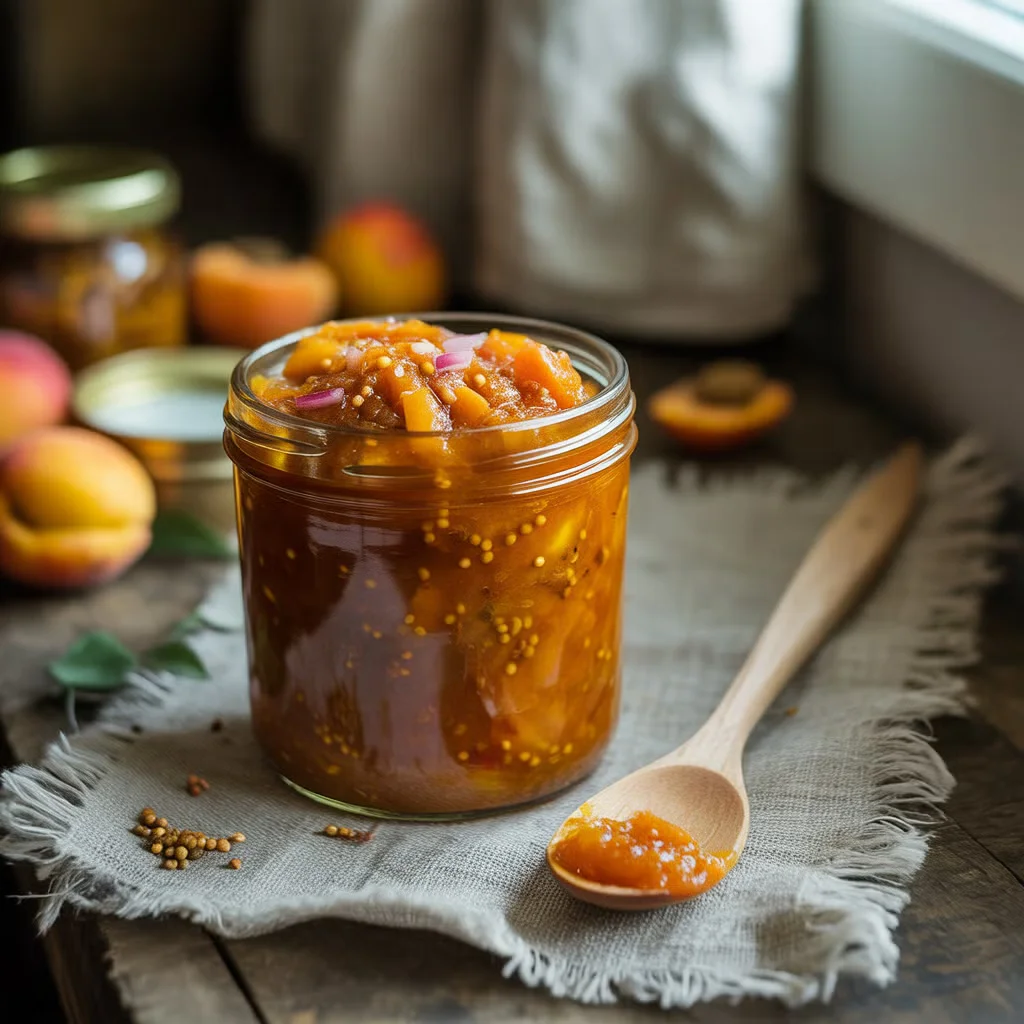
Apricot chutney is a sweet-and-sour preserve with gentle warmth from curry powder, nutmeg and cloves. Cook a batch to serve alongside cheese, or spoon it over savoury dishes for a fruity, spiced accent.
Ingredients
- 1,361 g (48 oz)fresh apricots
- 3onions, chopped
- 473 ml (16 oz)white vinegar
- 850 g (30 oz)sugar
- 1 tspsalt
- 1 tspground nutmeg
- 1 tspground cloves
- 1 tspcurry powder
Instructions
- 1
Prepare apricots
Remove the stones from the apricots and chop the fruit roughly.
- 2
Simmer the chutney
Put the chopped apricots, onions, white vinegar, sugar, salt, ground nutmeg, ground cloves and curry powder in a deep saucepan. Bring to the boil, then lower the heat and simmer uncovered for 1 hour, stirring occasionally.
- 3
Jar and cool
Once the mixture has thickened, transfer it to sterilised jars. Seal the jars and leave them to cool to room temperature, then store in a cool, dark place.
What is apricot chutney?
Chutney is a condiment of fruit or vegetables cooked with vinegar and seasonings, associated with South Asian cooking and now made in many styles around the world. This version combines fresh apricots and onions with sugar, vinegar and warming spices.
The long, uncovered simmer helps the fruit soften and the mixture thicken, while the vinegar and spices balance the sweetness. It makes a useful make-ahead addition to a cheese board or savoury meal.
Nutrition and macros by portion
The nutrition label shows one serving as written: 4100 calories, 18g protein, 1060g carbs, 8g fat.
| Portion | Adjustment | kcal | Protein | Carbs | Fat |
|---|---|---|---|---|---|
| Lighter | Use a smaller spoonful | 2870 kcal | 13g | 742g | 6g |
| This serving | As written | 4100 kcal | 18g | 1060g | 8g |
| Hungry | Serve with a larger meal | 6150 kcal | 27g | 1590g | 12g |
Most of the carbohydrates and sugars come from the large quantity of sugar, with additional carbohydrate from the apricots and onions. The fruit contributes most of the fibre, while the recipe contains very little fat and only a modest amount of protein. Because this is a preserve, serve a small spoonful alongside a meal with a protein source and vegetables.
Choosing the ingredients
Apricots: Use ripe fruit that is still firm enough to chop; very soft fruit will break down more quickly as it cooks.
Vinegar and sugar: These provide the chutney's sharp and sweet backbone. Measure both carefully, as they make up a large part of this recipe.
Spices: Curry powder, nutmeg and cloves give the preserve its gentle savoury warmth. Measure them level so that no single spice dominates.
Getting the simmer right
Start by bringing the ingredients to the boil, then reduce the heat to a steady simmer. Keep the pan uncovered as directed so moisture can evaporate and the chutney can thicken.
Stir from time to time, paying attention to the bottom of the pan as the mixture reduces. If it catches, lower the heat and stir more frequently.
Checking the texture
The recipe's cue is that the chutney should be thickened before it goes into jars. The fruit should be tender, and the mixture should look cohesive rather than watery.
Remember that a hot chutney can seem looser than it will once cooled. Avoid extending the cooking time simply to make it very firm in the saucepan.
Timing the batch
The stated total time is 90 minutes, including the 1-hour simmer. Allow extra time if your fruit releases a lot of liquid and the mixture has not thickened yet.
Prepare the jars before the chutney is ready, so you can transfer the hot mixture promptly. The recipe calls for sterilised jars and cooling to room temperature after sealing.
Serving ideas
Cheese: Serve a small spoonful with a cheese board, where its sweet-tart flavour contrasts with savoury cheeses.
Savoury dishes: Try it alongside roasted or grilled dishes, or use it as a table condiment. Start with a little and add more to taste.
Recipe notes & tips
- Chop the apricots roughly so they soften at a similar pace.
- Use a deep saucepan to leave room for bubbling during the initial boil.
- Stir occasionally throughout the simmer, especially as the chutney thickens.
- Keep the pan uncovered during cooking to let moisture evaporate.
- Have sterilised jars ready before the chutney reaches its thickened stage.
Variations
- More heat: Add a little chilli if you want a spicier chutney.
- Ginger warmth: Include finely chopped fresh ginger for a brighter aromatic note.
- Raisin addition: Stir in raisins during simmering for extra chewy fruit.
- Smoother texture: Chop the apricots more finely before cooking.
- Milder spice: Reduce one of the ground spices slightly to soften its flavour.
Common mistakes to avoid
- Cooking covered: The mixture may stay thin; simmer it uncovered as directed.
- High heat throughout: The chutney can catch on the pan; lower the heat after it boils.
- Rare stirring: Thickening chutney can stick; stir occasionally and check the base of the pan.
- Guessing the quantities: The balance depends on the specified sugar and vinegar; measure them rather than estimating.
- Using unprepared jars: The method calls for sterilised jars; prepare them before filling.
How to store
The recipe directs you to seal the chutney in sterilised jars, cool it to room temperature and store it in a cool, dark place. Follow reliable preserving guidance for shelf storage, and refrigerate after opening.
Frequently asked questions
How do I know when the chutney is thick enough?
The recipe says to transfer it once it has thickened. Look for tender fruit in a cohesive mixture without a watery layer.
Should I simmer it with the lid on?
No. Simmer it uncovered for 1 hour so moisture can evaporate and the mixture can reduce.
How often should I stir it?
Stir occasionally during the simmer, checking the bottom of the pan as the mixture gets thicker.
Can I use dried apricots instead?
This recipe specifies fresh apricots. Dried fruit would change the texture and liquid balance, so it would need a separately adjusted method.
What goes well with apricot chutney?
It is suggested as an accompaniment to cheese boards and other favourite dishes. Serve a small amount first, then add more to suit the meal.
Why is my chutney still runny?
It may need more time to reduce, particularly if the fruit has released a lot of liquid. Continue simmering uncovered, stirring occasionally, until thickened.
Cook it from the original
This recipe comes from finedininglovers.asia. Their page has the author’s own photos, notes and tips — the best place to cook it from.
Open the recipe on finedininglovers.asia