
Garlic Parmesan Focaccia Bread : Savory & Easy
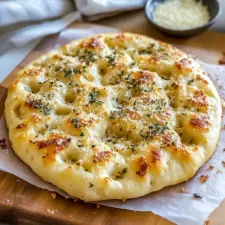
This no-knead Italian-style focaccia is topped with garlic-infused olive oil, Parmesan and flaky salt. It makes a savoury, golden bread for sharing alongside dinner, serving with dips or using in sandwiches.
Ingredients
- 500 gplain flour
- 10 gsalt
- 7 g (1 packet)instant yeast
- 75 ml (30 ml for the dough and 45 ml for the topping)olive oil
- 414 ml, warm (about 43°C)water
- 3 cloves, finely mincedgarlic
- 50 ggrated Parmesan
- to tasteflaky sea salt
- optional, to tastefresh herbs such as rosemary or thyme
Instructions
- 1
Mix dry ingredients
Combine the flour, salt and instant yeast in a large mixing bowl.
- 2
Make the dough
Stir in the olive oil and warm water until a sticky dough forms. Cover the bowl with cling film and leave the dough to rise for 1 to 2 hours, until doubled in size.
- 3
Stretch into pan
Grease a 23 × 33 cm baking dish with olive oil. Transfer the dough to the dish and stretch it towards the edges. Leave it to rest for another 30 minutes.
- 4
Warm garlic oil
In a small saucepan over low heat, warm the olive oil and cook the minced garlic until fragrant, without letting it brown. Set aside.
- 5
Add the toppings
Press dimples into the dough with your fingers. Drizzle the garlic oil over it, then add the Parmesan, herbs if using, and flaky sea salt.
- 6
Bake until golden
Preheat the oven to 220°C and bake for 20 to 25 minutes, until golden brown. Let the focaccia cool slightly before slicing.
What is focaccia?
Focaccia is a flat Italian bread, traditionally made with olive oil and baked until its surface is crisp and its inside soft. This version keeps the dough simple and no-knead, then adds garlic, Parmesan and herbs for a savoury finish.
The long rise gives the sticky dough time to expand, while dimpling it before baking creates little pockets for the fragrant oil.
Nutrition and macros by portion
The nutrition label shows one serving as written: 270 calories, 8g protein, 36g carbs, 11g fat.
| Portion | Adjustment | kcal | Protein | Carbs | Fat |
|---|---|---|---|---|---|
| Lighter | Smaller slice | 189 kcal | 6g | 25g | 8g |
| This serving | As written | 270 kcal | 8g | 36g | 11g |
| Hungry | Larger slice | 405 kcal | 12g | 54g | 17g |
The flour supplies most of the carbohydrates, while olive oil contributes much of the fat and Parmesan adds protein as well as some fat. Serve a slice with a vegetable-rich salad or soup for a more balanced plate.
A sticky, no-knead dough
Flour and water: the dough is meant to be sticky, rather than firm enough to knead by hand. Resist the urge to add extra flour, which can make the baked bread denser.
Yeast: instant yeast is mixed straight into the dry ingredients. Check that the water is warm, not hot, before adding it.
Let the dough rise
First rise: cover the bowl and wait until the dough has doubled, allowing 1 to 2 hours as directed. The time can vary with room temperature, so use the dough’s expansion as your cue.
Pan rest: after stretching the dough into the greased dish, give it the full 30 minutes to relax before dimpling and topping.
Make the garlic topping
Gentle heat: warm the garlic in the oil over low heat just until fragrant. Keep it moving and take care not to brown it, as the recipe calls for a gently flavoured oil.
Even coverage: drizzle the oil across the dough, then scatter on the Parmesan, optional herbs and flaky salt so each slice gets some topping.
Look for a golden finish
Dimpling: press your fingertips into the dough to make indentations before adding the topping. This gives the surface its characteristic uneven texture.
Baking: cook at 220°C for 20 to 25 minutes, checking for a golden-brown top. Let the loaf cool slightly before cutting so it is easier to slice.
Plan the rising time
The listed 40-minute total time does not include the full rising and resting periods described in the method. Allow 1 to 2 hours for the first rise and another 30 minutes after transferring the dough to the dish, as well as preparation and baking time.
Most of that extra time is hands-off, so you can prepare other parts of a meal while the dough rises.
Serve it warm
Focaccia works as a side for soup, salad or a main meal, and can also be served with dips. Slightly cooled slices are sturdy enough for sandwiches.
For a sharing spread, cut the bread into strips or squares and serve it while still warm.
Recipe notes & tips
- Measure the flour carefully so the dough does not become unnecessarily stiff.
- Use warm rather than hot water when mixing the dough.
- Let the dough double in size during the first rise instead of relying only on the clock.
- Keep the garlic over low heat and remove it once fragrant.
- Grease the baking dish well to help release the focaccia after baking.
- Cool the loaf slightly before slicing for neater pieces.
Variations
- Add rosemary: scatter fresh rosemary over the dough with the Parmesan.
- Use thyme: add fresh thyme leaves for a different herbal note.
- More garlic: increase the minced garlic if you prefer a stronger flavour.
- Extra Parmesan: add a little more grated cheese for a cheesier top.
- Finish with herbs: sprinkle additional fresh herbs over the bread after baking.
Common mistakes to avoid
- Adding too much flour: keep the dough sticky as described rather than trying to make it easy to knead.
- Using hot water: use warm water so it is suitable for mixing with the yeast.
- Rushing the first rise: wait until the dough has doubled before transferring it to the dish.
- Browning the garlic: keep the saucepan over low heat and cook only until fragrant.
- Skipping the dimples: press the dough with your fingers before adding the oil and toppings.
- Cutting straight away: let the baked focaccia cool slightly before slicing.
How to store
Once cool, store the focaccia in an airtight container at room temperature and eat within 2 days. Rewarm slices briefly in a low oven until heated through.
Frequently asked questions
Can I make the dough ahead?
The method specifies a 1 to 2 hour rise followed by a 30-minute rest in the pan. It does not give instructions for refrigerating the dough ahead.
How do I know when the dough has risen enough?
After the first rise, it should have doubled in size. Room temperature can affect how long this takes, so check the dough as well as the time.
Can I use dried herbs?
Fresh rosemary or thyme are optional in the ingredient list. Dried herbs can be used instead, though the recipe does not specify an amount.
Why is the dough sticky?
This no-knead recipe makes a sticky dough, which is stretched into the baking dish rather than kneaded. Avoid adding extra flour unless it is impossible to handle.
Can I leave out the Parmesan?
Yes, though the topping will no longer have the same cheesy flavour. The garlic oil, herbs and flaky salt still season the bread.
How should I reheat leftover focaccia?
Warm slices briefly in a low oven until heated through. This helps bring back some warmth and texture.
Cook it from the original
This recipe comes from bazarecipe.com. Their page has the author’s own photos, notes and tips — the best place to cook it from.
Open the recipe on bazarecipe.com