
Fig Preserves
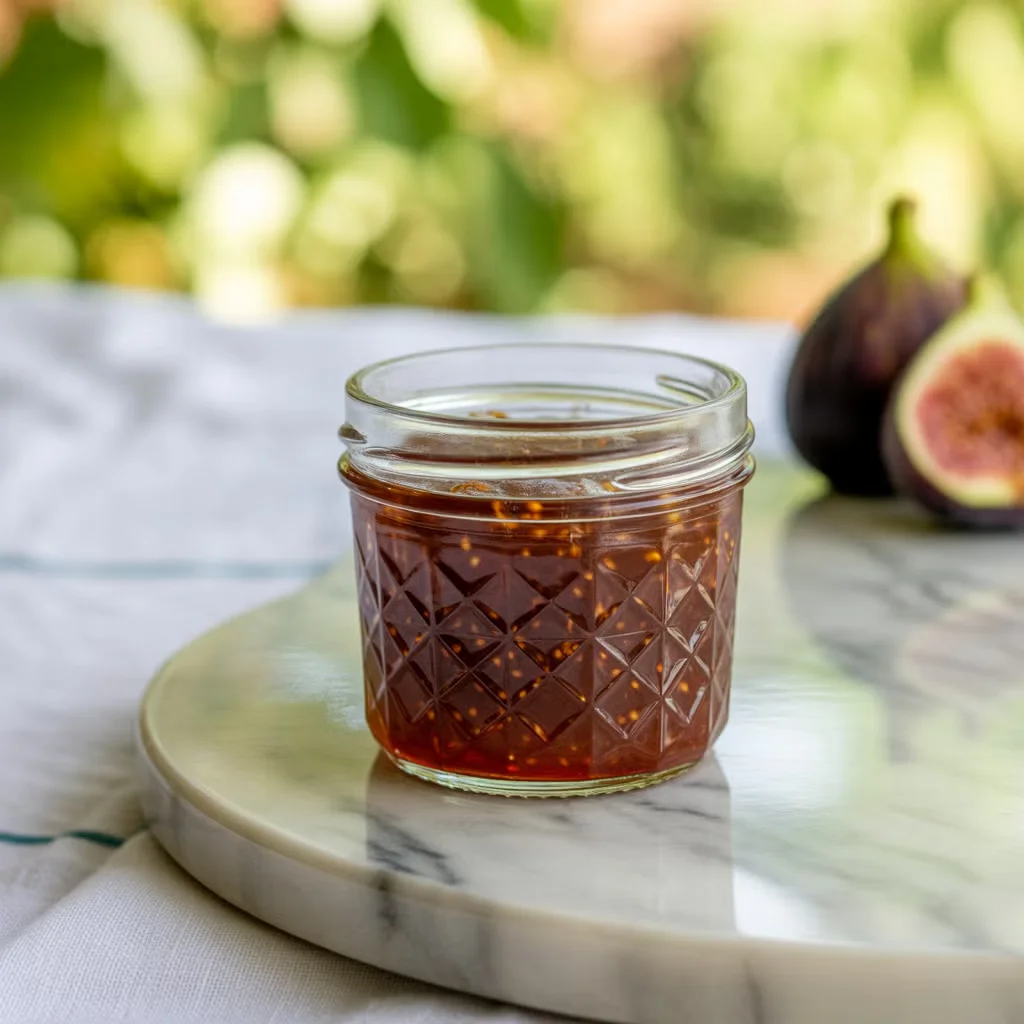
Fig preserves are whole figs simmered in a lemon-scented sugar syrup until glossy and tender. Make a batch to serve with cheese or spoon over warm toast; the long simmer gives the fruit time to absorb the syrup.
Ingredients
- 80fresh figs
- 15 ml (1 tbsp)bicarbonate of soda
- 2.7 litres (95 fl oz)boiling water
- 1.36 kg (48 oz)granulated sugar
- 946 ml (32 fl oz)water
- 1lemon, sliced
Instructions
- 1
Soak the figs
Put the figs in a mixing bowl and sprinkle over the bicarbonate of soda. Pour in the boiling water to cover and leave the figs to soak for 1 hour.
- 2
Make the syrup
Drain and rinse the figs. Put the granulated sugar and water in a Dutch oven, bring to the boil, then simmer for 10 minutes.
- 3
Simmer and jar
Add the figs and lemon slices to the Dutch oven and simmer for 1 hour, stirring occasionally. Spoon the figs into sterilised jars and pour in enough syrup to cover them. Fit the lids tightly, then use tongs to transfer the jars to a hot-water bath for 10 minutes.
- 4
Cool the jars
Leave the jars to cool completely at room temperature, then transfer them to the pantry for storage.
What are fig preserves?
Fig preserves are fruit cooked gently in sugar syrup, traditionally kept as a sweet accompaniment to bread or cheese. This version leaves the figs whole and adds sliced lemon for a bright note against the rich syrup.
The combination works because the figs have time to soften and take on the syrup while the lemon brings a little contrast. Serve the fruit and syrup together so each portion gets both.
Nutrition and macros by portion
The nutrition label shows one serving as written: 6940 calories, 32g protein, 1770g carbs, 16g fat.
| Portion | Adjustment | kcal | Protein | Carbs | Fat |
|---|---|---|---|---|---|
| Lighter | Use less syrup | 4858 kcal | 22g | 1239g | 11g |
| This serving | As written | 6940 kcal | 32g | 1770g | 16g |
| Hungry | Larger spoonful | 10410 kcal | 48g | 2655g | 24g |
Most of the carbohydrates and energy come from the granulated sugar, with additional carbohydrate from the figs. The figs contribute a little protein and very little fat; the lemon contributes only a small amount. Serve a modest spoonful with cheese or plain yoghurt to make a more balanced plate.
Why soak the figs?
Bicarbonate soak: the recipe starts by soaking the figs in boiling water with bicarbonate of soda for 1 hour. Drain and rinse them well before they go into the syrup.
Building the syrup
Sugar and water: bring these to the boil in a Dutch oven, then simmer for 10 minutes before adding the fruit. Starting with a simmered syrup gives the figs a sweet liquid to cook in.
Lemon: add the slices with the figs, as directed, so they simmer together for the full hour.
Getting the texture right
Gentle cooking: simmer the figs for 1 hour and stir occasionally, rather than stirring constantly. This helps keep the fruit intact while it softens.
Doneness: the method gives a cooking time but no separate visual test. Follow the hour-long simmer and check that the figs are tender before jarring.
Filling the jars
Cover the fruit: spoon the figs into sterilised jars, then add syrup until the figs are covered. This keeps the preserve together as a mix of fruit and syrup.
Water bath: the recipe specifies 10 minutes in a hot-water bath after the lids are fitted. Use tongs to move the jars, and follow current food-safety guidance for preserving and storage.
Ways to serve fig preserves
Cheese board: pair a spoonful of figs and syrup with cheese and plain crackers or bread.
Breakfast: spread the fruit on warm toast, or spoon it over porridge or yoghurt. The syrup also makes a sweet topping for pancakes.
Recipe notes & tips
- Rinse the figs thoroughly after draining them from the bicarbonate soak.
- Use a Dutch oven or another heavy-based pan to simmer the syrup and fruit.
- Stir gently and only occasionally to help keep the figs whole.
- Slice the lemon before you start simmering so it is ready to add with the figs.
- Use sterilised jars as specified in the method.
Variations
- Warm spice: add a cinnamon stick to the syrup while it simmers.
- Ginger: simmer a few slices of fresh ginger with the figs for a gently warming flavour.
- Orange: replace the lemon slices with orange slices for a softer citrus note.
- Vanilla: add a split vanilla pod to the syrup for a fragrant variation.
- Smaller fruit: halve larger figs so they are easier to serve on toast.
Common mistakes to avoid
- Skipping the rinse: leftover bicarbonate can affect the flavour, so rinse the drained figs well.
- Boiling hard: vigorous cooking can break up the fruit; keep the figs at a simmer.
- Stirring too often: excessive stirring can crush the figs, so stir occasionally and gently.
- Leaving fruit uncovered: add enough syrup to cover the figs in each jar.
- Moving hot jars by hand: use tongs when transferring them to the hot-water bath.
How to store
The method directs you to cool the jars completely and store them in the pantry, but it does not specify a safe storage duration. Follow current tested guidance for shelf-stable preserves; once opened, refrigerate and use promptly.
Frequently asked questions
Can I use dried figs?
This recipe calls for fresh figs, and dried figs will absorb liquid differently. For the intended whole-fruit texture, use fresh figs.
Do I need to rinse the figs after soaking?
Yes. Drain them and rinse them before adding them to the syrup, as directed.
How long do the figs simmer?
Simmer them with the lemon slices for 1 hour, stirring occasionally.
How do I know when the preserves are ready?
The recipe specifies a 1-hour simmer rather than a separate set test. Check that the figs have softened while keeping their shape.
Can I skip the hot-water bath?
The method includes a 10-minute hot-water bath. For pantry storage, use a current tested preserving method rather than changing the processing steps.
What goes well with fig preserves?
Serve them with cheese, spread them on warm toast, or spoon them over porridge or yoghurt.
Cook it from the original
This recipe comes from finedininglovers.asia. Their page has the author’s own photos, notes and tips — the best place to cook it from.
Open the recipe on finedininglovers.asia