
Japchae
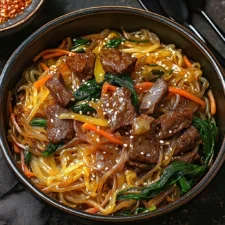
Japchae is a Korean stir-fry of chewy sweet potato glass noodles, beef and colourful vegetables, tossed with soy sauce and sesame oil. It makes a generous shared meal or a substantial side for a family dinner.
Ingredients
- 907 g (2 lb)thinly sliced beef (or chicken, tofu or prawns)
- 454 g (1 lb)Korean sweet potato noodles (glass noodles)
- 3 mediumcarrots, cut into julienne strips
- 1 largewhite onion, thinly sliced
- ½ bunchspring onions, chopped
- 6 clovesgarlic, minced
- 227 g (½ lb)spinach leaves
- 60 ml (4 tbsp)sesame oil
- 90 ml (6 tbsp)soy sauce
- To tasteolive oil
Instructions
- 1
Cook the noodles
Boil the sweet potato noodles in water with olive oil for 5–6 minutes, until tender but still chewy. Drain and set aside.
- 2
Brown the beef
Heat a frying pan over high heat and cook the thinly sliced beef with half the soy sauce and sesame oil until browned. Take the pan off the heat.
- 3
Stir-fry vegetables
In a separate frying pan, stir-fry the carrots and onion with olive oil until softened. Add the remaining soy sauce and sesame oil, along with the garlic and spring onions, and cook for another minute.
- 4
Combine everything
Stir the spinach into the vegetables until wilted. Put the beef and vegetables in a bowl with the drained noodles, then toss well.
- 5
Serve warm
Serve warm, adding chopped spring onions on top if desired.
What is japchae?
Japchae is a Korean noodle dish made with sweet potato starch noodles, which turn translucent and pleasantly springy when cooked. It is often served at gatherings as well as at everyday meals.
This version pairs the noodles with beef, spinach, carrots and onion. Sesame oil and soy sauce bring the ingredients together in a savoury, lightly sweet style.
Nutrition and macros by portion
The nutrition label shows one serving as written: 380 calories, 24g protein, 50g carbs, 12g fat.
| Portion | Adjustment | kcal | Protein | Carbs | Fat |
|---|---|---|---|---|---|
| Lighter | Less oil, more spinach | 266 kcal | 17g | 35g | 8g |
| This serving | As written | 380 kcal | 24g | 50g | 12g |
| Hungry | Larger noodle portion | 570 kcal | 36g | 75g | 18g |
The noodles provide most of the carbohydrates, while sesame oil contributes much of the fat. Beef supplies much of the protein, with smaller contributions from the vegetables. Serve it with extra vegetables or salad to add freshness alongside a portion.
The noodles make the dish
Sweet potato noodles: cook them until tender but still chewy, as the recipe directs. Drain them well so excess water does not dilute the seasoning.
Oil in the water: the method calls for olive oil when boiling the noodles, but gives no quantity. Use it sparingly if you choose to include it.
Build flavour in stages
Beef: browning it over high heat gives the thin slices colour before they are combined with the noodles. The first portion of soy sauce and sesame oil seasons the meat.
Vegetables: cook the carrots and onion until softened, then add the remaining sauce, garlic and spring onions. The extra minute helps distribute their flavour without cooking the garlic for too long.
Check the texture
Noodles: look for a tender, chewy bite rather than a soft or mushy one. Drain them as soon as they reach that point.
Spinach: stir it in only until the leaves wilt. This keeps it tender and makes it easier to toss evenly through the noodles.
A practical cooking order
Prepare the vegetables and garlic before heating the pans, since the stir-frying stages move quickly. Cook the noodles, beef and vegetables in the order given, then toss everything together in a bowl.
The recipe takes 45 minutes in total and serves six. Keep the drained noodles ready while the beef and vegetables finish cooking.
Serving ideas
Serve japchae warm as a main course, or offer it as a side alongside other Korean dishes. A little chopped spring onion on top adds a fresh finish.
For a more balanced plate, pair a portion with additional vegetables or a simple, lightly dressed salad.
Recipe notes & tips
- Cut the carrots into similar-sized strips so they soften at a similar rate.
- Have the soy sauce, sesame oil, garlic and spring onions ready before stir-frying.
- Keep the noodles chewy by checking them at the shorter end of the 5–6-minute cooking time.
- Drain the noodles thoroughly before adding them to the bowl.
- Toss the ingredients well so the sauce and vegetables are distributed through the noodles.
Variations
- Use chicken: swap it for the beef and brown it with the same sauce and oil.
- Make it vegetarian: use tofu instead of beef.
- Try prawns: use them in place of the beef and cook until done.
- Add mushrooms: stir-fry sliced mushrooms with the carrots and onion.
- Change the greens: use another tender leafy green in place of the spinach.
Common mistakes to avoid
- Overcooking the noodles: stop when they are tender but still chewy, then drain them.
- Crowding the beef pan: cook the thin slices so they can brown rather than steam.
- Adding wet noodles: drain them well before tossing, so the sauce is not watered down.
- Cooking the garlic too long: add it with the remaining seasonings and cook for just another minute.
- Wilting the spinach too much: stir it in only until the leaves have wilted.
How to store
Refrigerate leftovers in a covered container and use within 3 days. Reheat until piping hot in a frying pan, stirring gently; add a small splash of water if the noodles have tightened.
Frequently asked questions
What are Korean sweet potato noodles?
They are glass noodles made from sweet potato starch. Once cooked, they are translucent and have a chewy texture.
Can I use another protein?
Yes. The recipe suggests chicken, tofu or prawns instead of beef. Cook the chosen protein in the same stage as the beef.
How do I know when the noodles are ready?
They should be tender but retain a chewy bite. The recipe gives a cooking time of 5–6 minutes.
Can japchae be served as a side dish?
Yes. It can be served warm as either a main course or a side.
Can I prepare japchae ahead?
You can prepare the vegetables and garlic ahead and keep them refrigerated until cooking. For the best chewy texture, cook and combine the noodles close to serving.
Cook it from the original
This recipe comes from bazarecipe.com. Their page has the author’s own photos, notes and tips — the best place to cook it from.
Open the recipe on bazarecipe.com