
Hummus authentic recipe
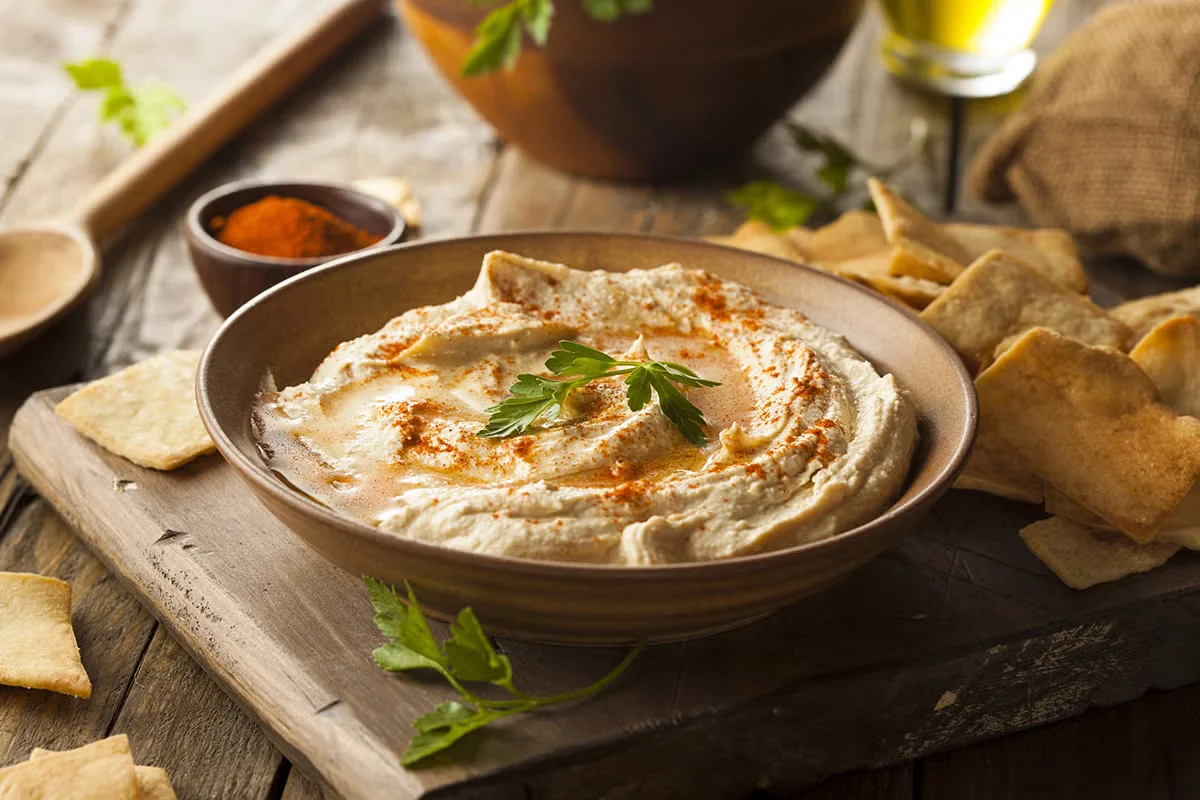
This quick hummus blends chickpeas with tahini, olive oil, lemon and garlic into a smooth, savoury dip. Make it in about 10 minutes and finish with paprika for colour and a gentle warmth.
Ingredients
- 425 g (15 oz), drained and rinsedchickpeas
- 1 tbsptahini
- 2 tbspextra-virgin olive oil
- 2 tbspfresh lemon juice
- 1garlic clove
- to tastesea salt
- as neededwater
- to garnishpaprika
Instructions
- 1
Blend the hummus
Put the drained, rinsed chickpeas, tahini, olive oil, lemon juice, garlic and sea salt in a blender. Blend until very smooth, adding water as needed to reach the consistency you prefer.
- 2
Garnish and serve
Spoon the hummus into a serving bowl and sprinkle with paprika. Add any whole chickpeas you have kept back for extra texture, if you like.
What is hummus?
Hummus is a chickpea and tahini dip associated with Middle Eastern cooking, particularly the Levant. Its exact origins are shared and debated across the region, but the familiar combination of pulses, sesame paste and lemon has become a staple well beyond it.
This version keeps the ingredient list short and uses a blender for a smooth finish. Lemon and garlic brighten the chickpeas, while olive oil adds richness.
Nutrition and macros by portion
The nutrition label shows one serving as written: 1030 calories, 40g protein, 120g carbs, 49g fat.
| Portion | Adjustment | kcal | Protein | Carbs | Fat |
|---|---|---|---|---|---|
| Lighter | Use less olive oil | 721 kcal | 28g | 84g | 34g |
| This serving | As written | 1030 kcal | 40g | 120g | 49g |
| Hungry | Serve with flatbread | 1545 kcal | 60g | 180g | 74g |
Most of the carbohydrates and fibre come from the chickpeas, which also provide much of the protein. Olive oil and tahini supply most of the fat. Serve a smaller scoop alongside vegetables and a source of lean protein for a more balanced plate.
Choosing the chickpeas
Canned chickpeas: drain and rinse them well before blending to wash away the canning liquid and excess salt. They make this a quick recipe without needing to soak or cook dried pulses.
Whole chickpeas: if you want a textured topping, set a few aside before blending. The method also works without them.
Getting a smooth texture
Blend thoroughly: let the chickpeas break down until the mixture looks even and creamy, scraping down the sides if needed. A powerful blender or food processor can make this easier.
Add water gradually: a small amount loosens the mixture without overwhelming the tahini and lemon. Stop when the hummus is easy to scoop and spread.
Balancing the flavour
Lemon and garlic: fresh lemon juice gives the dip its tang, while one garlic clove brings savoury sharpness. Their intensity can vary, so taste the finished hummus before serving.
Salt: add it to taste, especially if the chickpeas were canned. Paprika on top adds a mild, earthy finish.
Serving ideas
For dipping: serve with flatbread, crackers or cut vegetables. A bowl of hummus also works alongside a mezze spread.
For a meal: use it as a spread in a wrap or serve it with salad and grains. Those additions make the dip part of a more varied plate.
Make-ahead timing
The method takes around 10 minutes and is designed to be served straight after blending. If you make it ahead, cover and chill it, then stir before serving.
Chilled hummus can firm up slightly. Mix in a little water to loosen it if needed.
Recipe notes & tips
- Rinse the chickpeas thoroughly to remove their canning liquid.
- Add water a little at a time so the hummus does not become too thin.
- Taste before serving and adjust the salt to suit your chickpeas.
- Scrape down the blender sides if ingredients stick above the blades.
- Keep a few chickpeas whole if you want a more varied texture on top.
Variations
- More lemon: add a little extra juice for a sharper dip.
- Extra garlic: blend in another clove for a stronger savoury flavour.
- Spiced finish: dust the top with additional paprika before serving.
- Herb topping: scatter chopped parsley over the finished hummus.
- Chunkier texture: reserve more whole chickpeas and fold some through before serving.
Common mistakes to avoid
- Adding water all at once: the hummus can turn runny, so add it gradually.
- Stopping too soon: blend until the mixture is very smooth, scraping down the sides as needed.
- Over-salting: canned chickpeas can already be salty, so taste before adding more.
- Using un-rinsed chickpeas: rinse them first to remove the canning liquid.
- Blending in the garnish: add paprika after transferring the hummus to the bowl.
How to store
Keep hummus in an airtight container in the fridge for up to 4 days. Stir before serving and loosen with a little water if it has thickened; it is usually served cold, so reheating is not needed.
Frequently asked questions
Can I make this without a blender?
A food processor works well. For a rougher result, mash the chickpeas by hand and stir in the remaining ingredients.
How much water should I add?
Add only enough to reach your preferred consistency, a little at a time. The amount depends on how thick the chickpeas and tahini are.
Can I use dried chickpeas?
Yes, but cook them until tender first and let them cool before blending. The stated quantity is for drained chickpeas.
Why is my hummus too thick?
Blend in a small splash of water and check the texture again. Repeat until it is smooth and easy to scoop.
Can I make hummus ahead?
Yes. Cover it and keep it refrigerated, then stir before serving and adjust the consistency with water if needed.
Cook it from the original
This recipe comes from finedininglovers.asia. Their page has the author’s own photos, notes and tips — the best place to cook it from.
Open the recipe on finedininglovers.asia