
Veal piccata
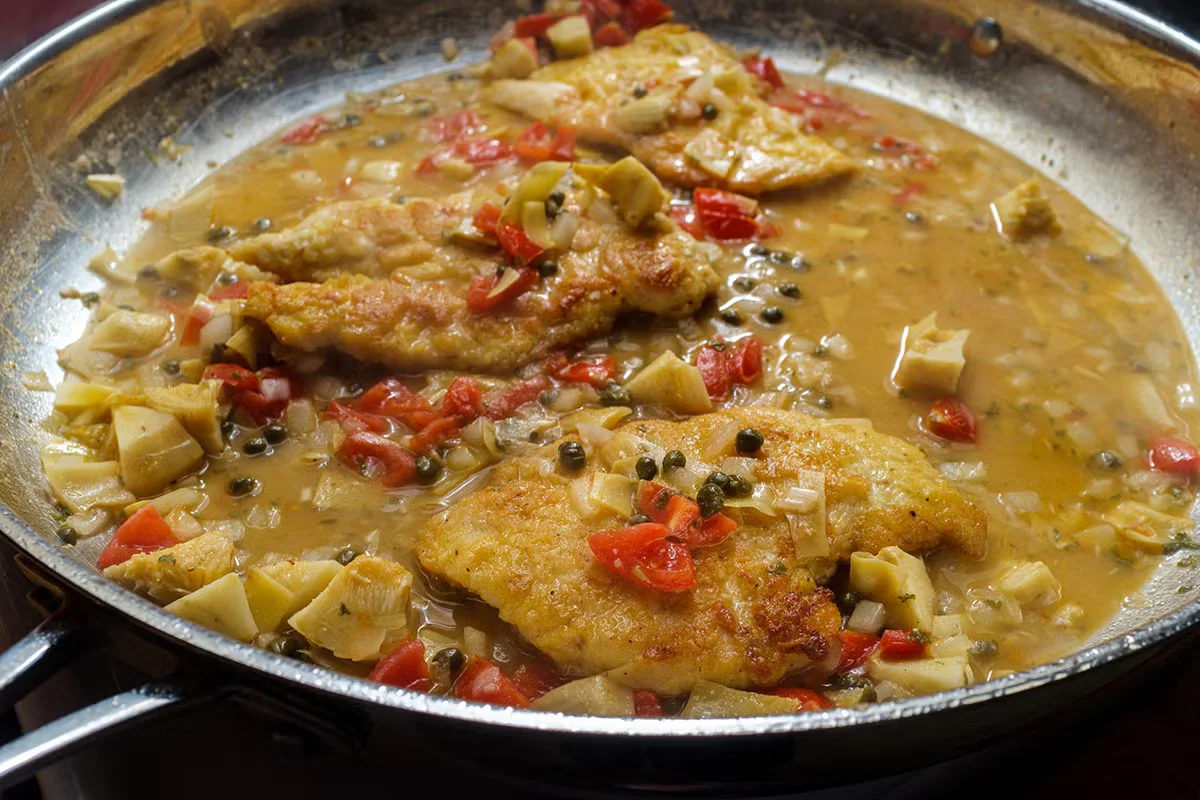
Veal piccata pairs lightly floured veal cutlets with a bright, buttery sauce of lemon, capers and sherry. It comes together in about 30 minutes and makes an elegant dinner for one.
Ingredients
- 119 g (4.2 oz)plain flour
- to tastesalt
- 30 ml (2 tbsp)vegetable oil
- 57 g (2 oz), pounded flatveal cutlets
- 237 ml (8 fl oz)chicken stock
- 118 ml (4 fl oz)dry sherry
- 15 ml (1 tbsp)lemon juice
- 30 ml (2 tbsp)capers
- 28 g (2 tbsp)unsalted butter
- 30 ml (2 tbsp)Italian parsley
- for garnishlemon slices
Instructions
- 1
Mix the flour
Combine the plain flour and salt on a plate.
- 2
Cook the veal
Heat the vegetable oil in a pan over a medium heat. While it warms, coat the veal cutlets in the flour, then cook them one at a time for about 3 minutes on each side.
- 3
Make the sauce
When the cutlets are cooked, transfer them to a plate and cover with foil. Add the chicken stock, dry sherry, lemon juice and capers to the pan, scraping up the browned flavour left by the veal. Bring the liquid to the boil, lower the heat and simmer for a few minutes so it reduces.
- 4
Finish and serve
Take the pan off the heat and stir in the unsalted butter and Italian parsley. Plate the cutlets and spoon plenty of sauce over them. Serve with lemon slices on the side for extra juice.
What is veal piccata?
Piccata is an Italian-American preparation in which thin pieces of meat are cooked and served with a tangy pan sauce, often featuring lemon and capers. This version uses veal, with sherry and chicken stock adding depth to the sauce.
The flour coating helps the cutlets brown and gives the sauce a little body. Finishing the sauce with butter off the heat makes it glossy and rounds out the sharp lemon and salty capers.
Nutrition and macros by portion
The nutrition label shows one serving as written: 970 calories, 29g protein, 98g carbs, 44g fat.
| Portion | Adjustment | kcal | Protein | Carbs | Fat |
|---|---|---|---|---|---|
| Lighter | Use less flour and butter | 679 kcal | 20g | 69g | 31g |
| This serving | As written | 970 kcal | 29g | 98g | 44g |
| Hungry | Add another veal cutlet | 1455 kcal | 44g | 147g | 66g |
The flour supplies most of the carbohydrates, while the oil and butter contribute much of the fat. Veal provides protein, with smaller amounts also coming from the flour and stock. Serve with vegetables or salad for a more balanced plate.
Choose and prepare the veal
Thin cutlets: Pounding the veal flat helps it cook quickly and evenly. If the cutlets are uneven, aim for a consistent thickness before flouring.
Light coating: Shake off excess flour so it browns rather than forming a thick layer in the pan. The flour left behind also helps create the browned bits that flavour the sauce.
Build the pan sauce
Browned bits: Scrape the base of the pan after adding the stock and sherry to lift the savoury residue left by the veal.
Reduce first: Let the liquid simmer for a few minutes before adding the butter. This concentrates its flavour and prevents the butter from simply thinning the sauce.
Get the texture right
Tender veal: Cook the cutlets individually as directed, giving each side about 3 minutes. Thin meat can dry out if left in the pan too long.
Smooth finish: Remove the pan from the heat before stirring in the butter and parsley. The sauce should look glossy, with the capers still distinct.
Timing for one serving
Have the flour, salt, stock, sherry, lemon juice and capers ready before you start cooking. The cutlets cook quickly, so preparing these items first makes the transition to the sauce easier.
Keep the cooked veal covered with foil while the sauce simmers. Serve as soon as the sauce is finished so the cutlets stay warm.
What to serve with it
A simple green salad or steamed vegetables bring freshness alongside the buttery, tangy sauce. Their mild flavour lets the lemon and capers remain the focus.
For a more filling plate, serve the veal with pasta, rice or boiled potatoes to catch the sauce. A lemon wedge or slice on the side lets each diner add more citrus.
Recipe notes & tips
- Pound the cutlets to an even thickness so they cook at the same rate.
- Shake excess flour off the veal before it goes into the pan.
- Cook the cutlets in batches rather than crowding the pan.
- Taste the sauce before adding extra salt, as capers can be salty.
- Stir the butter in after taking the pan off the heat for a glossy finish.
Variations
- Use white wine: Replace the dry sherry with white wine for a different flavour in the sauce.
- Add garlic: Soften a finely chopped clove in the pan before adding the stock and sherry.
- Try chicken: Use thin chicken cutlets in place of the veal and cook them through.
- Add more lemon: Stir in a little extra lemon juice at the end for a sharper sauce.
- Serve with pasta: Spoon the sauce over pasta alongside the veal for a more substantial meal.
Common mistakes to avoid
- Thick cutlets: They may cook unevenly; pound them flat before flouring.
- Too much flour: A heavy coating can turn pasty; shake off the excess.
- Crowded pan: The cutlets may brown poorly; cook them individually as directed.
- Skipping the scrape: The sauce misses the browned flavour; loosen the pan residue with the stock and sherry.
- Boiling after butter: The sauce can lose its smooth finish; stir in the butter off the heat.
How to store
Refrigerate leftovers in a covered container for up to 2 days. Reheat gently in a pan until hot, adding a small splash of stock if the sauce has thickened; avoid prolonged heating, which can toughen the veal.
Frequently asked questions
Can I use chicken instead of veal?
Yes. Thin chicken cutlets work well, but cook them until fully cooked through, as the time may differ from veal.
What can I use instead of dry sherry?
Dry white wine is a suitable substitute. For an alcohol-free option, use extra chicken stock and adjust the lemon to taste.
How do I know when the sauce has reduced enough?
After a few minutes of simmering, it should look slightly more concentrated. It will become glossier when you stir in the butter.
Should I rinse the capers?
If they taste especially salty, briefly rinse and drain them before adding. Otherwise, use them as they are and taste the sauce before seasoning.
Can I make veal piccata ahead?
It is best cooked just before serving, since the cutlets are thin and can lose tenderness when reheated. You can measure out the sauce ingredients in advance.
Cook it from the original
This recipe comes from finedininglovers.asia. Their page has the author’s own photos, notes and tips — the best place to cook it from.
Open the recipe on finedininglovers.asia