
Tuna carpaccio
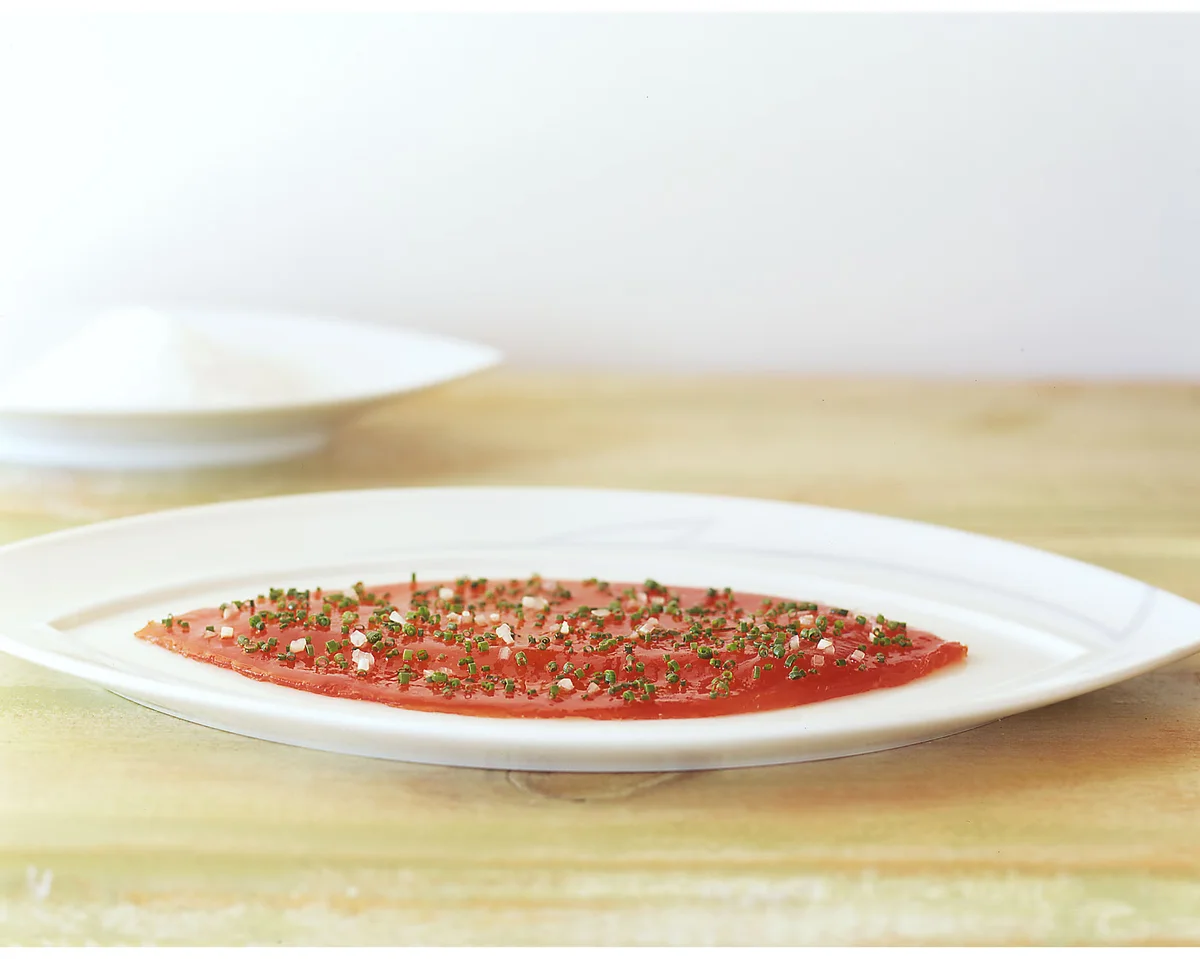
Tuna carpaccio is a quick, elegant starter of thinly pounded raw yellowfin dressed with olive oil, chives and lemon. It makes a striking plate with very little cooking, and toasted baguette slices provide something crisp to serve alongside.
Ingredients
- 4 pieces (113 g each; 4 oz each)sushi-quality yellowfin tuna
- to tastefine sea salt
- to tastefreshly ground white pepper
- 60 ml (4 tbsp)extra-virgin olive oil
- 10 ml (2 tsp)thinly sliced fresh chives
- 1lemon, halved and seeded
- for servingtoasted baguette slices
Instructions
- 1
Cover the worktop
Lay a large sheet of plastic wrap on a work surface. Put one 1.3 cm-thick piece of tuna in the centre and cover it with another large sheet of plastic wrap.
- 2
Flatten the tuna
Using a meat pounder or a heavy-based saucepan, pound the tuna with a smooth motion, striking the centre and then pressing and sliding outwards. Continue until it forms a very thin, even round about 23 cm across.
- 3
Trim and chill
With the fish still covered, place an 20 cm round plate, bowl or cake pan over it as a guide. Cut through the tuna and both layers of plastic wrap to make a round, leaving the plastic in place. Transfer it to a baking tray and repeat with the remaining tuna. Refrigerate for 30 minutes.
- 4
Plate the tuna
When ready to serve, peel away the top sheet of plastic from one round. Set the tuna in the centre of a large dinner plate with the remaining plastic facing upwards, then remove that sheet. Repeat with the other three rounds.
- 5
Season and serve
Season each round with salt and white pepper. Dip a wide pastry brush in the olive oil and coat the tuna generously. Sprinkle with chives, squeeze lemon juice over the top and wipe each plate rim with a towel. Serve immediately, with toasted baguette slices on a separate plate.
What is tuna carpaccio?
Carpaccio is a dish of thinly sliced or pounded raw food, commonly associated with Italian cooking. This seafood version uses yellowfin tuna, shaped into delicate rounds and dressed simply with oil, herbs and citrus.
The method here creates broad, even pieces rather than slices. Chilling them briefly helps the rounds hold their shape while they are transferred to plates.
Nutrition and macros by portion
The nutrition label shows one serving as written: 970 calories, 104g protein, 5g carbs, 61g fat.
| Portion | Adjustment | kcal | Protein | Carbs | Fat |
|---|---|---|---|---|---|
| Lighter | Less oil, more salad | 679 kcal | 73g | 4g | 43g |
| This serving | As written | 970 kcal | 104g | 5g | 61g |
| Hungry | Add extra baguette | 1455 kcal | 156g | 8g | 92g |
Most of the protein comes from the tuna, while the olive oil supplies most of the fat and energy. The baguette contributes carbohydrates, but its amount is not specified, so the nutrition estimate cannot include it reliably. For a more balanced plate, serve the carpaccio with a generous green salad and a modest amount of bread.
Choose the tuna carefully
Freshness first: use tuna sold as suitable for raw eating, and keep it chilled until you are ready to prepare it. The recipe calls for four pieces, each about 113 g and 1.3 cm thick.
Even thickness: pieces of similar size are easier to flatten consistently. Remove any bones or tough bits before pounding, if needed.
Pound with a light hand
Plastic wrap: sandwich the tuna between large sheets so it does not stick to the pounder or tear as easily. Keep the wrap smooth and taut around the fish.
Outward pressure: work from the middle towards the edges, combining gentle blows with a sliding press. Stop once the tuna is thin and even, rather than continuing until it breaks apart.
Trim and chill the rounds
Cutting guide: use an 20 cm round object as the template, keeping the fish covered while cutting. A sharp knife helps make a neat edge through both layers of wrap.
Chilling time: give the rounds 30 minutes in the fridge as directed. Keep them covered during this time and handle them carefully when transferring them to plates.
Dress just before serving
Olive oil: brush it over the tuna generously, as the recipe directs, so the surface is evenly coated. Season each round with salt and white pepper first.
Fresh finish: add the chives and squeeze over lemon juice just before serving. This keeps the herbs fresh and the tuna from sitting in the citrus for too long.
Serve with something crisp
Baguette slices: serve them separately alongside the plated tuna, as directed. Their crisp texture contrasts with the soft, thin fish.
A simple side: a lightly dressed green salad can accompany the plate without competing with the lemon, chives and olive oil.
Recipe notes & tips
- Keep the tuna cold while preparing and plating it.
- Use plastic wrap above and below the fish to make pounding and transfer easier.
- Pound with a smooth outward motion so the round stays intact.
- Chill the trimmed rounds for the full 30 minutes before serving.
- Season and dress the tuna immediately before it goes to the table.
- Wipe the plate rims after adding the lemon and oil for a tidy presentation.
Variations
- Add capers: scatter a few rinsed capers over the tuna for a briny note.
- Use parsley: replace the chives with finely chopped fresh parsley.
- Add citrus zest: grate a little lemon zest over the finished rounds for a brighter aroma.
- Include rocket: serve a small handful of rocket alongside the tuna and baguette.
- Try black pepper: use freshly ground black pepper instead of white pepper for a more pronounced finish.
Common mistakes to avoid
- Pounding too hard: the fish can tear, so use controlled strokes and press outwards gradually.
- Leaving uneven thickness: the tuna will be harder to handle, so work across the centre and edges until it is even.
- Cutting without a guide: the rounds may come out irregular, so use an 20 cm plate or bowl as a template.
- Removing the wrap too early: the fish may be difficult to move, so keep it covered until you are ready to plate.
- Dressing too far ahead: the tuna can lose its delicate texture, so add the oil, chives and lemon just before serving.
How to store
This is best served immediately after it is dressed. Keep any undressed rounds covered and refrigerated, and use them promptly; do not leave raw tuna at room temperature. Reheating is not suitable for this dish.
Frequently asked questions
Can I prepare the tuna ahead?
You can pound, trim and chill the rounds for the 30 minutes specified in the method. Keep them covered and refrigerated, then season and dress them just before serving.
What does sushi-quality tuna mean?
Choose tuna from a reputable fishmonger or supplier that explicitly sells it for raw consumption. Keep it cold and follow the supplier’s handling advice.
Can I use a saucepan instead of a meat pounder?
Yes. The method allows a heavy-based saucepan as an alternative; use its flat base and press the tuna outward with controlled movements.
How thin should the tuna be?
Pound each piece into a very thin, even round about 23 cm across, then trim it to an 20 cm round using a guide.
Can I make this without baguette?
Yes. The tuna can be served on its own or with a salad instead. The recipe specifies toasted baguette slices as an accompaniment, not as part of the tuna rounds.
Cook it from the original
This recipe comes from finedininglovers.asia. Their page has the author’s own photos, notes and tips — the best place to cook it from.
Open the recipe on finedininglovers.asia