
Tortellini with cured ham
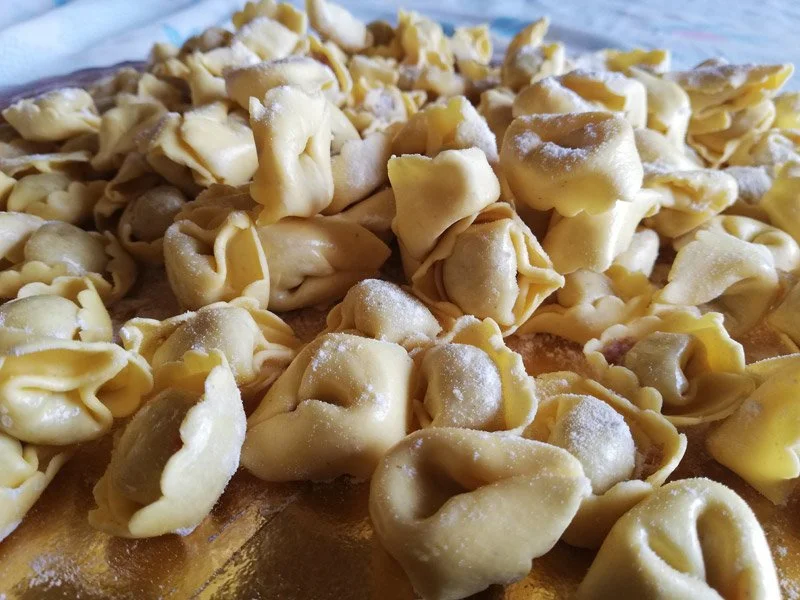
These handmade tortellini combine fresh egg pasta with a savoury filling of cured ham, pork loin, mortadella and Parmesan. They take patient shaping, but can be served in the traditional way in meat broth.
Ingredients
- 400 gItalian 00 flour
- 4whole eggs
- 100 gprosciutto crudo (Italian cured ham)
- 100 gpork loin
- 100 gBologna mortadella
- 100 ggrated Parmigiano Reggiano
- 1 largeegg
- 1 pinchnutmeg
- 25 gbutter
- as neededsalt
- to tasteblack pepper
Instructions
- 1
Make the dough
Sift the flour onto a work surface and shape it into a well. Crack the eggs into the centre and beat them with a fork, gradually drawing in the flour, then knead by hand for about 15 minutes, dusting the surface with flour now and then. If the dough remains wet and sticky, add a little more flour; keep kneading until smooth and even.
- 2
Rest the dough
Wrap the dough in cling film and leave it in a cool, dry place or in the fridge for at least 30 minutes, until firmer and more elastic. While it rests, cut the pork loin into rough pieces.
- 3
Cook the pork
Melt the butter in a pan and add the pork, salt and pepper. Cook for about 10 minutes, then take the pan off the heat and leave the pork to cool slightly. Meanwhile, chop the cured ham and mortadella, then put the pork, ham and mortadella in a food processor.
- 4
Blend the filling
Pulse briefly, then add the grated Parmesan, egg, nutmeg and a pinch of pepper. Blend again until the mixture is compact, smooth and well combined.
- 5
Chill the filling
Taste the filling and add salt if needed. Leave it to firm up in the fridge for 24 hours, or at least for a few hours. Transfer the rested pasta to a lightly floured work surface and roll it out with a rolling pin or pasta machine.
- 6
Cut the squares
Roll the pasta until it is almost translucent, about 0.5 mm thick. Use as little flour as possible so it stays slightly moist. With a fluted pastry wheel, cut vertical and then horizontal strips to make squares about 3–4 cm across.
- 7
Fill the pasta
Knead and roll out the pasta scraps as well. Keep the squares covered with a clean tea towel so they do not dry out, uncovering them as you work. Put a hazelnut-sized ball of filling on each square, fold it diagonally into a triangle and bring the corners together.
- 8
Seal each triangle
If the pasta has dried a little, brush it with water before folding. Press around the filling to push out the air and seal the edges firmly.
- 9
Shape the tortellini
Rest the triangle’s base on the tip of your left index finger and lift its point upwards. Bring the two ends around into a ring and press them together firmly with your thumb and index finger so the tortellino stays closed during cooking. Gently slide it off your finger and place it on a lightly floured cloth; repeat with the remaining pasta and filling.
- 10
Dry and serve
Arrange the tortellini slightly apart in a single layer on the cloth and leave them to dry for at least 30 minutes. Cook and dress them as you prefer; the traditional Emilian method is to cook them in meat broth.
What are tortellini?
Tortellini are small rings of filled fresh pasta associated with Emilia-Romagna, especially Bologna and Modena. This version pairs a thin egg-pasta wrapper with a rich filling of cured ham, pork loin, mortadella and Parmesan.
The filling is cooked, finely blended and chilled before shaping, which helps it hold together as you portion it. Serving the finished pasta in meat broth follows the traditional approach described for this dish.
Nutrition and macros by portion
The nutrition label shows one serving as written: 525 calories, 27g protein, 54g carbs, 21g fat.
| Portion | Adjustment | kcal | Protein | Carbs | Fat |
|---|---|---|---|---|---|
| Lighter | Smaller pasta portion | 368 kcal | 19g | 38g | 15g |
| This serving | As written | 525 kcal | 27g | 54g | 21g |
| Hungry | Larger tortellini portion | 788 kcal | 41g | 81g | 32g |
The flour and pasta eggs provide most of the carbohydrates, while the pork, cured ham, mortadella, Parmesan and eggs contribute protein. Butter, mortadella, ham and Parmesan also supply much of the fat, and the cured meats and cheese make sodium a consideration. Balance a serving with vegetables or a green salad, especially if serving the tortellini without broth.
Build a smooth pasta dough
Flour and eggs: Start by drawing the flour into the eggs gradually, then knead for about 15 minutes. The finished dough should feel smooth and even rather than sticky.
Resting time: A rest of at least 30 minutes gives the dough time to become firmer and more elastic, making it easier to roll out.
Make a cohesive filling
Pork loin: Cooking it in butter for about 10 minutes adds it to the filling in a cooked, cooled form. Let it cool slightly before blending with the other meats.
Ham and mortadella: These bring the filling’s cured-meat flavour, while Parmesan, egg and nutmeg help bind and season the mixture. Blend until compact and uniform, then taste and adjust the salt if needed.
Roll and cut the pasta
Thin sheets: Roll the pasta to about 0.5 mm, thin enough to look almost translucent. Use only a little flour so the surface remains slightly moist and can seal when folded.
Small squares: Cut pieces about 3–4 cm across and keep them covered with a clean tea towel as you work. This helps prevent the exposed pasta from drying before you shape it.
Shape and seal each tortellino
Fill sparingly: Use a hazelnut-sized ball of filling for each square, then fold it corner to corner into a triangle. Too much filling can make the edges harder to bring together.
Push out air: Press around the filling and seal the edges before bringing the triangle’s ends into a ring around your finger. Firmly press the join so the tortellino remains closed during cooking.
Drying and cooking
Single layer: Arrange the shaped tortellini slightly apart on a lightly floured cloth and dry them for at least 30 minutes. Keep them in one layer rather than piling them up.
Traditional serving: The recipe points to meat broth as the traditional cooking liquid for Emilian tortellini. It leaves the pasta and its filling at the centre of the bowl.
What to serve alongside
In broth: Serve the tortellini in meat broth for a simple, traditional bowl. The broth provides the liquid element, so additional accompaniments can stay modest.
On the side: If serving them without broth, pair a portion with a green salad or cooked vegetables for freshness and contrast with the rich filling.
Recipe notes & tips
- Knead the dough for the full 15 minutes so it becomes smooth and even.
- Keep the pasta covered while shaping to stop the squares drying out.
- Use only a small amount of flour when rolling so the edges can seal.
- Keep the filling chilled until you are ready to shape the tortellini.
- Press out trapped air around the filling before sealing each triangle.
- Arrange the finished tortellini in a single layer with a little space between them.
Variations
- Serve in broth: Cook and serve the tortellini in meat broth for the traditional Emilian style.
- Add more nutmeg: Increase the pinch slightly for a more pronounced warm spice note.
- Use a pasta machine: Roll the rested dough through a pasta machine instead of using a rolling pin.
- Shape smaller tortellini: Cut smaller squares and use a correspondingly smaller amount of filling in each.
- Cook only what you need: Keep the remaining shaped tortellini separate in a single layer until ready to cook.
Common mistakes to avoid
- Sticky dough: Knead until smooth and add a little flour if it remains wet and tacky.
- Dry pasta squares: Keep them under a clean tea towel and uncover them only as you shape.
- Overfilled squares: Use a hazelnut-sized portion so the edges can meet and seal.
- Air trapped inside: Press around the filling before joining the triangle’s ends.
- Loose joins: Press the ends together firmly to help prevent the tortellini opening during cooking.
- Crowded tortellini: Dry them in a single layer with space between each one.
How to store
The recipe recommends chilling the filling for 24 hours, or at least a few hours, before shaping. Once shaped, dry the tortellini for at least 30 minutes as directed; the recipe does not specify a storage time for finished tortellini. If keeping them beyond that period, refrigerate them covered and cook promptly, or freeze them in a single layer before transferring to a suitable container.
Frequently asked questions
Can I make the filling ahead?
Yes. The method says to chill the filling for 24 hours, or at least a few hours, before shaping the tortellini.
How thin should I roll the pasta?
Aim for about 0.5 mm, thin enough that it is almost translucent. Use very little flour so the pasta stays slightly moist.
What if the pasta squares start to dry out?
Keep the unworked squares covered with a clean tea towel. If a square has dried slightly, brush it with water before folding.
How much filling goes in each tortellino?
Use a small ball about the size of a hazelnut. Press around it to remove air before sealing the pasta.
What is the traditional way to serve these tortellini?
The method identifies meat broth as the traditional cooking liquid for Emilian tortellini.
Can I use a pasta machine?
Yes. The dough can be rolled with a rolling pin or with a pasta machine, stopping when it is about 0.5 mm thick.
Cook it from the original
This recipe comes from fragolosi.it. Their page has the author’s own photos, notes and tips — the best place to cook it from.
Open the recipe on fragolosi.it