
Pizza with tuna, onion and rocket
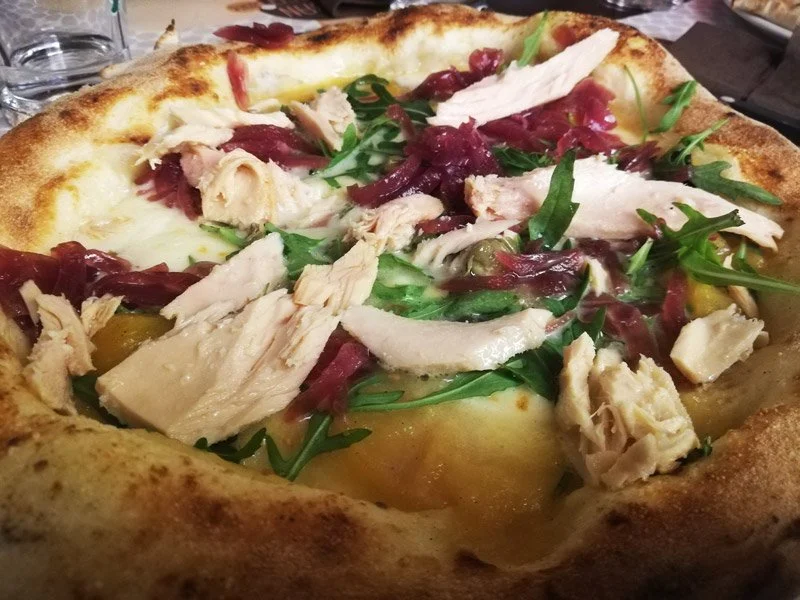
These Neapolitan-style pizzas pair fresh tuna and peppery rocket with sweet-and-sour onions and datterini tomatoes. Make four individual pizzas, baking them one at a time so each base can cook thoroughly.
Ingredients
- 1 kg, plus extra for the work surfacetype 0 flour
- 7 gdried yeast
- about 555 mllukewarm water
- 2 tablespoonsextra-virgin olive oil
- 18–20 gsalt
- 400 gfresh tuna fillets
- 1 kgonions
- 50 grocket
- 40 mlvinegar
- 30 gcaster sugar
- 20datterini tomatoes
- juice of ½lemon
- to tasteextra-virgin olive oil
- to tastesalt
- to tasteblack pepper
Instructions
- 1
Mix the dough
Fit a dough hook to a stand mixer. Put the yeast and slightly lukewarm water in the bowl and mix on low speed until the yeast dissolves. Add a few spoonfuls of flour and increase to medium speed; add more flour gradually while the mixer runs. Add the salt and oil, then gradually work in the remaining flour. Add a little more lukewarm water if needed.
- 2
Knead the dough
Knead until the dough is soft, smooth and uniform, and gathers around the hook, pulling away from the sides of the bowl; this should take about 10 minutes. To knead by hand, combine and work all the ingredients, then transfer the dough to a lightly floured work surface and knead for a couple of minutes, folding it to strengthen the gluten.
- 3
Fold the dough
To fold, stretch the dough and fold it back over itself repeatedly, turning it half a turn each time. This helps develop a smooth, cohesive dough and incorporates air to encourage bubbles.
- 4
Let it rise
Shape the dough into a ball and cut a cross into the top. Put it in the oiled mixer bowl and cover with cling film. Leave it in a switched-off oven with the light on until doubled in volume, about 2–4 hours depending on the season.
- 5
Divide and prove
Transfer the dough to a floured work surface and divide it into four pieces with a dough scraper. Put the pieces in an oiled or floured container, cover with a lid and leave to prove for 30–60 minutes.
- 6
Cook the onions
Meanwhile, peel, rinse and cut the onions into small wedges. Heat 4 tablespoons of oil in a large frying pan and soften the onions over low heat. Once they begin to soften, add the sugar dissolved in the vinegar and continue cooking until the onions are well stewed.
- 7
Prepare the toppings
Remove the onions from the heat, season with salt and set aside. Salt the tuna fillets and sear them on all sides. Leave them to marinate for 10 minutes in a little extra-virgin olive oil mixed with the lemon juice, then slice them. Halve the tomatoes, remove their seeds and liquid, and chop them. Clean, rinse and dry the rocket, then cut it into pieces.
- 8
Shape the bases
Heat the oven to 250°C on the conventional setting, with both the top and bottom elements on. When the second prove is complete, take one dough portion and keep the others covered. On a floured work surface, stretch it into a circle, pressing gently with your fingertips to push the air bubbles towards the edge so the rim can rise.
- 9
Bake the pizza
Move the base to an oiled baking tray or one lined with baking paper. Top with the sweet-and-sour onions and scatter over the chopped tomatoes. Bake on the lower part of the oven for about 5 minutes, then reduce the temperature to 230°C and bake in the middle of the oven for another 5–7 minutes.
- 10
Finish and serve
Cooking time is approximate and depends on your oven; lift the pizza to check that the base is well cooked. Take it out of the oven, add the tuna slices and rocket, drizzle with oil and season with salt and pepper. Serve hot, then shape and bake the remaining three pizzas in the same way.
What is tuna, onion and rocket pizza?
Pizza is closely associated with Naples, and this version brings together a classic risen dough with a distinctive mix of toppings. Sweet-and-sour onions and fresh tuna give it a different character from the familiar tomato-and-cheese topping.
The recipe builds flavour in stages: the onions are cooked until tender, while the seared tuna and rocket are added after baking. That keeps the fish from drying out and the leaves fresh.
Nutrition and macros by portion
The nutrition label shows one serving as written: 1290 calories, 48g protein, 225g carbs, 20g fat.
| Portion | Adjustment | kcal | Protein | Carbs | Fat |
|---|---|---|---|---|---|
| Lighter | Less oil, more rocket | 903 kcal | 34g | 158g | 14g |
| This serving | As written | 1290 kcal | 48g | 225g | 20g |
| Hungry | Larger pizza portion | 1935 kcal | 72g | 338g | 30g |
The flour supplies most of the carbohydrates, while the olive oil and tuna contribute much of the fat; tuna also provides the main protein. Onions and tomatoes add further carbohydrates, and the dough's salt makes sodium a significant part of the estimate. Balance a slice with a generous green salad or other vegetables.
Building the dough
Flour and water: add the flour gradually, keeping back a little water unless the dough needs it. The stated water amount is approximate, so the finished dough should guide you.
Kneading: look for a smooth dough that gathers around the hook and releases from the bowl. If working by hand, folding and turning the dough helps develop its structure.
Getting the rise right
First prove: the dough needs to double, which may take 2–4 hours depending on the season. Use its volume as the cue rather than relying only on the clock.
Second prove: after dividing the dough, let the four portions rest for 30–60 minutes in a covered container. Keep the portions you are not shaping covered while you work on each pizza.
Making the sweet-and-sour onions
Low heat: cook the onions gently in the oil until they start to soften. This gives them time to become tender before the vinegar and sugar go in.
Finish cooking: stir in the sugar dissolved in vinegar and continue until the onions are well stewed. Season them with salt off the heat and spread them over the pizza as the main topping.
Shaping and baking
The rim: stretch the dough into a circle and press towards the outside with your fingertips, encouraging the edge to rise. Avoid flattening the rim as you shape the centre.
Two-stage bake: start at 250°C on the lower oven level for about 5 minutes, then lower the heat to 230°C and move the tray to the middle for 5–7 minutes. Check the underside because ovens and trays can affect the timing.
Finishing the toppings
Tuna: sear the salted fillets on all sides, then leave them in the lemon-and-oil mixture for 10 minutes before slicing. Add the slices only after the pizza comes out of the oven.
Tomatoes and rocket: remove the seeds and liquid from the datterini tomatoes before chopping, so they add less moisture to the base. Add the rocket at the end to preserve its fresh, peppery taste.
What to serve alongside
Serve each pizza hot, while the base is crisp and the onions are tender. A simple green salad or sliced vegetables make a fresh contrast to the rich dough and toppings.
Because the recipe makes four individual pizzas, you can bake them in sequence and serve each as it is ready. Keep the unshaped dough portions covered between turns.
Recipe notes & tips
- Add the water gradually because the dough may not need every last drop.
- Use the dough's doubled volume, not just the clock, to judge the first prove.
- Keep the dough portions covered while shaping and baking the pizzas one at a time.
- Drain the tomatoes well after removing their seeds and liquid.
- Check the base by lifting the pizza, as oven timings can vary.
- Add the tuna and rocket only after baking, as directed.
Variations
- More acidity: add a little extra lemon juice to the tuna's oil marinade.
- Extra herbs: scatter chopped fresh herbs over the finished pizza alongside the rocket.
- More tomato: use additional deseeded datterini tomatoes for a fruitier topping.
- Milder onions: cook them gently for longer before adding the vinegar mixture.
- Peppery finish: add a few extra rocket leaves just before serving.
Common mistakes to avoid
- Adding all the water at once: hold some back and add it gradually if the dough needs it.
- Rushing the first prove: wait until the dough has doubled, which may take 2–4 hours.
- Leaving dough uncovered: cover the portions to stop their surfaces drying out.
- Wet tomato topping: remove the seeds and liquid before chopping the tomatoes.
- Overbaking the tuna: add the sliced fish after the pizza has baked.
- Flattening the rim: press the dough towards the edge so the outer border can rise.
How to store
For the best texture, eat the pizzas hot after baking. Refrigerate leftovers in a covered container and use within 2 days; reheat in a hot oven until warmed through.
Frequently asked questions
Can I make the dough by hand?
Yes. Work the ingredients together by hand, then knead the dough on a lightly floured surface for a couple of minutes, folding it as you go.
How long does the dough need to rise?
The first rise takes about 2–4 hours, until doubled, depending on the season. The divided portions then need another 30–60 minutes.
Can I use tinned tuna instead of fresh?
The recipe calls for fresh tuna, which is seared and marinated before slicing. Tinned tuna has a different texture and does not need that searing step.
Why bake the tuna after the pizza base?
The method adds the tuna after baking so the slices stay tender rather than cooking through in the oven.
How can I tell when the pizza is done?
Lift the base and check that it is well cooked. The suggested times are about 5 minutes at 250°C, followed by 5–7 minutes at 230°C, but ovens vary.
Can I prepare the onions ahead?
Yes. Cook them until well stewed, season with salt and set aside; add them to the shaped base before baking.
Cook it from the original
This recipe comes from fragolosi.it. Their page has the author’s own photos, notes and tips — the best place to cook it from.
Open the recipe on fragolosi.it