
Pasta with tomato and black olives
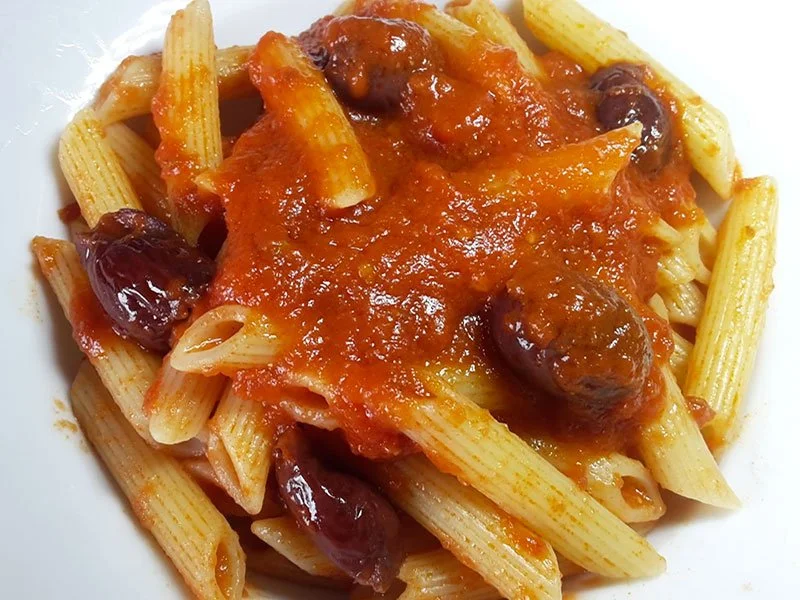
This summery pasta pairs a smooth fresh-tomato sauce with black olives, basil and a little chilli. It is an easy Italian first course, finished with grated Parmesan at the table.
Ingredients
- 350 gpasta, any shape you like
- 700 gfresh tomatoes for sauce
- a few leavesbasil
- 1onion
- 1 clovegarlic, peeled
- 100 gpitted black olives
- to tastegrated Parmesan
- to tasteextra-virgin olive oil
- to tastesalt
- to tastechilli
Instructions
- 1
Prepare tomatoes
Remove the stalks from the tomatoes and rinse them thoroughly.
- 2
Chop tomatoes
Halve the tomatoes and remove the seeds and excess liquid. Cut them into pieces and put them in a saucepan. Rinse the basil leaves and shake off the water.
- 3
Prepare aromatics
Peel, wash and finely chop the onion. Peel the garlic, then rinse it with a small piece of chilli.
- 4
Season tomatoes
Add the onion, a few hand-torn basil leaves and a pinch of salt to the tomatoes.
- 5
Soften tomatoes
Simmer over a medium heat with the pan covered for about 10–15 minutes, stirring regularly, until the tomatoes are soft.
- 6
Pass the sauce
Pour off some of the cooking liquid, then push the tomatoes through a food mill into a bowl.
- 7
Fry garlic
Heat 3–4 tablespoons of oil in a separate saucepan. Let the whole garlic clove and chilli turn lightly golden, then add the tomato purée and olives, whole or chopped to suit your taste.
- 8
Cook sauce
Adjust the seasoning with salt and cook over a low heat for about 10 minutes, or until the sauce reaches the consistency you want.
- 9
Cook pasta
Let the sauce take on the flavours for a couple of minutes, then remove the pan from the heat. Cook the pasta in plenty of salted water and drain it al dente. Toss it with the tomato and olive sauce.
- 10
Serve with Parmesan
Divide the pasta between plates and serve. Put the grated Parmesan on the table so everyone can add it to taste.
What is pasta with tomato and black olives?
This is a straightforward Italian pasta dish built around fresh tomatoes, black olives and basil. Tomato-and-olive sauces are at home in central and southern Italy and the islands, where simple, sunny flavours make an appealing first course.
Fresh tomatoes are simmered and passed into a smooth sauce before the olives are added. That extra step gives the sauce a softer texture while keeping the olives distinct.
Nutrition and macros by portion
The nutrition label shows one serving as written: 480 calories, 15g protein, 68g carbs, 18g fat.
| Portion | Adjustment | kcal | Protein | Carbs | Fat |
|---|---|---|---|---|---|
| Lighter | Less oil, more tomato | 336 kcal | 11g | 48g | 13g |
| This serving | As written | 480 kcal | 15g | 68g | 18g |
| Hungry | Larger pasta portion | 720 kcal | 23g | 102g | 27g |
Most of the carbohydrates come from the pasta, while olive oil and olives provide much of the fat; the Parmesan contributes some protein and fat. Serve with a generous portion of vegetables or salad to balance the plate.
Choosing the pasta and tomatoes
Pasta shape: Use the shape you prefer; short pasta catches pieces of olive, while long pasta can be twirled through the smooth sauce.
Tomatoes: Choose ripe fresh tomatoes suitable for sauce. Removing the seeds and some of their liquid helps the finished sauce become less watery.
Building the sauce
Tomato base: Simmer the chopped tomatoes with onion, basil and a pinch of salt until soft, stirring from time to time. Passing them through a food mill makes the sauce smoother.
Aromatics: Let the whole garlic clove and chilli colour gently in the oil before adding the tomato purée. This flavours the oil; the recipe removes the pan from the heat after the sauce has cooked, rather than specifying that the garlic is removed.
Getting the texture right
Tomato purée: Pour off only part of the cooking liquid before passing the tomatoes. The sauce should be smooth but not thin; if it still seems loose, give it a little more time over a low heat.
Olives: Add them whole or chopped, depending on whether you want larger salty bites or a more even distribution through the sauce.
Timing and doneness
Tomatoes: The first simmer takes about 10–15 minutes, until the pieces are soft enough to pass through the mill.
Sauce and pasta: Allow about 10 minutes for the sauce to thicken, then cook the pasta until al dente according to its packet. Have the pasta ready to toss with the sauce while both are hot.
Serving the dish
Finish: Toss the drained pasta with the sauce so it is coated evenly, then serve straight away.
At the table: Offer grated Parmesan separately, as the recipe suggests. A simple green salad or cooked seasonal vegetables make an easy accompaniment.
Recipe notes & tips
- Use ripe tomatoes for a fuller, naturally sweet sauce.
- Stir the tomatoes regularly while they simmer so they soften evenly.
- Pour off only some of the cooking liquid before using the food mill.
- Chop the olives if you want their flavour spread through every mouthful.
- Keep the garlic clove whole so it can flavour the oil without dispersing through the sauce.
- Reserve the Parmesan for the table so each person can choose how much to add.
Variations
- More chilli: Add a larger piece for a punchier sauce.
- Extra basil: Tear in a few fresh leaves when serving for a stronger herbal note.
- Olive texture: Chop the olives finely for a more evenly flavoured sauce.
- Different shape: Use short pasta instead of long pasta to catch the olives in its ridges or hollows.
- Cheese-free: Leave out the Parmesan for a dairy-free version.
Common mistakes to avoid
- Watery sauce: Pour off some, not all, of the tomato cooking liquid before passing the tomatoes.
- Burnt garlic: Let it colour gently in the oil rather than browning it deeply.
- Overcooked pasta: Drain it when al dente so it keeps its bite when tossed with the sauce.
- Unsoftened tomatoes: Simmer until the pieces are tender before passing them through the food mill.
- Too much salt: Season the sauce carefully, remembering that olives and Parmesan are also savoury.
How to store
Refrigerate leftover pasta or sauce in a covered container and use within 2 days. Reheat gently in a saucepan; add a small splash of water if the sauce has thickened. For best texture, store the sauce separately from the pasta when possible.
Frequently asked questions
Can I use tinned tomatoes?
Yes, though the method is written for fresh tomatoes. Drain excess liquid as needed and simmer until soft before passing the sauce.
Do I need a food mill?
A food mill gives the sauce its smooth texture. If you do not have one, use a sieve and press the softened tomatoes through it.
Should the olives be whole or chopped?
Either works: keep them whole for larger bites or chop them to distribute their flavour more evenly.
How do I know when the sauce is ready?
After about 10 minutes over a low heat, it should have thickened to a consistency that clings to the pasta rather than running thinly across the plate.
Can I make the sauce ahead?
Yes. Prepare the sauce ahead and refrigerate it, then reheat gently while the pasta cooks.
When should I add the Parmesan?
Serve it separately at the table, as in the recipe, so everyone can add it to taste.
Cook it from the original
This recipe comes from fragolosi.it. Their page has the author’s own photos, notes and tips — the best place to cook it from.
Open the recipe on fragolosi.it