
Baked pasta
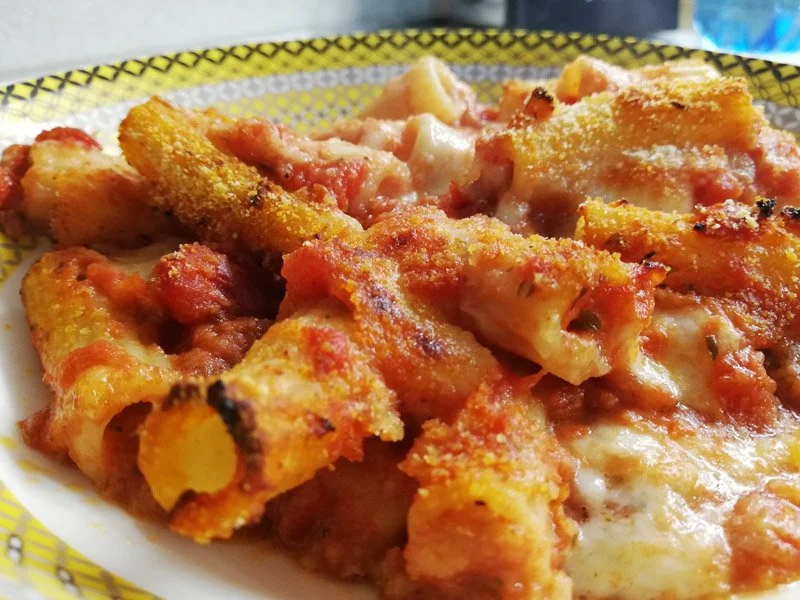
This Italian baked pasta layers short pasta with a slow-cooked meat and tomato ragù, mozzarella, caciocavallo and Parmesan. It makes a generous centrepiece for a Sunday lunch, with a browned, cheesy top and a rich sauce running through the layers.
Ingredients
- 500 gshort pasta, any shape you like
- 200 gminced beef
- 200 gminced pork
- 200 gsausage meat, skins removed
- 1.5 lpassata
- 400 gpeeled tomatoes, roughly chopped
- 2 tablespoonstomato purée
- 1 clovegarlic, peeled and left whole
- 1onion
- a few leavesbasil
- 125 ml (½ glass)red wine
- 120 gParmesan, grated
- 200 gmozzarella, diced
- 150 gfresh caciocavallo, diced
- to tasteknobs of butter
- to tastebreadcrumbs
- to tasteextra-virgin olive oil
- to tastesalt
- to tasteblack pepper
Instructions
- 1
Soften the onion
Finely chop the onion and soften it with the whole garlic clove in a few tablespoons of olive oil. Meanwhile, halve the sausages, remove their skins and crumble the meat. Once the onion has softened, take out the garlic and add the minced beef, minced pork and sausage.
- 2
Brown the meat
Let the meat brown, breaking up any lumps with a fork. Pour in the red wine and let the alcohol evaporate. In a separate bowl, crush the peeled tomatoes with a fork, then add them to the minced meat and sausage.
- 3
Simmer the ragù
Cook gently with the pan covered for about 10 minutes. Add the passata and tomato purée, stir, then pour in a glass of water. Season with salt and pepper, add the basil leaves and simmer, covered, for about 40 minutes.
- 4
Cook the pasta
If needed, loosen the sauce with a little hot water as it cooks. Take the ragù off the heat once it has thickened. While it simmers, boil the pasta in plenty of salted water and drain it very al dente, as it will finish cooking in the oven.
- 5
Prepare the layers
Heat the oven to 180°C, conventional setting. Toss the pasta with 2 ladles of ragù, one third of the diced cheeses and one third of the Parmesan. Butter an oven dish and spread a generous ladle of sauce over its base.
- 6
Build the bake
Spread one third of the pasta in the dish and cover it with a ladle of ragù. Add alternating layers of diced cheese, ragù and grated Parmesan.
- 7
Finish layering
Continue layering until the ingredients are used up. Finish with a layer of pasta and level it with a spatula or the back of a spoon. Use the handle of a wooden spoon to make holes in the surface, almost to the bottom of the dish.
- 8
Top the pasta
Spoon ragù over the pasta, letting some run into the holes. Scatter over Parmesan and breadcrumbs, then dot the surface with small pieces of butter.
- 9
Bake until golden
Bake the dish on the middle shelf for about 15–20 minutes. Switch on the grill for the final few minutes, then remove the dish from the oven.
- 10
Rest before serving
Leave the baked pasta at room temperature for a few minutes before bringing it to the table.
What is baked pasta?
Pasta al forno is an Italian family-style dish in which pasta, sauce and cheese are assembled in a dish and baked. It is often served for a leisurely Sunday lunch, and recipes vary from region to region and household to household.
This version uses a meat ragù with beef, pork and sausage, layered with mozzarella, caciocavallo and Parmesan. The pasta is cooked very al dente first so it can absorb some sauce and finish cooking in the oven.
Nutrition and macros by portion
The nutrition label shows one serving as written: 1060 calories, 55g protein, 105g carbs, 45g fat.
| Portion | Adjustment | kcal | Protein | Carbs | Fat |
|---|---|---|---|---|---|
| Lighter | Less cheese and butter | 742 kcal | 39g | 74g | 31g |
| This serving | As written | 1060 kcal | 55g | 105g | 45g |
| Hungry | Larger pasta portion | 1590 kcal | 83g | 158g | 68g |
Most of the carbohydrates come from the pasta, while the minced meat, sausage and cheeses provide much of the protein. The meat, cheeses, olive oil and butter contribute most of the fat. Balance a serving with a generous green salad or vegetables; the nutrition figures are estimates and will vary with the sausage and cheese you use.
Building a full-flavoured ragù
The meat: Beef, pork and sausage each bring a different savoury note. Break the meat up as it browns so it cooks evenly and is easy to layer through the pasta.
The tomatoes: Passata gives the sauce a smooth base, while crushed peeled tomatoes add texture. Let the ragù simmer gently until it thickens, loosening it with hot water if it becomes too concentrated.
Why the pasta stays very al dente
The pasta: Drain it before it reaches its usual serving texture, since baking continues to cook it. A firm bite at this stage helps the finished dish hold its shape rather than turning soft.
The sauce: Tossing the pasta with some ragù before layering coats it evenly. Keep the remaining sauce for between the layers and the top so the pasta has moisture throughout.
Layering the cheeses
Diced cheese: Mozzarella and fresh caciocavallo are tucked between the layers, where they melt into soft pockets. Cut them into similar-sized pieces so they are easy to distribute.
Grated cheese: Parmesan seasons the layers and helps form a savoury finish. Reserve some for the top, along with breadcrumbs and small pieces of butter.
The holes in the top
Make the holes: Push the handle of a wooden spoon through the top layer until it almost reaches the bottom of the dish. This gives some of the ragù on top a route into the pasta below.
Cover the surface: Spoon sauce over the top and into the holes before adding the Parmesan, breadcrumbs and butter. The final minutes under the grill brown the topping, so keep an eye on it.
Serving and timing
Resting: Leave the dish for a few minutes after baking so the layers settle and are easier to serve. The recipe’s total time is 115 minutes, including the long simmer for the ragù.
On the table: Serve it as the main dish with a simple green salad or cooked vegetables. The rich sauce and several cheeses make lighter, fresh-tasting sides a good contrast.
Recipe notes & tips
- Use a short pasta shape with ridges or openings that can hold onto the ragù.
- Break up the meat as it browns to avoid large dense clumps in the sauce.
- Cook the pasta in plenty of salted water and drain it while it still has a firm bite.
- Keep some hot water nearby to loosen the ragù if it thickens too much.
- Distribute the diced cheeses across the layers rather than piling them in one place.
- Watch the dish closely under the grill, as the breadcrumb and cheese topping can brown quickly.
Variations
- Add vegetables: Layer in cooked aubergine or courgette for a vegetable addition.
- Change the meat: Use all beef or all pork instead of the three-meat mixture.
- Try another cheese: Replace the caciocavallo with another good-melting cheese.
- Add chilli: Stir a little chilli into the ragù for gentle heat.
- Use fresh herbs: Add a little chopped parsley with the basil for a different herbal note.
Common mistakes to avoid
- Overcooking the pasta: Drain it very al dente because it continues cooking in the oven.
- Rushing the ragù: Keep it at a gentle simmer so the sauce thickens without catching.
- Leaving large meat clumps: Break them up with a fork while browning for a more even filling.
- Making the sauce too thick: Add a little hot water so it can coat the pasta and flow into the holes.
- Skipping the resting time: Give the bake a few minutes to settle before cutting portions.
- Walking away from the grill: Check the topping during the final minutes to prevent it getting too dark.
How to store
Cool leftovers, cover or transfer them to an airtight container and refrigerate for up to 3 days. Reheat portions until piping hot in the oven or microwave; add a splash of water if the pasta seems dry.
Frequently asked questions
Can I make the ragù ahead?
Yes. Make the ragù in advance, cool it promptly and keep it covered in the fridge. Reheat it before assembling the dish.
Which pasta shapes work best?
Choose a short shape such as rigatoni, penne or fusilli. Ridged or hollow pasta holds the ragù well.
Can I assemble the dish before baking?
Yes, assemble it ahead and refrigerate it covered. Let it lose some of its chill before baking, and check that it is hot all the way through.
How do I know when it is ready?
The top should be browned and the cheese melted, with the sauce bubbling around the edges. The recipe allows about 15–20 minutes in a 180°C oven, followed by a few minutes under the grill.
Can I freeze baked pasta?
Yes. Freeze cooled portions in suitable airtight containers. Defrost in the fridge before reheating until piping hot.
What can I serve with it?
A green salad or simply cooked vegetables make a fresh, straightforward accompaniment to the rich meat and cheese layers.
Cook it from the original
This recipe comes from fragolosi.it. Their page has the author’s own photos, notes and tips — the best place to cook it from.
Open the recipe on fragolosi.it