
Pasta with walnut pesto
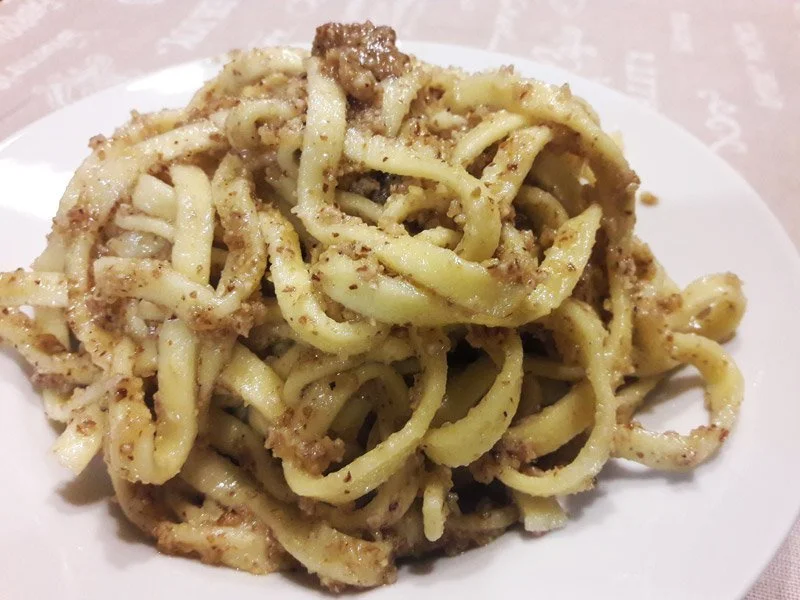
This Italian first course pairs long pasta with a creamy, savoury walnut pesto. It is quick to bring together and offers a change from the more familiar basil-based sauce.
Ingredients
- 350 glong pasta
- 150 gwalnut kernels
- 50 gpine nuts
- 50 ggrated Parmesan
- 50 mlmilk
- 1/2 clovepeeled garlic
- 60 mlextra-virgin olive oil
- to tastesalt
- to tasteblack pepper
Instructions
- 1
Soften the walnuts
Put the walnut kernels in boiling water for 2 minutes. Turn off the heat and leave them in the water for 3–4 minutes.
- 2
Remove the skins
Drain the walnuts and, once they are cool enough to handle, peel off their outer skins.
- 3
Dry the walnuts
Spread the peeled kernels out on a tea towel and pat them dry with a soft cloth.
- 4
Soak the bread
Meanwhile, crumble the bread into the milk and leave it to soften. Squeeze it out, reserving the remaining milk for later. The recipe’s ingredient list does not specify bread or its quantity.
- 5
Blend the nuts
Put the walnuts, pine nuts and garlic in a food processor. Pulse at medium speed for 2 minutes rather than blending continuously, which can make the mixture too oily.
- 6
Add the cheese
Add the Parmesan and reserved milk, then season with salt and pepper. Blend for a further 30 seconds at a higher speed.
- 7
Stream in oil
Add just enough olive oil to make a slightly thick, well-combined pesto, pouring it in drop by drop or in a thin stream so you can control the amount.
- 8
Cook the pasta
If the pesto is too thick, loosen it with a little milk. Cook the pasta in plenty of salted water and drain it when al dente.
- 9
Toss and serve
Toss the pasta with the walnut pesto, divide it among plates and serve straight away.
What is walnut pesto?
Pesto is a family of Italian sauces made by crushing or blending ingredients into a flavourful dressing. This version uses walnuts and pine nuts instead of the basil associated with pesto alla Genovese.
Walnuts bring a mellow, earthy flavour, while Parmesan adds savouriness. The milk and careful addition of oil help the blended nuts coat long pasta.
Nutrition and macros by portion
The nutrition label shows one serving as written: 820 calories, 24g protein, 71g carbs, 51g fat.
| Portion | Adjustment | kcal | Protein | Carbs | Fat |
|---|---|---|---|---|---|
| Lighter | Use less pesto | 574 kcal | 17g | 50g | 36g |
| This serving | As written | 820 kcal | 24g | 71g | 51g |
| Hungry | Serve a larger portion | 1230 kcal | 36g | 107g | 77g |
Most of the carbohydrates come from the pasta, while the walnuts and olive oil contribute much of the fat; the Parmesan and nuts provide protein. Pair a serving with vegetables or salad to add freshness and balance the plate.
Preparing the walnuts
Peeling: Briefly soaking the walnut kernels in hot water helps loosen their outer skins. Let them cool enough to handle before peeling.
Drying: Pat the kernels dry before blending so excess water does not make the pesto runny.
Blending a smooth pesto
Pulse the walnuts, pine nuts and garlic rather than running the processor continuously. This gives you more control over the texture and helps avoid turning the nuts into an overly oily paste.
Add the oil gradually, stopping when the pesto is thick but cohesive. If it needs loosening, the method suggests using a little milk.
A note on the bread instruction
The method instructs you to soak bread in the milk, but the ingredient list does not include bread or give a quantity. Check the original recipe before cooking if you want to follow that part precisely.
The method also says to reserve the milk left after squeezing the bread. Keep it aside for the later blending step, as directed.
Cooking pasta al dente
Cook the long pasta in plenty of salted water and begin checking it towards the end of the packet’s suggested cooking time. It should be tender with a slight firmness at the centre.
Drain it when it reaches that point, then toss it with the pesto and serve promptly so the sauce clings to the pasta.
What to serve alongside
A crisp green salad or simply dressed vegetables offer a fresh contrast to the rich, nutty sauce. Keep their seasoning light so it does not compete with the Parmesan.
Serve the pasta as a first course, or make it a more substantial meal with vegetables and a source of protein on the side.
Recipe notes & tips
- Let the walnuts cool enough to handle before peeling them.
- Pat the peeled walnut kernels dry before adding them to the processor.
- Pulse the nuts in bursts instead of blending them continuously.
- Pour the olive oil in gradually so you can stop when the pesto reaches the right consistency.
- Reserve some cooking water before draining the pasta in case the finished dish needs loosening.
- Serve the pasta as soon as it has been tossed with the pesto.
Variations
- More garlic: Add a little extra garlic for a sharper flavour.
- Herb finish: Stir in chopped parsley just before serving for a fresh note.
- Lemon: Add a little lemon zest for a brighter finish.
- Extra crunch: Keep a few chopped walnuts aside to scatter over the finished pasta.
- Vegetable side: Serve with roasted or steamed seasonal vegetables for a fuller plate.
Common mistakes to avoid
- Blending continuously: The nut mixture can become too oily; pulse it in short bursts.
- Adding all the oil at once: The pesto may become thinner than intended; stream it in gradually.
- Skipping the drying: Wet walnuts can loosen the pesto; pat them dry after peeling.
- Overcooking the pasta: It can turn soft when tossed with the sauce; drain it al dente.
- Guessing the bread quantity: The method mentions bread but the ingredient list gives no amount; check the original recipe before using it.
How to store
Refrigerate leftover pesto or dressed pasta promptly in an airtight container and use within 2 days. Reheat the pasta gently, adding a splash of milk or water if the sauce has thickened; the texture is best when freshly made.
Frequently asked questions
Can I make the walnut pesto without a food processor?
Yes. Chop the nuts and garlic very finely, then mix them with the Parmesan, reserved milk and oil. The pesto will have a more textured finish.
Do I need to peel the walnuts?
The method includes briefly soaking and peeling them. This takes extra time, so allow for it when planning the recipe.
What should I do if the pesto is too thick?
The recipe suggests loosening it with a little milk. Add it gradually and mix until the sauce coats the pasta.
Can I use a different shape of pasta?
Yes. The recipe calls for long pasta, but another shape can be used; choose one that holds the thick sauce well.
Why does the method mention bread?
It instructs you to soak bread in the milk, but bread is missing from the ingredient list and no quantity is given. Check the original recipe if you want to include it.
Cook it from the original
This recipe comes from fragolosi.it. Their page has the author’s own photos, notes and tips — the best place to cook it from.
Open the recipe on fragolosi.it