
Chocolate croissant
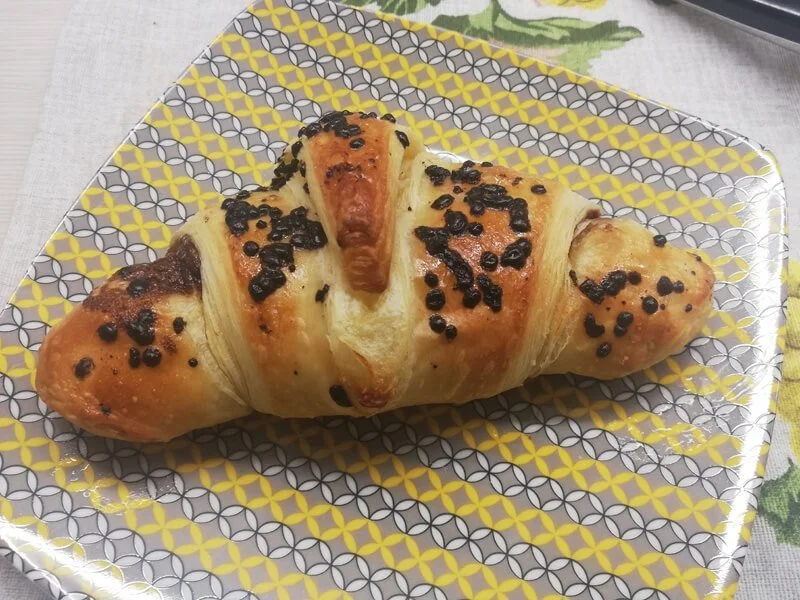
These Italian-style chocolate croissants are made with crisp puff pastry wrapped around homemade chocolate custard. Serve them warm or cooled with a cappuccino for a sweet breakfast or snack.
Ingredients
- 1 sheetround puff pastry
- 75 gplain flour (or cornflour)
- 3egg yolks
- 100 gsugar
- 25 gbutter
- 500 mlmilk
- 1vanilla pod, split in half
- 50 gdark chocolate, melted
- As neededmilk and egg yolk, mixed for brushing
- As neededchocolate chips, to decorate
Instructions
- 1
Heat the milk
Bring the milk and split vanilla pod to the boil. Meanwhile, whisk the sugar and egg yolks together in a saucepan using a wooden spoon or whisk.
- 2
Add the flour
Sift the flour into the egg mixture and stir thoroughly. When the milk boils, take it off the heat and remove the vanilla pod.
- 3
Cook the custard
Gradually pour the hot milk into the egg, sugar and flour mixture. Return the saucepan to the heat and cook for a few minutes, stirring constantly so the custard does not catch on the bottom.
- 4
Finish the filling
Once the custard has thickened, remove it from the heat and transfer it to a bowl. Stir for a few minutes to let it cool and aerate, then mix in the butter pieces and melted dark chocolate. Leave the chocolate custard to cool.
- 5
Prepare the pastry
Ten minutes before baking, preheat a conventional oven to 180°C. Unroll the pastry onto its protective sheet and roll it out lightly to about 2–3 mm thick.
- 6
Cut and fill
Cut the pastry from the centre into 8 equal triangles, or 16 smaller ones. Put a heaped teaspoon of chocolate custard at the base of each triangle, then fold the ends of the base in slightly to help contain the filling.
- 7
Shape and chill
Roll each triangle from its base towards its point to form a croissant. Curve the tips slightly if you like, then chill the pastries for about 30 minutes.
- 8
Arrange the croissants
After chilling, transfer the croissants to one or two baking trays lined with baking paper. Space them apart.
- 9
Brush and bake
Brush the pastries with the egg yolk and milk mixture, then press on the chocolate chips so they stick. Bake in the preheated conventional oven at 180°C for 12–15 minutes on the middle shelf.
- 10
Finish baking
Lower the oven to 170°C and bake for about 5 minutes more, adjusting for the croissants’ size, until golden. Remove from the oven and leave to cool before serving.
What are chocolate croissants?
In Italy, cornetti are a familiar breakfast pastry, often enjoyed with a cappuccino. They can be plain or filled with sweet ingredients such as jam, custard or chocolate cream.
This version pairs ready-made puff pastry with a homemade chocolate custard. The contrast between crisp, layered pastry and soft filling makes them a tempting treat for breakfast or a snack.
Nutrition and macros by portion
The nutrition label shows one serving as written: 360 calories, 6g protein, 43g carbs, 19g fat.
| Portion | Adjustment | kcal | Protein | Carbs | Fat |
|---|---|---|---|---|---|
| Lighter | Make mini croissants | 252 kcal | 4g | 30g | 13g |
| This serving | As written | 360 kcal | 6g | 43g | 19g |
| Hungry | Serve two croissants | 540 kcal | 9g | 65g | 29g |
The pastry, sugar and flour provide most of the carbohydrates, while butter, egg yolks and chocolate contribute much of the fat. Egg yolks, milk and chocolate also provide some protein. Pair one croissant with fresh fruit or plain yoghurt to round out the plate.
Making the chocolate custard
Warm milk: infusing it with the split vanilla pod gives the custard a gentle vanilla flavour. Remove the pod before gradually adding the milk to the egg mixture.
Thicken gently: keep stirring as the custard cooks so it thickens evenly without sticking. Add the butter and melted chocolate once it is off the heat, then let the filling cool before shaping.
Handling the pastry
Roll lightly: the pastry should be about 2–3 mm thick, but avoid pressing it hard or working it for too long. Keeping it cool helps preserve its layers.
Cut evenly: make 8 triangles for full-sized pastries or 16 for mini ones. Try to keep the triangles similar in size so they bake at a similar pace.
Sealing and shaping
Contain the filling: place a heaped teaspoon of custard at the wide end of each triangle and fold in the corners slightly. This helps reduce leaks as the pastry rolls and bakes.
Roll from the base: move towards the point of the triangle, keeping the roll snug but not tight. Curve the tips if desired, then chill the shaped pastries for about 30 minutes to help them hold their form.
Baking cues
Start at 180°C: bake the brushed pastries on the middle shelf for 12–15 minutes. Leave space between them so heat can circulate.
Lower the heat: continue at 170°C for about 5 minutes, allowing a little extra time for larger croissants. Look for a golden surface before taking them out, and let them cool before serving.
Serving ideas
Serve these pastries on their own or alongside coffee, tea or a glass of milk. Their chocolate custard makes them rich enough to work as a small breakfast treat or an afternoon snack.
For a more balanced plate, add fresh fruit or plain yoghurt. The pastries are also easy to make in mini size for a smaller serving.
Recipe notes & tips
- Let the chocolate custard cool before filling the pastry so it is easier to handle.
- Keep the pastry on its protective sheet while rolling and cutting to make it easier to move.
- Use a heaped teaspoon of filling for each croissant, as too much can escape during baking.
- Chill the shaped pastries for about 30 minutes before baking to help them keep their shape.
- Press the chocolate chips gently into the egg wash so they stay in place.
- Check smaller croissants early, as they may finish baking before larger ones.
Variations
- Make mini pastries: cut the sheet into 16 triangles and keep an eye on the shorter baking time.
- Use cornflour: substitute it for the plain flour to make the custard.
- Try a different filling: use cooled custard without chocolate for a plain cream version.
- Add a nutty topping: replace some chocolate chips with chopped nuts.
- Serve with fruit: add fresh berries or sliced fruit on the side.
Common mistakes to avoid
- Filling with warm custard: it can soften the pastry; let the chocolate cream cool first.
- Adding too much filling: it can leak from the seams; use a heaped teaspoon per triangle.
- Skipping the chill: the pastries may lose their shape; rest them in the fridge for about 30 minutes.
- Crowding the tray: the croissants need space to bake evenly; use two lined trays if necessary.
- Baking only by the clock: sizes can vary; check for a golden surface and adjust the final minutes.
How to store
Once fully cool, store the croissants in an airtight container in the fridge and eat within 2 days. Reheat briefly in an oven until warmed through; the pastry may be less crisp after storage.
Frequently asked questions
Can I make the chocolate custard ahead?
Yes. Make it in advance and let it cool before using it to fill the pastry. Keep it covered in the fridge until needed.
Can I use shop-bought custard?
The method calls for homemade custard, but cooled shop-bought chocolate custard can be used as a practical substitute. Choose a thick one so it is less likely to run out.
Why chill the shaped croissants?
The recipe uses a 30-minute chill to help the pastries hold their shape during baking. Keep them cool while arranging them on the trays.
How do I know when they are ready?
After 12–15 minutes at 180°C and about 5 minutes at 170°C, they should look golden. Larger croissants may need a little longer.
Can I make smaller croissants?
Yes. Cut the pastry into 16 mini triangles instead of 8. Smaller pastries may bake more quickly, so check them as they approach the end of the stated time.
Can I freeze them?
The recipe does not specify freezing. For the best pastry texture, bake and enjoy them fresh or refrigerate leftovers for up to 2 days.
Cook it from the original
This recipe comes from fragolosi.it. Their page has the author’s own photos, notes and tips — the best place to cook it from.
Open the recipe on fragolosi.it