
Roman-style fried courgettes
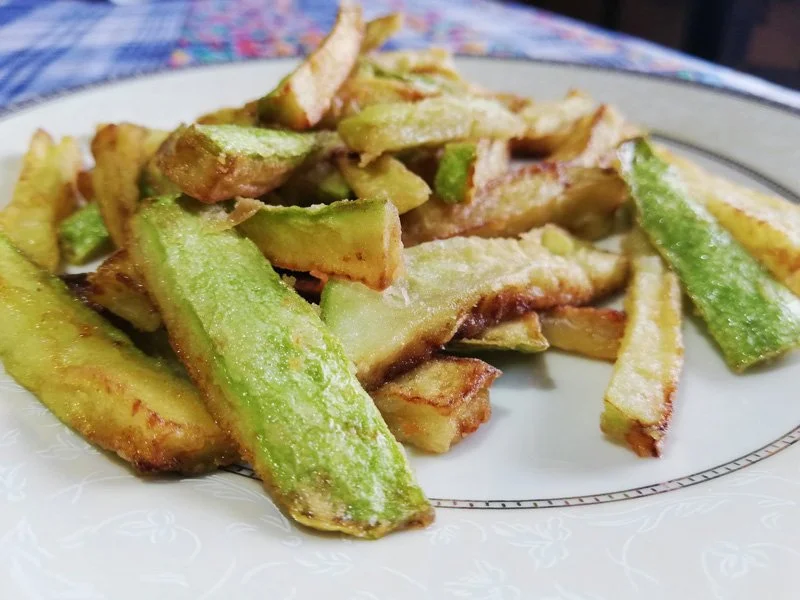
Roman-style fried courgettes are thin, flour-coated strips fried until lightly golden. Serve them hot as a crisp snack or an easy side dish.
Ingredients
- 800 gRomanesco courgettes
- about 150 gplain flour (or semolina)
- 40 gcoarse salt
- to tastefine salt
- as neededpeanut oil
Instructions
- 1
Cut the courgettes
Trim off the ends of the courgettes and rinse them. Cut them lengthways into thin slices, then cut each slice into strips 3–4 mm wide.
- 2
Salt the strips
Put the courgette strips in a colander and sprinkle them with the coarse salt to draw out their moisture.
- 3
Drain and dry
Leave the strips to release their liquid for 30 minutes. Rinse and drain them, then gently pat dry with a clean tea towel.
- 4
Coat with flour
Spread the flour on a large plate. Toss the courgettes in it until they are thoroughly coated.
- 5
Heat the oil
Meanwhile, heat plenty of peanut oil in a non-stick frying pan.
- 6
Fry in batches
When the oil begins to sizzle, add a few courgette strips at a time, first shaking off excess flour through a sieve.
- 7
Turn until golden
Fry the strips until golden on all sides, turning them at regular intervals.
- 8
Lift from the pan
Use a slotted spoon to lift out the courgettes as they become lightly golden.
- 9
Drain and season
Set the fried courgettes on kitchen paper to absorb excess oil. Once frying is finished, taste them and add a little fine salt only if needed.
- 10
Serve while hot
Transfer the courgettes to a serving plate or individual plates and serve hot.
What are Roman-style fried courgettes?
This Italian appetiser turns courgettes into slim, fried strips with a light flour coating. It is a simple, economical dish to serve as a snack or alongside a meal.
Romanesco courgettes are associated with the area around Rome, and this style relies on a few straightforward steps rather than a heavy batter. Salting and drying the strips helps prepare them for coating and frying.
Nutrition and macros by portion
The nutrition label shows one serving as written: 390 calories, 8g protein, 40g carbs, 24g fat.
| Portion | Adjustment | kcal | Protein | Carbs | Fat |
|---|---|---|---|---|---|
| Lighter | Use less frying oil | 273 kcal | 6g | 28g | 17g |
| This serving | As written | 390 kcal | 8g | 40g | 24g |
| Hungry | Serve a larger portion | 585 kcal | 12g | 60g | 36g |
The courgettes provide most of the carbohydrate and fibre, while the flour adds further carbohydrates. Peanut oil contributes most of the fat, and the dish has only modest protein from the courgettes and flour. Balance a portion with a protein-rich main and a fresh salad or other vegetables.
Choosing the courgettes
Romanesco courgettes: Use them if available for the named version of the dish. Choose firm courgettes and cut the strips evenly so they cook at a similar rate.
Flour or semolina: The recipe allows either plain flour or semolina. Coat the strips thoroughly, then remove the excess so the coating stays light.
Why salt and dry them?
Salting: The coarse salt draws moisture from the cut courgettes while they rest in a colander for 30 minutes. Rinse the strips afterwards so they are not left overly salty.
Drying: Pat them gently with a clean tea towel before flouring. Wet strips can make the coating clump and can cause the hot oil to spit.
Frying in small batches
Batch size: Add only a few strips at a time, as the method specifies. This leaves room to turn them and helps keep the oil hot.
Coating: Shake off loose flour through a sieve just before frying. Excess flour can fall into the pan and darken in the oil.
Look for light golden colour
Turn the strips at regular intervals so they colour on all sides. Lift them from the pan once they are lightly golden, rather than waiting for a deep brown crust.
The recipe does not give a frying temperature or a cooking time for each batch, so use the stated visual cue and watch the strips closely.
Serving them hot
Drain each batch briefly on kitchen paper, then taste before adding fine salt. The courgettes have already been salted and rinsed, so extra seasoning may not be needed.
Serve them straight away as a snack or side dish. They pair well with a simple main course or other small dishes.
Recipe notes & tips
- Cut the strips to a consistent 3–4 mm width for more even frying.
- Give the courgettes the full 30 minutes to release their liquid.
- Dry the strips gently after rinsing before you coat them.
- Sieve excess flour from each batch just before it goes into the pan.
- Taste the fried courgettes before adding any fine salt.
Variations
- Try semolina: Use it instead of plain flour, as the recipe suggests.
- Choose another courgette: Use a firm variety if Romanesco courgettes are unavailable.
- Serve with a dip: Offer a simple dip on the side for snacking.
- Make a mixed platter: Serve the strips alongside other fried or grilled vegetables.
- Add fresh herbs: Scatter chopped herbs over the courgettes just before serving.
Common mistakes to avoid
- Skipping the salting: Leave the strips in the colander for the full 30 minutes to draw out moisture.
- Leaving them damp: Pat the rinsed courgettes dry so the flour coats them more evenly.
- Using too much flour: Shake the strips through a sieve to remove loose flour before frying.
- Frying too many at once: Work in small batches so the strips have room to turn.
- Over-browning: Lift the strips when they are lightly golden, as directed.
- Salting without tasting: Check the seasoning first because the courgettes have already been salted.
How to store
For the best texture, serve the courgettes hot soon after frying. If you have leftovers, refrigerate them in a covered container for up to 2 days and reheat in an oven until hot; they may be softer than when freshly fried.
Frequently asked questions
Can I use plain flour instead of semolina?
Yes. The recipe gives plain flour and semolina as alternatives.
Why do the courgettes rest with coarse salt?
The salt draws liquid from the strips. After 30 minutes, rinse and drain them, then pat them dry.
How thick should I cut the strips?
Cut each strip 3–4 mm wide so they are fairly even for frying.
How can I tell when the courgettes are ready?
Turn them regularly and lift them from the pan when they are lightly golden on all sides.
Should I add fine salt after frying?
Taste the strips first. Add only a little fine salt if they need it.
Can I make them ahead?
They are best served hot soon after frying. You can refrigerate leftovers for up to 2 days, but reheated strips will be less crisp.
Cook it from the original
This recipe comes from fragolosi.it. Their page has the author’s own photos, notes and tips — the best place to cook it from.
Open the recipe on fragolosi.it