
Ravioli with butter
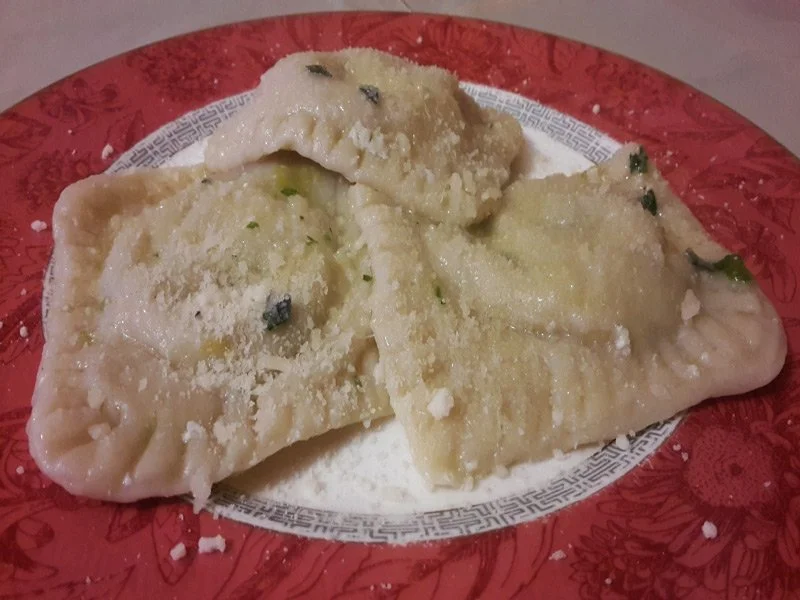
These Italian ravioli are filled with ricotta and escarole, then finished in browned butter with sage and Parmesan. Making them by hand takes time, but the soft filling and fragrant sauce make them a rewarding meal to share.
Ingredients
- 400 gsemolina flour (or plain flour, type 0)
- 4eggs
- 1 tablespoonoil
- to tastesalt
- as neededsemolina flour, for dusting
- 250 gcow’s milk ricotta or mixed-milk ricotta, drained
- 400 gescarole
- 70 ggrated Parmesan
- 1 pinchnutmeg
- 1egg yolk
- to tastesalt
- 1egg
- 1 tablespoonwater
- 100 gbutter
- a few leavesfresh sage
- 80 ggrated Parmesan
Instructions
- 1
Make the dough
Beat the eggs in a bowl. Tip the flour onto a work surface and make a well in the centre; add the oil, eggs and a pinch of salt.
- 2
Knead the dough
Bring the flour into the egg mixture, first with a fork and then with your hands. Knead for about 10 minutes, until the dough is smooth, firm and elastic.
- 3
Rest and prepare
Shape the dough into a ball, wrap it in cling film or a damp, wrung-out tea towel, and leave it at room temperature for 30 minutes. While it rests, drain the ricotta. Trim, wash and boil the escarole in a little lightly salted water for about 10 minutes.
- 4
Mix the filling
Drain and squeeze the escarole, chop it finely and put it in a bowl. Sieve the ricotta and add it to the escarole with the egg yolk, 70 g Parmesan, nutmeg, salt and pepper; mix well. Divide the rested dough into two portions.
- 5
Roll the first sheet
Keep one portion wrapped in a floured tea towel. On a lightly floured surface, roll the other portion to a thickness of 2–3 mm. Lay it on a tea towel and cover it with another tea towel to stop it drying out.
- 6
Roll and fill
Roll the second portion of dough to the same thickness. Place small mounds of filling on one sheet, leaving 4 cm between them.
- 7
Seal the ravioli
Beat the egg with the tablespoon of water, then brush it onto the dough between the filling mounds; alternatively, use water alone. Lay the second sheet on top, matching the edges, and press gently around each mound with your fingertips to seal the sheets and push out any air.
- 8
Cut and dry
Use a pastry cutter, ravioli stamp or fluted pastry wheel to cut out evenly sized squares. Place the ravioli well apart on a floured tea towel as you make them.
- 9
Chill the ravioli
Dry the ravioli in the refrigerator for 30 minutes. When they are nearly ready to cook, bring a large pan of salted water to the boil.
- 10
Cook and serve
Cook the ravioli over a low heat so the filling does not escape. As they near the end of cooking, melt the butter very gently in a wide frying pan. Add the chopped sage and let the butter turn hazelnut brown. Transfer the cooked ravioli to the pan and toss for 1 minute, then scatter over the remaining 80 g Parmesan and serve at once.
What are ravioli with butter?
Ravioli are filled pasta parcels found in Italian cooking, with shapes and fillings that vary from region to region and household to household. This version pairs ricotta with escarole, then keeps the finish simple with butter, sage and Parmesan.
The method works by giving the dough time to rest and the assembled ravioli a short chill before cooking. That helps make the pasta easier to handle and gives the seams time to hold together.
Nutrition and macros by portion
The nutrition label shows one serving as written: 900 calories, 39g protein, 82g carbs, 47g fat.
| Portion | Adjustment | kcal | Protein | Carbs | Fat |
|---|---|---|---|---|---|
| Lighter | Less butter, more escarole | 630 kcal | 27g | 57g | 33g |
| This serving | As written | 900 kcal | 39g | 82g | 47g |
| Hungry | Add another ravioli portion | 1350 kcal | 59g | 123g | 71g |
The pasta flour supplies most of the carbohydrates, while the butter and Parmesan contribute much of the fat. The eggs, ricotta and Parmesan provide protein, with the escarole adding vegetables. Balance the plate with a crisp salad or extra vegetables alongside the ravioli.
Choose a dry filling
Ricotta: Draining and sieving it helps keep the filling smooth rather than watery, which makes the ravioli easier to seal.
Escarole: Cook it until tender, then squeeze out as much water as you can before chopping. Any excess moisture can soften the filling and leak into the pasta.
Knead and roll evenly
Kneading: Work the dough for about 10 minutes until it feels smooth, firm and elastic. If it keeps springing back while rolling, let it rest briefly rather than forcing it thinner.
Thickness: Aim for 2–3 mm for both sheets so they cook evenly. Cover the first sheet while you roll the second to prevent the surface drying out.
Seal out the air
Egg wash: Brush the spaces between filling mounds lightly with beaten egg and water, or use water alone. Too much liquid can make the dough slippery rather than helping it stick.
Pressing: Gently press around each mound, working from the filling outwards to push away trapped air. Seal the edges firmly before cutting the squares.
Watch the cooking cues
Pasta water: Once the ravioli go in, keep the heat low enough to avoid a vigorous boil that could knock the parcels about or split them. Cook until the pasta is tender and the filling is hot.
Browned butter: Melt it over a very gentle heat with the sage. Take it off the heat when it smells nutty and turns golden brown, before it darkens too far.
Serve straight away
The finished ravioli need only about 1 minute in the butter and sage to take on the sauce. Add the Parmesan just before serving so it clings to the pasta without losing its fresh, savoury flavour.
A crisp green salad or simply cooked vegetables make a fresh contrast to the rich butter sauce. Serve any sides separately so the ravioli remain the centre of the plate.
Recipe notes & tips
- Drain the ricotta ahead of time so it is ready when you make the filling.
- Squeeze the cooked escarole thoroughly before chopping it.
- Keep unused dough covered while you work to stop it drying out.
- Space the filling mounds 4 cm apart to leave room for sealing and cutting.
- Cook the ravioli gently rather than at a rolling boil.
- Serve immediately after tossing with the sage butter and Parmesan.
Variations
- Add lemon: Finish with a little finely grated lemon zest for a brighter note.
- Use spinach: Replace the escarole with cooked, well-drained spinach.
- Change the herbs: Use a few thyme leaves in place of the sage.
- Make the dough with plain flour: Use type 0 flour instead of semolina for a different pasta texture.
- Add black pepper: Season the filling with freshly ground pepper for extra warmth.
Common mistakes to avoid
- Wet filling: Squeeze the escarole well and drain the ricotta so the filling does not make the pasta soggy.
- Drying sheets: Cover rolled pasta with a tea towel while preparing the second sheet.
- Trapped air: Press from around each mound outwards before cutting to help prevent ravioli splitting.
- Loose edges: Brush between the mounds and press the two sheets together firmly before cutting.
- Boiling too vigorously: Keep the water at a gentle simmer to reduce the chance of the filling escaping.
- Overbrowned butter: Use a low heat and remove the pan once the butter is golden and nutty-smelling.
How to store
Keep uncooked ravioli in a single layer, well separated, in the refrigerator and cook within a day. Cooked leftovers can be refrigerated in a covered container for up to 2 days; reheat gently in a frying pan with a small splash of water or butter, as boiling can break them apart.
Frequently asked questions
Can I use plain flour instead of semolina?
Yes. The ingredient list allows type 0 plain flour as an alternative to semolina; the dough may feel a little different as you knead and roll it.
Can I make the ravioli ahead?
Yes. Assemble them and chill for 30 minutes as directed, then keep them covered and cook within a day. Keep them separated so they do not stick together.
How do I know when the ravioli are cooked?
The pasta should be tender and the filling hot. Keep the water at a gentle simmer and check one raviolo if you are unsure.
Can I freeze the uncooked ravioli?
Arrange them in a single layer on a tray until firm, then transfer to a freezer-safe container. Cook from frozen in gently simmering water, allowing extra time and checking that the filling is hot.
What can I use instead of escarole?
Cooked spinach is a practical substitute. Whichever greens you choose, drain and squeeze them thoroughly before mixing with the ricotta.
Cook it from the original
This recipe comes from fragolosi.it. Their page has the author’s own photos, notes and tips — the best place to cook it from.
Open the recipe on fragolosi.it