
Pico de gallo
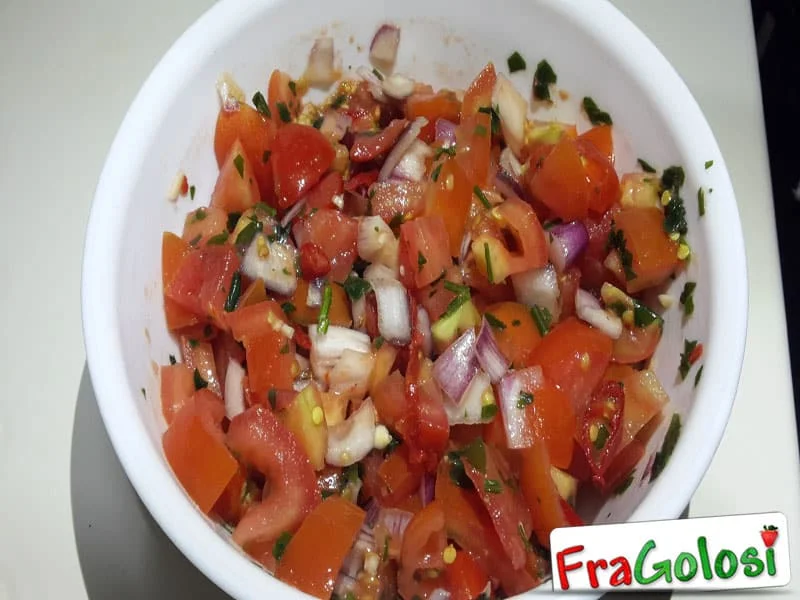
Pico de gallo is a fresh Mexican salsa of chopped tomatoes, onion, chilli, lime and coriander. It takes little preparation and makes a bright, tangy accompaniment for snacks or other dishes.
Ingredients
- 4 mediumtomatoes
- 1onion
- 2 clovesgarlic
- Juice of 1lime
- 1–2red or green hot chillies, such as jalapeños
- 1 heaped tablespoonchopped coriander
- A drizzleextra-virgin olive oil
- To tastesalt
Instructions
- 1
Prepare tomatoes
Wash the tomatoes, halve them and remove the seeds and watery pulp.
- 2
Dice tomatoes
Cut the tomatoes into small dice and put them in a bowl.
- 3
Chop aromatics
Peel and wash the onion, then dice it. Peel and wash the garlic cloves, then chop them finely.
- 4
Mix and season
Add the garlic and onion to the tomatoes. Season with salt and stir gently.
- 5
Add flavourings
Pour in the lime juice, then add a drizzle of oil, the chopped coriander and finely chopped chilli.
- 6
Adjust chilli
Use as much chilli as suits your taste.
- 7
Chill salsa
Cover the bowl with cling film and refrigerate the pico de gallo for 1 hour.
- 8
Allow flavours
Bear in mind that the longer the salsa stays in the fridge, the more time the flavours have to blend.
- 9
Serve as a snack
Serve the pico de gallo as a starter with crostini, crackers, slices of toasted stale bread or another accompaniment.
- 10
Use as a side
Alternatively, serve the pico de gallo alongside other dishes.
What is pico de gallo?
Pico de gallo is a Mexican salsa made from fresh, chopped ingredients rather than a cooked tomato base. Its name is often used for a chunky mixture of tomato, onion, chilli and herbs.
Fresh tomato and lime give this version its lively character, while a short rest in the fridge helps the onion, garlic and chilli season the mixture throughout.
Nutrition and macros by portion
The nutrition label shows one serving as written: 40 calories, 2g protein, 9g carbs, 1g fat.
| Portion | Adjustment | kcal | Protein | Carbs | Fat |
|---|---|---|---|---|---|
| Lighter | Use less olive oil | 28 kcal | 1g | 6g | 1g |
| This serving | As written | 40 kcal | 2g | 9g | 1g |
| Hungry | Serve a larger portion | 60 kcal | 2g | 14g | 2g |
Most of the carbohydrates and natural sugars come from the tomatoes and onion; the vegetables also provide a little fibre. The small amount of oil contributes most of the fat, while this salsa contains only modest protein. Serve it alongside a protein-rich main and a more substantial source of energy, such as beans or bread, for a more balanced plate.
Choosing the ingredients
Tomatoes: Choose ripe but firm tomatoes so the salsa tastes full and stays in distinct pieces. Removing the seeds and watery pulp helps prevent excess liquid in the bowl.
Chilli: Jalapeños are one option, but another fresh red or green chilli works too. Start with less if you prefer a gentler heat, then adjust to taste.
Coriander and lime: Chopped coriander adds a fresh herbal note, while lime juice brings acidity. Add the oil sparingly so it rounds the flavours without masking them.
Getting the texture right
Even dicing: Cut the tomato and onion into small, similar-sized pieces so each spoonful is balanced. Finely chop the garlic and chilli to distribute their stronger flavours.
Gentle mixing: Fold the ingredients together rather than crushing them. This keeps the tomato pieces intact and the salsa pleasantly chunky.
Why remove the tomato seeds?
Tomato seeds and their surrounding liquid can make a fresh salsa watery, especially as it rests. Removing them before dicing gives the finished mixture a cleaner, more spoonable texture.
If the tomatoes are particularly juicy, let the diced pieces drain briefly before mixing them with the other ingredients.
The importance of resting
Refrigerating the covered bowl for 1 hour gives the lime, salt, garlic and chilli time to season the tomatoes and onion. Keep the bowl covered so the salsa stays fresh and does not take on other fridge aromas.
The vegetables will release some juice as they stand, so give the salsa a gentle stir before serving.
How to serve it
For a simple starter, serve it with crostini, crackers or slices of toasted stale bread, as suggested in the recipe. Choose sturdy pieces that can scoop up the chunky salsa.
It also works as a fresh accompaniment to other dishes. Drain off a little of the liquid if you want a less juicy topping.
Recipe notes & tips
- Remove the tomato seeds and watery pulp before dicing to help keep the salsa from becoming runny.
- Dice the tomatoes and onion into similarly sized pieces for a consistent texture.
- Taste the chilli before adding it, as heat can vary from one pepper to another.
- Add the salt gradually and taste again after the ingredients have rested.
- Stir gently so the tomato pieces stay intact.
- Give the salsa a final gentle stir before serving to redistribute its juices.
Variations
- Milder chilli: Use one small chilli or remove its seeds for less heat.
- More lime: Add a little extra lime juice if you prefer a sharper flavour.
- Herb swap: Replace some of the coriander with chopped parsley for a different herbal note.
- Chunky topping: Leave the vegetables in slightly larger dice when serving over other dishes.
- Less liquid: Drain the diced tomatoes briefly before mixing for a firmer salsa.
Common mistakes to avoid
- Leaving the tomato pulp in: It can make the salsa watery; remove the seeds and surrounding liquid before dicing.
- Chopping unevenly: Large pieces can dominate a spoonful; aim for similarly sized dice.
- Adding too much chilli at once: Heat is hard to undo; start with less and taste before adding more.
- Mashing the mixture: The salsa loses its chunky texture; fold the ingredients together gently.
- Skipping the chill: The flavours have less time to blend; refrigerate the covered bowl for 1 hour as directed.
How to store
Keep the salsa covered in the fridge and eat it within 1–2 days for the freshest texture. It is served cold, so stir it gently and serve straight from the fridge; drain any excess liquid if needed.
Frequently asked questions
Can I make pico de gallo ahead of time?
Yes. The recipe calls for a 1-hour rest in the fridge, which gives the flavours time to blend. For the best texture, make it on the day you plan to serve it.
How can I make it less spicy?
Use one chilli or choose a milder one, and remove the seeds before chopping. Add it gradually and taste as you go.
Why is my pico de gallo watery?
Ripe tomatoes release juice, particularly after they are salted and chilled. Removing the seeds and watery pulp helps, and you can drain off excess liquid before serving.
Can I use another chilli instead of jalapeño?
Yes. The recipe allows for another red or green hot chilli. Adjust the amount to suit its heat and your preference.
What can I serve with pico de gallo?
Serve it with crostini, crackers or toasted stale bread, or use it as an accompaniment to other dishes.
Cook it from the original
This recipe comes from fragolosi.it. Their page has the author’s own photos, notes and tips — the best place to cook it from.
Open the recipe on fragolosi.it