
Lasagna
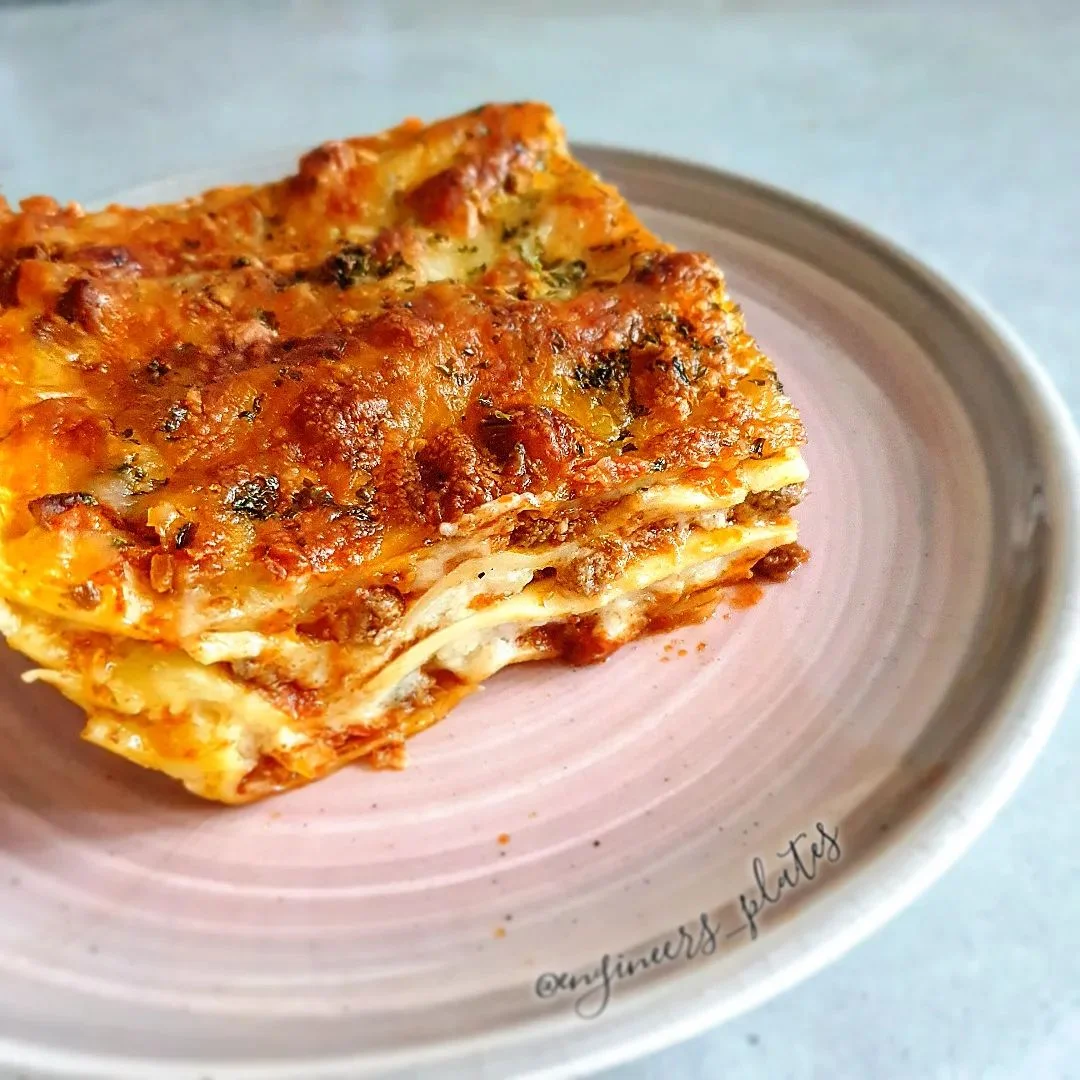
This is a layered, oven-baked pasta dish with a slow-cooked beef and tomato sauce, white sauce and a cheesy top. The supplied method describes lasagne sheets, while the ingredient list names cooked spaghetti, so check which pasta you have before assembling.
Ingredients
- 500 gminced beef
- 1 tspdried rosemary leaves
- 2garlic cloves, minced
- 1red onion, finely chopped
- 1carrot, finely chopped
- 1 handfulcelery leaves, finely sliced
- 2 canstomato purée
- 200 mlwater
- 30 ml (2 tbsp)olive oil
- 38 g (3 tbsp)sugar
- A pinchsalt
- To tastemozzarella
- To tastecooked spaghetti
- 43 g (3 tbsp)unsalted butter
- 24 g (3 tbsp)plain flour
- 710 ml (3 cups)milk
- 110 g (1 cup)shredded Cheddar cheese
- To tasteseasonings
Instructions
- 1
Sauté aromatics
Heat the olive oil in a pot. Add the dried rosemary and garlic and sauté them.
- 2
Brown the beef
Add the minced beef and stir until the liquid released by the meat has evaporated.
- 3
Add vegetables
Stir in the onion, carrot and celery leaves.
- 4
Simmer the sauce
Add the tomato purée and 200 ml water, then stir. Cover and cook over low heat for about 1 hour, until the sauce is ready to use.
- 5
Layer the pasta
Spread 2 or 3 tbsp of beef ragù over the base of a baking dish. Add a lasagne sheet, béchamel and more ragù, then repeat the layers, starting with another lasagne sheet. Finish with a generous layer of shredded mozzarella and strong Cheddar.
- 6
Bake until bubbling
Bake at 180°C until the top is lightly crisp and the beef ragù is bubbling.
- 7
Finish with parsley
Remove the dish from the oven and sprinkle it with parsley flakes.
What is lasagne?
Lasagne is an Italian baked pasta dish made by stacking pasta with sauce and often a creamy white sauce and cheese. Its familiar layered format makes it a hearty meal that can be prepared in a baking dish and served in portions.
This version pairs beef simmered with tomato, rosemary and finely chopped vegetables with béchamel and a cheesy top. The ingredient list and method do not quite match: the list specifies cooked spaghetti, but the layering instructions call for lasagne sheets.
Nutrition and macros by portion
The nutrition label shows one serving as written: 1000 calories, 50g protein, 105g carbs, 40g fat.
| Portion | Adjustment | kcal | Protein | Carbs | Fat |
|---|---|---|---|---|---|
| Lighter | More vegetables, less cheese | 700 kcal | 35g | 74g | 28g |
| This serving | As written | 1000 kcal | 50g | 105g | 40g |
| Hungry | Larger portion | 1500 kcal | 75g | 158g | 60g |
The beef contributes much of the protein and fat, while the pasta, flour and sugar provide most of the carbohydrates. Olive oil, butter and cheese also add fat, and the cheese and added salt contribute sodium. Pair a serving with salad or vegetables, and note that the amounts of pasta, mozzarella and tomato purée are not specified, so the nutrition estimate is approximate.
Build flavour in the ragù
Aromatics first: warming the rosemary and garlic in olive oil helps flavour the cooking fat before the beef goes in. Keep the heat moderate so the garlic does not scorch.
Vegetables next: finely chopped onion, carrot and celery leaves become part of the sauce as it simmers. Stir them through the beef before adding the tomato purée and water.
Give the sauce time
Slow simmer: the method calls for about 1 hour over low heat with the pot covered. Keep the heat gentle and check occasionally that the sauce is not catching on the bottom.
Ready to layer: the sauce should be cooked through and thick enough to spread between pasta layers. The recipe does not specify the can size or the amount of sugar, so season and adjust the sauce to your taste.
Check the pasta and layers
Pasta choice: use lasagne sheets if following the stated layering method. If you have cooked spaghetti instead, the supplied instructions do not explain how to layer or bake it, so the result will not be a conventional lasagne.
Even layers: spread the ragù and béchamel across the pasta rather than piling them in the middle. This helps the layers bake evenly and makes the dish easier to portion.
Make the béchamel
White sauce: the listed butter, flour and milk are the ingredients for béchamel, though the method does not include instructions for making it. A typical approach is to cook the flour briefly in melted butter, then gradually whisk in the milk until smooth and thickened.
Cheese finish: the method calls for mozzarella and strong Cheddar on top. The ingredient list gives no quantity for the mozzarella, so use enough to cover the surface without obscuring the layers.
Judge when it is baked
Look for the cues in the method: a lightly crisp top and bubbling ragù. The recipe gives no baking duration, so begin checking once the dish is hot throughout and avoid relying on a fixed time.
Rest briefly after baking before cutting. This gives the layers a little time to settle and helps each serving hold its shape.
Serve it as a meal
A crisp green salad or simply dressed vegetables make a fresh contrast to the rich meat and cheese. Steamed greens are another straightforward side.
The dish is substantial on its own, so serve a moderate slice alongside vegetables if you want a more balanced plate.
Recipe notes & tips
- Use a pot with a heavy base to help the ragù simmer without catching.
- Keep the garlic moving in the oil and add the beef before it browns too deeply.
- Stir the sauce occasionally during its hour-long simmer.
- Confirm whether you are using lasagne sheets or cooked spaghetti before assembling.
- Spread the béchamel and ragù evenly so each portion gets a mix of layers.
- Let the baked dish rest briefly before serving.
Variations
- Add extra vegetables: finely chop mushrooms or courgette and cook them with the onion and carrot.
- Use lasagne sheets: follow the stated layering method with sheets rather than cooked spaghetti.
- Adjust the herbs: add a little dried oregano alongside the rosemary.
- Change the cheese: use another melting cheese in place of some of the Cheddar.
- Reduce the sweetness: use less sugar in the ragù and taste before adding more.
Common mistakes to avoid
- Scorching the garlic: sauté it gently and add the beef as soon as it is fragrant.
- Skipping the simmer: cook the ragù over low heat for about 1 hour as directed.
- Guessing the pasta method: the recipe lists spaghetti but describes lasagne sheets, so choose the pasta before starting.
- Making uneven layers: spread the sauce across each layer rather than leaving bare patches.
- Baking by time alone: use the stated cues of a lightly crisp top and bubbling ragù.
- Cutting straight away: allow the dish a short rest so the layers settle.
How to store
Cool leftovers promptly, cover and refrigerate for up to 3 days. Reheat portions until piping hot throughout; add a splash of water if the pasta seems dry. The recipe does not give freezing instructions, and the result may vary depending on which pasta is used.
Frequently asked questions
Can I use cooked spaghetti instead of lasagne sheets?
The ingredient list names cooked spaghetti, but the method specifically describes layering lasagne sheets. It does not explain how to assemble the dish with spaghetti, so the result will differ from the method as written.
How long does the beef sauce simmer?
Cover it and cook it over low heat for about 1 hour. Stir occasionally and check that it is not catching on the base of the pot.
How do I know the lasagne is ready?
The method says to bake at 180°C until the top is a little crisp and the ragù is bubbling. No baking time is supplied, so use those visual cues.
How much mozzarella should I use?
The recipe does not give an amount. Sprinkle enough shredded mozzarella to cover the top alongside the Cheddar.
Does the recipe explain how to make the béchamel?
It lists butter, flour and milk and calls for béchamel in the layers, but gives no method for making it. Prepare a smooth white sauce from those ingredients before assembling.
Can I make the ragù ahead?
Yes. The method cooks the ragù before assembling, so you can prepare it in advance and refrigerate it once cooled. Reheat it thoroughly before layering if needed.
Cook it from the original
This recipe comes from fooooods.com. Their page has the author’s own photos, notes and tips — the best place to cook it from.
Open the recipe on fooooods.com