
Beef Sausages With Sauerkraut & Fried Shallots
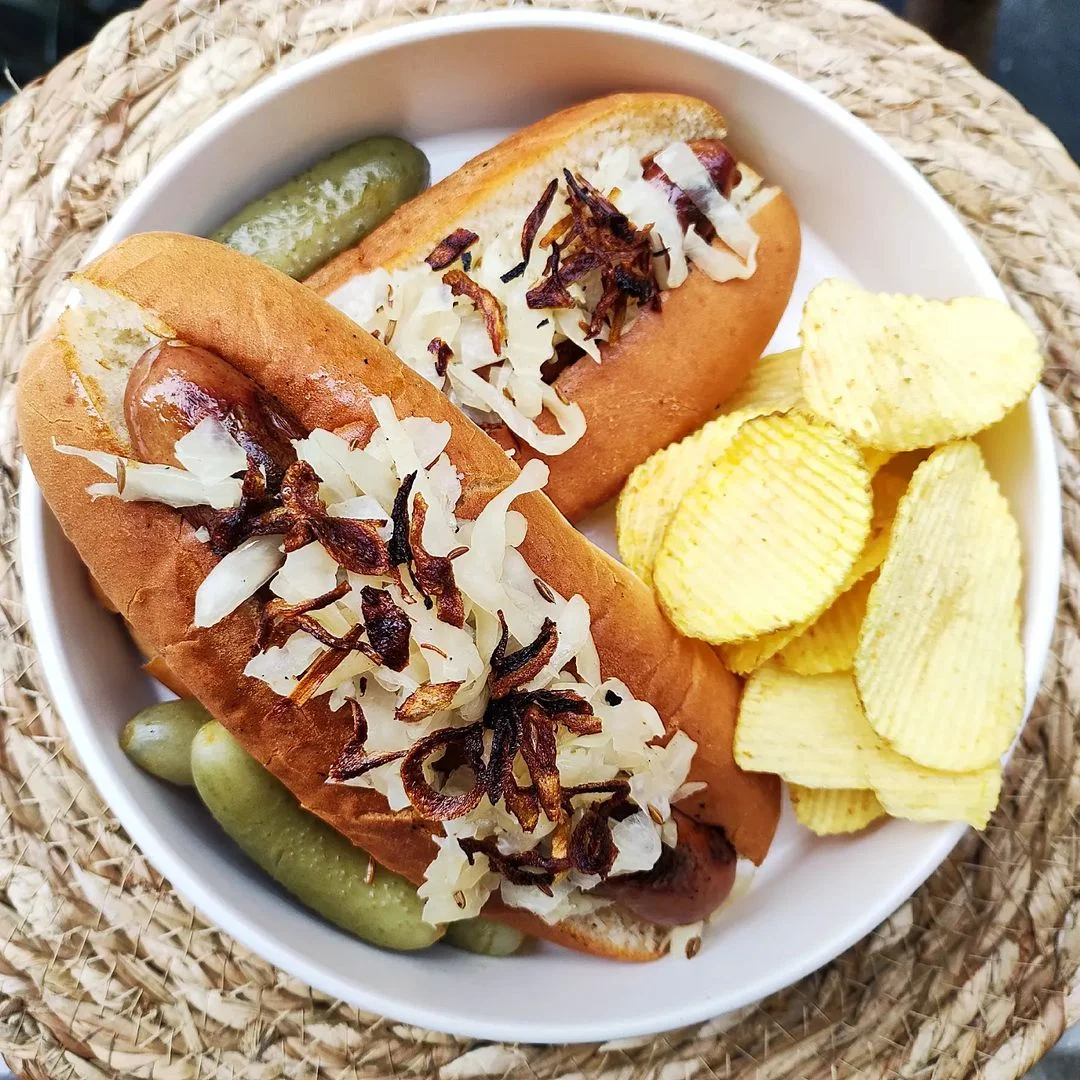
Beef sausages, tangy sauerkraut and crisp fried shallots come together in a simple hotdog bun. It is an easy, savoury meal that gets extra texture from the shallots and warmth from briefly heating the sauerkraut.
Ingredients
- 4sausages of choice
- 8 tbspsauerkraut
- 2 tbspshallots, thinly sliced
- 4hotdog buns
- for brushingbutter
- for fryingoil
Instructions
- 1
Fry the shallots
Pour enough oil into a small pot to fry the shallots and warm it over medium heat. Fry the sliced shallots until golden and crisp, then transfer them to a plate lined with kitchen paper to drain.
- 2
Store the topping
Once the shallots have cooled, keep them in an airtight container while you prepare the other components.
- 3
Warm the buns
Brush the buns lightly with butter. Heat them for about 1 minute on each side, then take them out of the pan.
- 4
Cook the sausages
Pan-fry or grill the sausages, turning them from time to time, for about 7–10 minutes, until marked and cooked through. Place one sausage in each bun.
- 5
Heat the sauerkraut
Add the sauerkraut to the pan and heat for 2 minutes, stirring continuously. Divide it into 4 portions and spoon it over the sausages.
- 6
Finish and serve
Arrange the hotdogs on serving plates or in bowls, sprinkle over the fried shallots and serve with sides of your choice.
- 7
Slice the cabbage
The recipe also gives these instructions for making sauerkraut: slice cabbage to your preferred thickness, add salt and massage it for 10 minutes.
- 8
Pack and ferment
Mix in caraway seeds, pack the cabbage tightly into clean jars and leave at room temperature for 14 days. Then chill it in the fridge.
What are beef sausages with sauerkraut?
This is a hotdog-style meal built around cooked sausages in buns, topped with sharp fermented cabbage and crisp shallots. Sauerkraut has roots in European food traditions, where fermenting cabbage was a way to preserve it.
Here, the kraut brings acidity to balance the rich sausage and buttered bun. The recipe also includes instructions for fermenting cabbage, though it does not give quantities for that process.
Nutrition and macros by portion
The nutrition label shows one serving as written: 470 calories, 18g protein, 42g carbs, 25g fat.
| Portion | Adjustment | kcal | Protein | Carbs | Fat |
|---|---|---|---|---|---|
| Lighter | Use less butter | 329 kcal | 13g | 29g | 18g |
| This serving | As written | 470 kcal | 18g | 42g | 25g |
| Hungry | Add another sausage | 705 kcal | 27g | 63g | 38g |
The bun supplies most of the carbohydrates, while the sausages contribute much of the protein and fat. Butter and frying oil add further fat, and both the sausage and sauerkraut can contribute sodium. For a more balanced plate, serve a hotdog with a generous side of vegetables or salad.
Choosing the ingredients
Sausages: Use your preferred type, keeping in mind that size and thickness affect cooking time. The recipe calls for them to be cooked until marked and cooked through.
Sauerkraut: Ready-made sauerkraut keeps this meal quick; 8 tablespoons are divided across four buns. Its tanginess is a useful contrast to the savoury sausage.
Shallots: Thin slices fry quickly and make a crisp finishing garnish. Keep them moving and take them out as soon as they turn golden.
Getting the shallots crisp
Oil temperature: Heat the oil over medium heat before adding the shallots. If it is too cool, they can absorb oil rather than crisp; if too hot, the thin slices may darken quickly.
Draining: Spread the fried shallots on kitchen paper so excess oil can drain away. Let them cool before storing them in an airtight container.
Cooking the sausages
Turn regularly: Pan-fry or grill the sausages, turning them occasionally for the stated 7–10 minutes. Look for browned marks and make sure they are cooked through before putting them in the buns.
Timing: The method gives an approximate cooking time, so allow for differences in sausage thickness and heat. Follow any cooking guidance on the sausage packaging as well.
Warming the buns and kraut
Buns: Brush them lightly with butter and warm each side for about 1 minute. This gives them a little colour without making them the focus of the dish.
Sauerkraut: Stir it in the pan for 2 minutes, then divide it evenly over the sausages. Stirring helps warm it without leaving it in one spot for too long.
Serving ideas
The recipe leaves the sides up to you. A crisp salad or simple vegetables can add freshness alongside the soft bun and rich sausage.
Serve soon after assembling so the buns stay pleasant to eat and the fried shallots retain their crunch.
About the homemade sauerkraut instructions
The final method lines describe slicing cabbage, massaging it with salt, adding caraway and fermenting it in jars for 14 days at room temperature before chilling. However, cabbage, salt and caraway are not included in the ingredient list, and no quantities or jar-safety details are supplied.
For this hotdog recipe, use the listed sauerkraut unless you already have a tested fermentation recipe to follow.
Recipe notes & tips
- Slice the shallots evenly so they cook at a similar rate.
- Fry the shallots in batches if the pot is small, rather than crowding them.
- Drain the fried shallots on kitchen paper and add them just before serving.
- Turn the sausages during cooking to brown them on several sides.
- Stir the sauerkraut continuously while it heats for 2 minutes.
- Warm the buns briefly so they do not become dry or overly crisp.
Variations
- Choose another sausage: Use your preferred sausage in place of beef sausages.
- Add mustard: Spread a little mustard inside each bun for a sharper flavour.
- Try extra toppings: Add sliced pickles for another tangy element.
- Use a different bun: Choose a sturdy roll that can hold the sausage and toppings.
- Add herbs: Scatter chopped parsley over the finished hotdogs for a fresh note.
Common mistakes to avoid
- Burning the shallots: Fry over medium heat and remove them as soon as they turn golden.
- Skipping the drain: Set the shallots on kitchen paper to absorb excess oil.
- Under-cooking the sausages: Cook for about 7–10 minutes and check that they are cooked through.
- Overheating the buns: Warm them for about 1 minute per side, then remove them.
- Leaving the kraut unstirred: Stir continuously during its 2-minute heating time.
- Adding the garnish too early: Sprinkle on the shallots just before serving to preserve their crispness.
How to store
Store cooked sausages and sauerkraut separately in covered containers in the fridge and use within 3 days. Reheat until piping hot, then assemble with freshly warmed buns and shallots; the fried shallots are best stored airtight at room temperature and used while crisp.
Frequently asked questions
Can I use ready-made sauerkraut?
Yes. The listed recipe uses 8 tablespoons of sauerkraut, and ready-made kraut avoids the separate fermentation process mentioned at the end of the method.
How long do the sausages take to cook?
The recipe gives about 7–10 minutes for pan-frying or grilling, with occasional turning. The exact time depends on their size and thickness, so check that they are cooked through.
Can I make the fried shallots ahead?
Yes. Once cooled, the method says to store them in an airtight container while preparing the rest of the dish. Add them at the end for the best crunch.
Do I need to heat the sauerkraut?
The method heats it in the pan for 2 minutes while stirring continuously. You can follow that step before dividing it over the sausages.
Can I make the homemade sauerkraut in this recipe?
The final method lines describe a 14-day fermentation, but the ingredient list does not include cabbage, salt or caraway, and gives no quantities for them. Use a tested fermentation recipe for homemade sauerkraut.
What can I serve with these hotdogs?
The recipe suggests sides of your choice. Salad or vegetables are easy options alongside the sausages and buns.
Cook it from the original
This recipe comes from fooooods.com. Their page has the author’s own photos, notes and tips — the best place to cook it from.
Open the recipe on fooooods.com