
Jjampong (Seafood Soup)
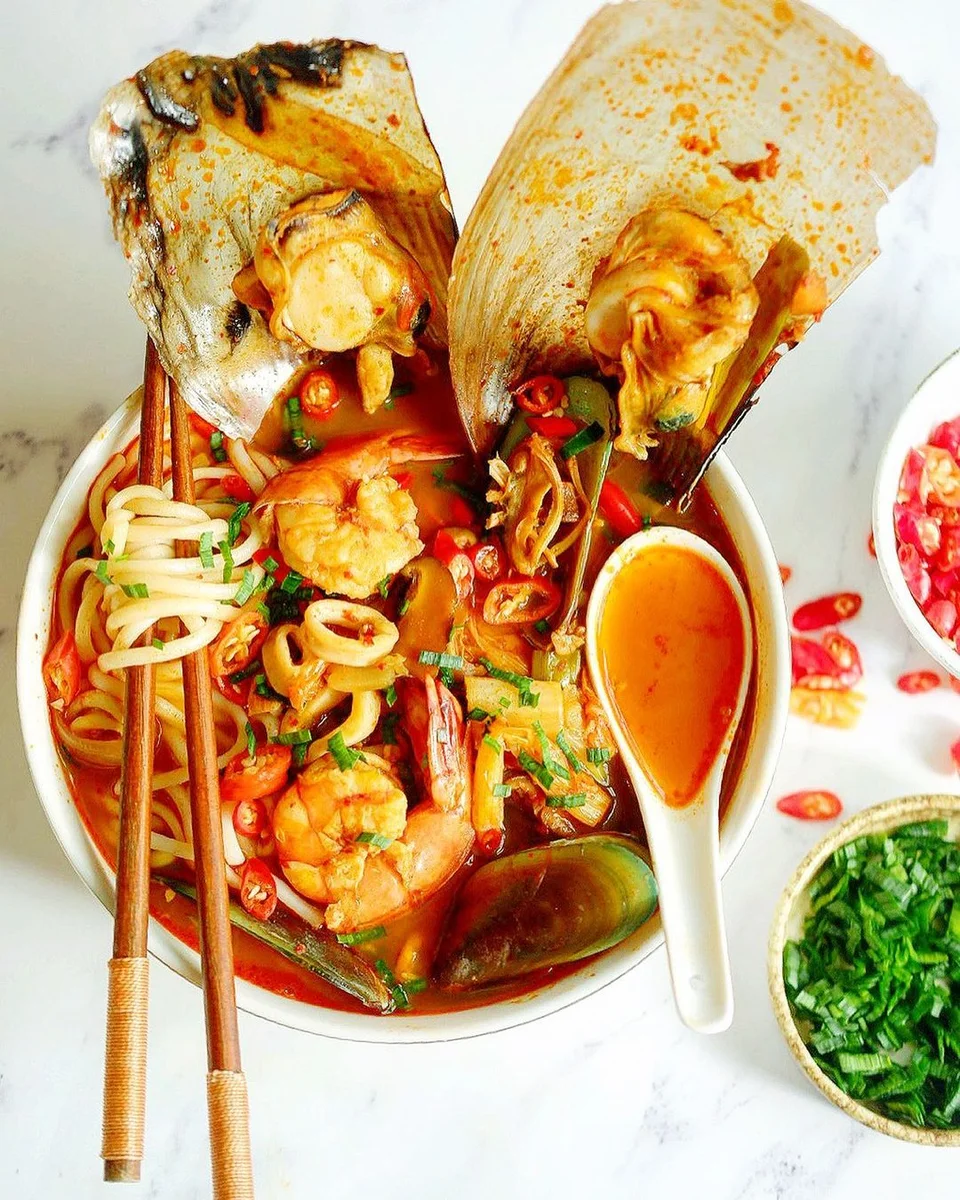
Jjampong is a spicy Korean noodle soup built around a rich stock, vegetables and seafood or other proteins. This method layers garlic, ginger and chilli pastes into the broth, then serves it over noodles.
Ingredients
- 400 gdried noodles
- 2 tbspoil
- 1 1/2 tbspminced garlic
- 1 tbspminced ginger
- 6 tbspgochugaru
- 1 tbspsesame oil
- 2 tbspgochujang
- 2 tbspfish sauce
- 1 tbspsoy sauce
- 1 tspsalt
- 1/2 tspwhite pepper
- 1 tspMSG
Instructions
- 1
Make the stock
Bring water to the boil in a pot with dried anchovies, seaweed and dashi stock powder. Boil over high heat for 20 minutes, then reduce the heat and simmer for a further 15 minutes.
- 2
Prepare the additions
While the stock cooks, prepare the vegetables and proteins.
- 3
Strain the stock
Strain the stock into a bowl or cups. The method says this should yield 7 cups.
- 4
Fry aromatics and beef
Heat the oil in a wok or large, deep pan. Fry the garlic and ginger until golden, then add sliced beef and stir-fry for 1 minute. Add half of the gochugaru and stir-fry.
- 5
Season the vegetables
Add the vegetables and the remaining gochugaru. Stir in the gochujang, soy sauce, fish sauce, salt, MSG and white pepper, then stir-fry until the vegetables soften.
- 6
Simmer the soup
Pour in the stock and bring the soup to the boil. Add the remaining proteins, cover and cook for 10 minutes.
- 7
Cook the noodles
Meanwhile, cook the noodles according to the packet instructions.
- 8
Finish and serve
Uncover the soup and drizzle over the sesame oil. Take it off the heat and serve with the noodles.
What is jjampong?
Jjampong is a Korean spicy noodle soup, commonly associated with Korean-Chinese cooking. It brings noodles and a boldly seasoned broth together with vegetables and seafood or other proteins.
This method builds flavour by frying aromatics and chilli seasoning before adding stock. The recipe details supplied here are incomplete: the method mentions stock ingredients, beef, vegetables and additional proteins, but their quantities are not included in the ingredient list.
Nutrition and macros by portion
The nutrition label shows one serving as written: 500 calories, 14g protein, 82g carbs, 10g fat.
| Portion | Adjustment | kcal | Protein | Carbs | Fat |
|---|---|---|---|---|---|
| Lighter | More vegetables, fewer noodles | 350 kcal | 10g | 57g | 7g |
| This serving | As written | 500 kcal | 14g | 82g | 10g |
| Hungry | Larger noodle portion | 750 kcal | 21g | 123g | 15g |
The 400 g of dried noodles supplies most of the carbohydrates, while the oils and gochujang contribute much of the fat. Protein and additional energy depend on the beef and other proteins mentioned in the method, which are not quantified in the supplied ingredients; the nutrition estimate is therefore especially uncertain. Balance the bowl by serving a good share of the vegetables and protein alongside the noodles.
Build the stock
Stock base: dried anchovies, seaweed and dashi stock powder are simmered first to give the soup its savoury foundation. Straining before adding it to the wok keeps the broth clear of the solids.
Yield: the method says to expect 7 cups of stock, but does not give the water quantity. Use the stated cooking times—20 minutes at a boil followed by 15 minutes over low heat.
Layer the chilli seasoning
Gochugaru: dividing the chilli flakes lets some fry with the beef and the rest cook with the vegetables. Take care as you stir so the seasoning does not catch on the bottom of the pan.
Gochujang: this paste joins the soy and fish sauces for a rounded, savoury seasoning. The listed 6 tablespoons of gochugaru make a strongly chilli-forward soup.
Soften the vegetables
Vegetables: stir-fry them with the seasonings until softened before adding stock. The recipe does not specify which vegetables to use or how much, so follow the intended quantities from the original recipe if available.
Pan space: a large wok or deep pan gives the ingredients room to fry and later hold the broth. If the pan is crowded, stir carefully and allow the vegetables to soften before pouring in the stock.
Cook proteins through
Beef: the method adds sliced beef after the garlic and ginger and gives it a brief 1-minute stir-fry before the chilli flakes go in.
Remaining proteins: add these after the stock reaches a boil, then cover and cook for 10 minutes. As the types and quantities are not listed, check that each protein is cooked through before serving.
Keep noodles separate
Noodles: cook them separately according to their packet instructions, rather than simmering them in the soup. This helps them keep their texture and avoids soaking up too much broth before serving.
Serving: place the noodles in bowls and ladle the finished soup over or alongside them. Finish the soup with sesame oil off the heat, as directed.
Balance the bowl
The noodles provide most of the carbohydrate, while the cooking oil, sesame oil and chilli paste contribute fat. Protein would mainly come from the beef and other proteins mentioned in the method, but those ingredients and their amounts are missing from the supplied list.
For a more balanced meal, serve a generous amount of the vegetables and protein with the noodles, rather than filling the bowl with noodles alone.
Recipe notes & tips
- Prepare the vegetables and proteins while the stock simmers so they are ready when needed.
- Use a large, deep pan so there is room to fry the ingredients and add the stock.
- Add the gochugaru in two stages, as described, to distribute its flavour through the soup.
- Cook the noodles separately and combine them with the soup only when serving.
- Check that the proteins are fully cooked after the covered 10-minute simmer.
Variations
- Adjust the heat: use less gochugaru for a milder broth.
- Add more vegetables: include extra vegetables if you want a fuller bowl.
- Choose seafood: use seafood among the proteins for a seafood-focused version.
- Use another noodle: follow the packet directions for the noodle you have.
- Finish at the table: offer extra gochugaru for diners who want more heat.
Common mistakes to avoid
- Skipping the stock straining: strain it before adding it to the wok so the solids do not end up in the soup.
- Adding noodles to the pot early: cook them separately to help prevent them turning too soft.
- Frying on too low a heat: use the stated high heat for the stock and a hot pan for the aromatics.
- Crowding the pan: use a large wok or deep pan so the vegetables can soften evenly.
- Guessing protein doneness: check the pieces are cooked through after the covered simmer, especially as the recipe does not specify their size.
How to store
Refrigerate leftover soup and noodles separately in covered containers and use within 3 days. Reheat the soup until steaming hot and warm the noodles separately or briefly in the broth just before serving.
Frequently asked questions
How spicy is this jjampong?
The listed 6 tablespoons of gochugaru make it a very chilli-forward soup. Reduce the amount if you prefer a milder broth.
Can I cook the noodles in the soup?
The method says to cook them separately according to the packet instructions. This keeps them from absorbing too much broth as it simmers.
What proteins should I use?
The method mentions sliced beef and additional proteins, but the ingredient list does not identify or quantify them. Use the intended ingredients from the original recipe if you have access to its full ingredient list.
Which vegetables go in the soup?
The method says to add vegetables but does not name them. The supplied details are not enough to identify the exact selection or amounts.
How much stock should I make?
The method says straining should yield 7 cups, but it does not state how much water to start with. Check the full original recipe for the missing stock quantities.
Can I prepare the stock ahead?
Yes. Strain it after simmering, cool it promptly and refrigerate it in a covered container; reheat it before adding it to the pan.
Cook it from the original
This recipe comes from fooooods.com. Their page has the author’s own photos, notes and tips — the best place to cook it from.
Open the recipe on fooooods.com