
Foul M’damas (Fava Beans)
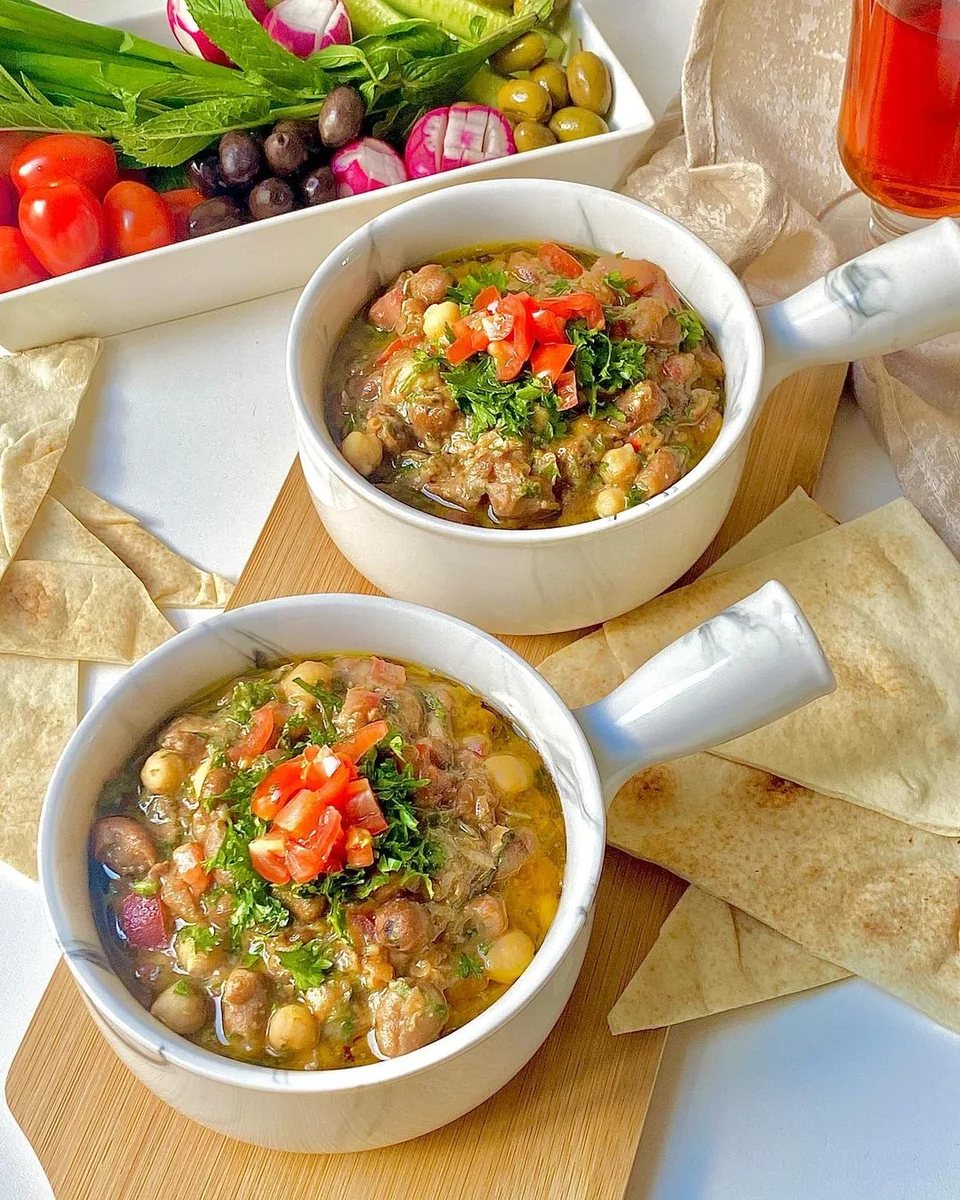
Foul M’damas is a warm, savoury dish of fava beans and chickpeas finished with lemon, garlic, olive oil and fresh toppings. It makes a hearty breakfast or a simple meal served with pita and sliced vegetables.
Ingredients
- 2 cansfava beans (Cedar brand)
- 240 ml (1 cup)water
- 130 g (3/4 cup)chickpeas
- 2 smalltomatoes, diced
- 3 clovesgarlic, crushed
- 15 g (1/2 cup)chopped parsley
- 60 ml (1/4 cup)olive oil
- 1lemon, squeezed
- to tastesalt
Instructions
- 1
Rinse the beans
Drain and rinse the fava beans and chickpeas, then put them in a pot.
- 2
Simmer the beans
Add the water and bring it to a boil. Reduce the heat and simmer for 10–15 minutes, until the beans have softened, lightly crushing them with a fork as they cook.
- 3
Add the toppings
Take the pot off the heat. Add the lemon juice, garlic, salt, olive oil, diced tomatoes and parsley, then mix everything together.
- 4
Serve it warm
Serve warm, garnished with extra parsley and tomatoes and a generous drizzle of olive oil.
- 5
Enjoy with sides
Serve with pita bread and sliced vegetables.
What is foul m’damas?
Foul m’damas is a dish of cooked fava beans, commonly eaten for breakfast across the Middle East and especially associated with Egypt. Recipes vary from place to place, with toppings and seasoning adjusted to taste.
This version combines fava beans with chickpeas and finishes them with lemon, garlic, tomatoes and parsley. Simmering softens the beans, while the fresh additions bring brightness and contrast.
Nutrition and macros by portion
The nutrition label shows one serving as written: 318 calories, 12g protein, 30g carbs, 14g fat.
| Portion | Adjustment | kcal | Protein | Carbs | Fat |
|---|---|---|---|---|---|
| Lighter | Use less olive oil | 223 kcal | 8g | 21g | 10g |
| This serving | As written | 318 kcal | 12g | 30g | 14g |
| Hungry | Add more pita bread | 477 kcal | 18g | 45g | 21g |
The beans and chickpeas provide most of the carbohydrates and plant protein, while the olive oil contributes most of the fat. Serve a portion with sliced vegetables, and adjust the amount of pita to suit the rest of the meal.
Choosing the beans
Fava beans: The canned beans make this version convenient; drain and rinse them before heating. Their texture should soften enough to crush lightly while simmering.
Chickpeas: These add a firmer bite alongside the fava beans. Drain and rinse them with the fava beans so the pot starts with clean, well-drained pulses.
Simmer gently
Bring the beans and water to a boil, then turn the heat down for a 10–15 minute simmer. A gentle simmer warms the beans through and gives them time to soften without rapidly breaking them apart.
Lightly crush some of the beans with a fork in the pot as they cook. Keep some whole for a mix of creamy and distinct textures.
Finish off the heat
Lemon and garlic: Stir these in after removing the pot from the heat, as the recipe directs. The lemon adds a sharp, fresh note, while the garlic seasons the warm beans.
Tomatoes and parsley: Fold them in at the same time for freshness and colour. Taste before serving and add salt as needed.
Check the texture
The beans are ready when they have softened and a few crush easily with a fork. If they are still firm after 10 minutes, continue simmering briefly and check again.
Aim for a thick, spoonable mixture rather than a smooth purée. Crush gently so the chickpeas and some fava beans keep their shape.
Serve with something to scoop
Pita bread is a natural partner for scooping up the warm beans. Sliced vegetables add a crisp, cool contrast to the soft pulses.
For the garnish, use the extra parsley and tomatoes mentioned in the method, plus a drizzle of olive oil. Add these just before serving.
Recipe notes & tips
- Rinse the canned beans and chickpeas well before adding them to the pot.
- Start checking the fava beans for softness at the 10-minute mark.
- Crush only some of the beans to keep a varied texture.
- Add the fresh toppings after taking the pot off the heat.
- Taste the mixture before serving and adjust the salt and lemon to your preference.
Variations
- More lemon: Add extra lemon juice at the table for a sharper finish.
- Herb change: Use some chopped mint alongside the parsley for a fresh variation.
- Spiced version: Stir in a pinch of ground cumin after cooking.
- Chilli finish: Add sliced fresh chilli or a pinch of chilli flakes to the warm beans.
- Extra vegetables: Serve with cucumber and sliced peppers alongside the pita.
Common mistakes to avoid
- Skipping the rinse: Rinsing removes the canning liquid; drain and rinse both types of beans first.
- Boiling too hard: A vigorous boil can break up the beans; reduce the heat once the water boils.
- Over-mashing: Crushing everything makes the texture uniform; lightly crush only some of the beans.
- Adding toppings too early: The recipe adds them off the heat, so wait until the pot is removed from the hob.
- Forgetting to taste: Canned beans can vary in saltiness; taste before adding more salt.
How to store
Refrigerate leftovers in a covered container for up to 3 days. Reheat gently in a saucepan or microwave, adding a small splash of water if the mixture has thickened; add fresh garnish after reheating.
Frequently asked questions
Can I use dried fava beans?
Yes, but they need to be soaked and cooked until tender before following this method. The recipe’s 10–15 minute simmer is for canned beans.
Can I make this ahead?
You can cook the beans ahead and refrigerate them. Reheat gently, then stir in the lemon, garlic, tomatoes and parsley before serving.
How do I know when the beans are ready?
They should be warm and soft enough to crush lightly with a fork. Keep simmering and check again if they are still firm.
What should I serve with foul m’damas?
Serve it warm with pita bread and sliced vegetables, as suggested in the recipe. Extra parsley, tomatoes and olive oil make a suitable garnish.
Can I use dried chickpeas instead of canned?
Yes, provided they are soaked and cooked until tender first. Add them to the pot already cooked, since the listed simmer time is intended to soften canned beans.
Cook it from the original
This recipe comes from fooooods.com. Their page has the author’s own photos, notes and tips — the best place to cook it from.
Open the recipe on fooooods.com