
Fish Tikka
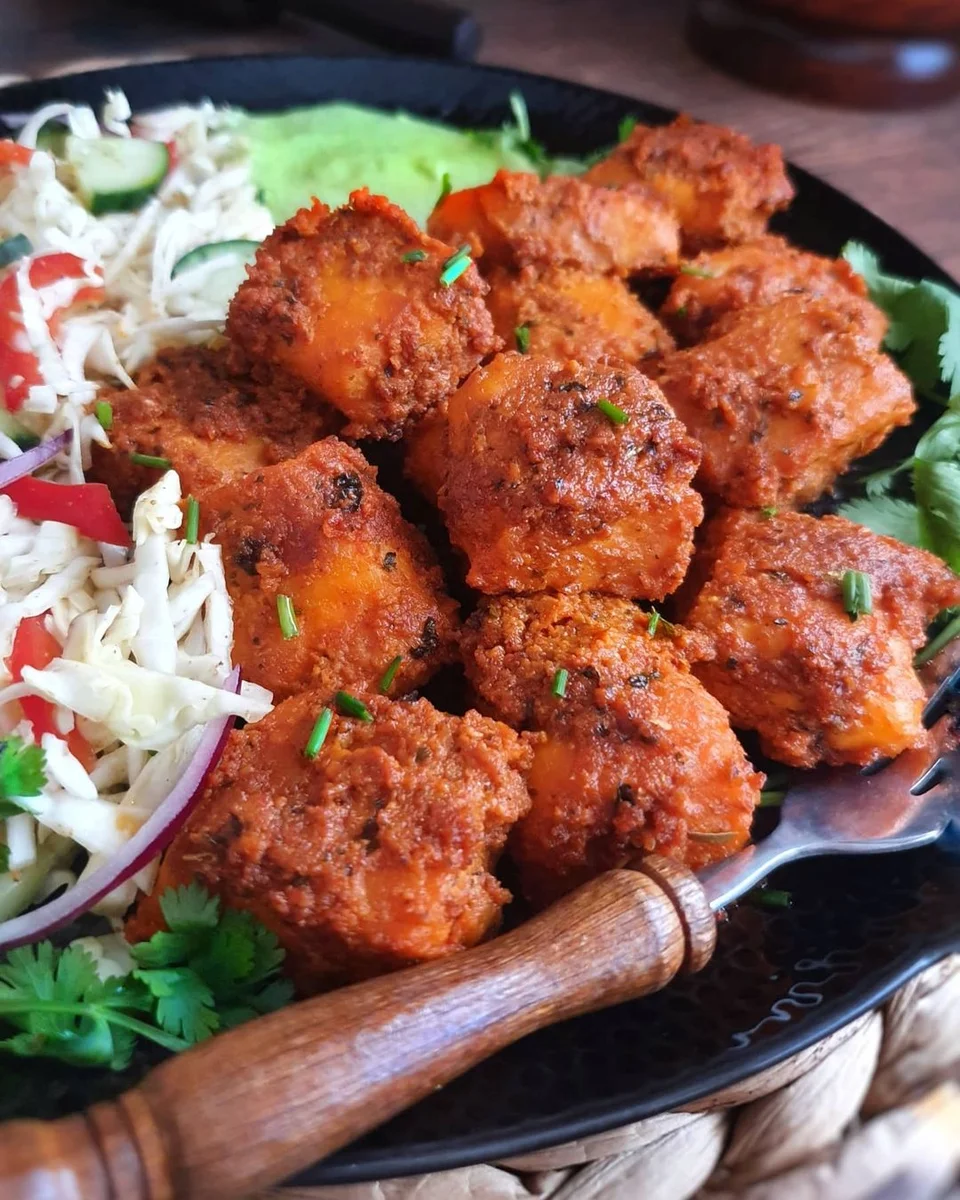
Fish tikka coats boneless fish in a spiced yoghurt marinade, then pan-fries it and gives it a brief smoky finish. It is a good choice when you want a richly seasoned fish dish without needing a tandoor.
Ingredients
- 400 gboneless fish cubes or fillets
- 3 tablespoonsoil
- 1 teaspoonmild Kashmiri chilli powder
- to tastehot red chilli powder
- ¼ teaspoonturmeric powder
- 1 teaspoonground coriander
- 1 teaspoonground cumin
- 1 teaspoonkasuri methi
- 1 tablespoonginger-garlic paste
- 2 tablespoonsthick yoghurt
- 2 teaspoonslemon juice
- 1 tablespoonchickpea flour
- as needed (optional)orange food colouring
- to tastesalt
- 2 tablespoonsbutter
- 1 tablespoonoil, for frying
- 1 small piececoal
- 1 small piecefoil
- a few dropsoil, for the coal
- to servesalad and chutney
Instructions
- 1
Warm the oil
Heat the 3 tablespoons of oil until warm.
- 2
Add the chillies
Turn off the heat. While the oil is still warm, stir in the Kashmiri and hot red chilli powders.
- 3
Cool the oil
Set the chilli oil aside and let it cool completely.
- 4
Mix the marinade
Add all the remaining ingredients except the fish to the cooled oil and mix well.
- 5
Marinate the fish
Coat the fish in the marinade and refrigerate it for 1 hour.
- 6
Heat the pan
Heat 2 tablespoons of butter with 1 tablespoon of oil in a large frying pan. Add more butter if needed.
- 7
Fry the fish
Pan-fry the fish on both sides until cooked through, then set it aside.
- 8
Heat the coal
Heat a small piece of coal until it is red hot.
- 9
Prepare the foil
Place a small piece of foil in the pan with the fish.
- 10
Add the coal
Set the hot coal on the foil and add a few drops of oil to it until it starts smoking.
- 11
Cover the pan
Close the pan with a lid immediately.
- 12
Infuse with smoke
Let the smoke infuse the fish for 1 minute.
- 13
Remove the coal
Take out the foil and coal and discard them.
- 14
Serve the fish
Serve the fish hot with salad and chutney. The suggested pairing is cabbage salad and coriander-yoghurt chutney.
What is fish tikka?
Tikka refers to pieces of food seasoned or marinated with spices and cooked, often in a tandoor. This version adapts that idea for a frying pan, using boneless fish and a short smoke infusion for a charred, smoky note.
Hake is one suitable choice, but any fresh, firm boneless fish that can hold together during frying will work. The yoghurt and chickpea flour help the spice mixture cling to the fish.
Nutrition and macros by portion
The nutrition label shows one serving as written: 250 calories, 21g protein, 4g carbs, 17g fat.
| Portion | Adjustment | kcal | Protein | Carbs | Fat |
|---|---|---|---|---|---|
| Lighter | Use less frying butter | 175 kcal | 15g | 3g | 12g |
| This serving | As written | 250 kcal | 21g | 4g | 17g |
| Hungry | Add rice or flatbread | 375 kcal | 32g | 6g | 26g |
The fish supplies most of the protein, while the chickpea flour and any rice or bread served alongside contribute carbohydrates. Oil and butter provide most of the fat; serve the fish with plenty of cabbage salad and a moderate amount of chutney to balance the plate.
Building the marinade
Chilli oil: warming the Kashmiri and hot chilli powders in the oil helps distribute their flavour through the marinade. Let it cool completely before mixing in the yoghurt and other ingredients.
Kasuri methi: this dried fenugreek leaf adds a distinctive savoury aroma. Crush it between your fingers as you add it to release its fragrance.
Marinating the fish
One hour: refrigerate the coated fish for the stated hour so the marinade has time to season its surface. Keep the fish chilled while it marinates.
Even coating: turn the pieces gently in the mixture until they are covered. If using fillets rather than cubes, handle them carefully so they stay intact.
Pan-frying for a tender centre
Hot pan: heat the butter and oil before adding the fish so it starts frying rather than sitting in fat. Cook in batches if needed to leave room between pieces.
Doneness: the recipe gives no fixed frying time, as this depends on the fish's thickness. Cook both sides until the fish is opaque and flakes easily, taking care not to break it up while turning.
Adding the smoky finish
Red-hot coal: the coal should be glowing before it goes onto the foil. Add only a few drops of oil, then cover the pan straight away to trap the smoke.
One minute: leave the covered fish to absorb the smoke for the stated minute, then remove and discard both the coal and foil. Handle the hot coal with suitable heatproof tools and keep the smoking pan in a well-ventilated area.
What to serve alongside
Fresh sides: cabbage salad adds a crisp contrast to the buttery, spiced fish. A coriander-yoghurt chutney brings a cool, tangy element.
On the plate: serve the fish hot with salad and chutney, as suggested. A portion of rice or flatbread can make the meal more substantial.
Recipe notes & tips
- Choose fresh, boneless fish that is firm enough to turn in a frying pan.
- Let the chilli oil cool fully before combining it with the yoghurt.
- Pat the fish dry before marinating if its surface is very wet.
- Avoid crowding the pan so the fish can fry rather than steam.
- Keep the smoking step brief and remove the coal and foil before serving.
- Serve the fish as soon as it is cooked for the best texture.
Variations
- Use hake: choose fresh hake, as in the suggested version, and cut it into even pieces.
- Adjust the heat: increase or reduce the hot red chilli powder to suit your preference.
- Skip the colouring: leave out the optional food colouring without changing the spice mixture.
- Change the fish: use another firm, boneless fish that holds together during pan-frying.
- Serve with rice: add plain rice or flatbread alongside the salad and chutney for a fuller meal.
Common mistakes to avoid
- Adding yoghurt to hot oil: let the chilli oil cool completely first so the marinade mixes evenly.
- Using wet fish: pat excess moisture away so the marinade can coat the surface.
- Crowding the frying pan: cook in batches to avoid steaming the fish.
- Turning too soon: allow the fish to cook on one side before gently turning it to help keep pieces intact.
- Leaving the coal in the pan: remove and discard the coal and foil after the one-minute smoke infusion.
- Smoking without ventilation: work in a well-ventilated area and handle the red-hot coal with care.
How to store
Refrigerate leftover fish in a covered container and eat within 2 days. Reheat gently in a frying pan until hot throughout; avoid prolonged heating, which can dry out the fish. Discard leftovers that have been left at room temperature for an extended period.
Frequently asked questions
Can I use fish fillets instead of cubes?
Yes. Use boneless fillets and handle them gently when marinating and turning, as they may be more delicate than cubes.
Can I leave out the coal-smoke step?
Yes. The fish will still be spiced and pan-fried, but it will not have the smoky finish.
How do I know when the fish is cooked?
It should be opaque and flake easily with a fork. The cooking time depends on the thickness of the pieces.
Can I marinate the fish for longer than an hour?
The method specifies 1 hour. For best texture, avoid leaving fish in the acidic yoghurt and lemon marinade for a long time.
What can I serve with fish tikka?
Try cabbage salad and coriander-yoghurt chutney, as suggested, or add rice or flatbread.
Is the orange food colouring necessary?
No. It is optional and can be omitted without changing the other ingredients.
Cook it from the original
This recipe comes from fooooods.com. Their page has the author’s own photos, notes and tips — the best place to cook it from.
Open the recipe on fooooods.com